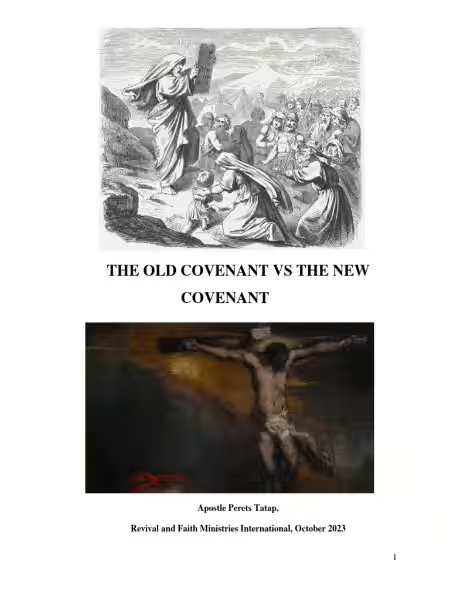
The concept of a New Covenant deeply resonates with many Christians, offering a fresh perspective on God’s relationship with humanity. It’s not simply a replacement of the Old Covenant, but a radical transformation in the way God interacts with us. This profound shift in relationship hinges on Jesus Christ’s sacrifice and promises of a new era of grace and forgiveness. Understanding this covenant allows us to embrace a richer and more fulfilling faith.
The Old Covenant, established with Abraham (Genesis 15:18), laid the groundwork for a relationship through the Law. This established a framework for ethical conduct and worship. However, it fell short of offering complete forgiveness and a perfect union with God. The inability to fully keep the Law often led to feelings of guilt and inadequacy. This is where the New Covenant, established through Jesus, brings a vital change, offering a path to a deeper and more intimate connection with the divine. Consider the example of a child who is disciplined by a parent, but eventually learns to grow and understand the value of the rules.
The Promise of a New Covenant: A Testament of Grace
The New Covenant, proclaimed by Jesus, centered on the powerful message of grace. It was foreshadowed in the Old Testament and definitively established through Jesus’ life, death, and resurrection. This transformative experience brought forgiveness and the restoration of a relationship with God, for which the law could not provide. Consider the verse in Jeremiah 31:31-34, which speaks directly about this new covenant, highlighting a radical change in the heart and mind that transforms our connection with the divine.
This new covenant is not simply a set of rules, but a relationship built on grace and love. Think of it like a parent embracing a child with open arms, despite the child’s imperfections. The New Covenant focuses on the inward transformation that occurs when we accept God’s love and forgiveness. This allows us to grow spiritually and respond to God’s love with devotion and kindness. The Gospel of Luke (22:20) speaks to this new covenant, highlighting the pivotal role of Jesus in establishing it.
Key Elements of the New Covenant
The New Covenant is characterized by several essential elements that distinguish it from its predecessor. These elements include: forgiveness of sins, the indwelling Holy Spirit, new life in Christ, and a relationship built on faith, rather than solely on adherence to laws. This is a powerful shift! Consider the example of a person who has been struggling with guilt, recognizing their brokenness, and seeking forgiveness. The New Covenant provides the pathway to healing and restoration.
A crucial aspect is the concept of forgiveness. The Old Covenant, while containing laws outlining right and wrong, could not erase past transgressions. The New Covenant, however, offers a powerful means of reconciliation. Hebrews 8:12 beautifully elaborates on this concept. The sacrifice of Jesus provides the means to have our sins forgiven, completely and utterly. This includes a transformative experience for the individual and a profound change within the human community.
The New Covenant in Action Today
The New Covenant isn’t a relic of the past; it’s a living reality for believers today. It empowers us to live lives of service, love, and compassion. By embracing the principles enshrined in the New Covenant, we experience a deeper connection with God and with others. The power of the New Testament lies in demonstrating the practical impact of this covenant. For example, loving our neighbors as ourselves and seeking justice for the vulnerable are fundamental expressions of the New Covenant. (Matthew 22:39).
Living according to the principles of the New Covenant encourages us to actively engage in acts of kindness, mercy, and forgiveness. This extends beyond personal relationships to our communities and the world around us. This transformative power is clearly demonstrated in the lives of many Christians who dedicate themselves to serving others. This compassionate response to the needs of others is a direct consequence of the New Covenant, leading to a more just and compassionate world. (Galatians 5:13).
Conclusion: Embracing the Promise of the New Covenant
Understanding the New Covenant is not just an academic exercise; it’s a vital component of a meaningful Christian life. It allows us to see God’s love in a fresh way and to live in a manner that reflects this love in our everyday life. God’s unconditional love is central to this new covenant, offering hope and redemption to all who seek it. Remember, the New Covenant is not just about rules, but about relationship and transformation.
By understanding the New Covenant, we can better appreciate the profound gift of grace and the transformative power of Jesus Christ. This understanding empowers us to live more fully and meaningfully within the framework of faith, love, and service. This journey of spiritual growth is a dynamic process, ongoing throughout our lives. For this profound journey, the New Covenant provides a framework, a map, a guide to lead us toward God’s love and embrace His promises. (Ephesians 2:8-9).
Frequently Asked Questions
What are some Bible verses about the New Covenant?
Hebrews 8:8-12, Jeremiah 31:31-34, Matthew 26:28, and Luke 22:20.
The New Covenant, established through Jesus Christ, is a new relationship between God and humanity. It replaces the Old Covenant, emphasizing grace, forgiveness, and a personal relationship with God.
How does the New Covenant differ from the Old Covenant?
The Old Covenant focused on law and obedience for salvation, while the New Covenant emphasizes grace and faith in Jesus Christ as the way to salvation. The Old Covenant’s emphasis was on external practices, while the New Covenant emphasizes an internal transformation.
What is the importance of the New Covenant for Christians?
The New Covenant provides believers with a direct relationship with God, based on grace and forgiveness through faith in Jesus Christ, rather than strict adherence to the law. This new relationship allows for a deeper understanding and experience of God’s love and mercy.
What is religion?
Religion is a set of beliefs, practices, and values that relate humanity to spirituality and moral values. Different religions offer varying perspectives on the nature of the universe, the purpose of life, and the relationship between humanity and the divine.