If you have ever seen a stone abbey on a hill, a quiet Buddhist temple, or a retreat center surrounded by woods, you may have wondered what makes a place a monastery. The short answer is that a monastery is a religious community and the place where its members live, worship, work, and follow a shared spiritual discipline.
Monasteries exist in many traditions, including Christianity, Buddhism, Hinduism, Jainism, and Taoism. Their buildings and customs differ widely, but most create a structured setting for prayer, meditation, study, service, and a simpler way of life. Some welcome visitors for tours or retreats, while others are closed to the public.
What a monastery is and why monastics live together
A monastery is both a community of religious practitioners and the physical site where that community resides. Members may be called monks or nuns, although the terminology varies by religion and language. They usually organize their lives around a rule, set of teachings, or tradition that guides worship, work, relationships, possessions, and personal conduct.
Monastic life is generally more structured than ordinary religious practice. A person who joins may promise to remain unmarried, share possessions, obey the community’s leaders, or stay committed to a particular way of life. Not every tradition requires exactly the same vows, and some communities include temporary residents or lay members who participate without becoming full-time monastics.
The purpose is not simply to live in an old building or withdraw from society. Monastic communities seek to make spiritual practice the center of daily life. Their routines can provide time for prayer, meditation, reading, manual work, teaching, hospitality, and care for people in need.
Core idea: A monastery is defined more by its community and disciplined religious life than by its appearance. A grand abbey, a small rural hermitage, and a city meditation center may all serve monastic purposes.
How daily life works inside a monastery
Daily schedules differ, but most monasteries follow a dependable rhythm. The day may begin before sunrise with prayer, chanting, meditation, or silent contemplation. Work, meals, study, and rest are then arranged around additional periods of worship or practice.
In many Christian monasteries, the day is shaped by the Liturgy of the Hours, a series of communal prayers observed at set times. Buddhist monasteries may center the schedule on meditation, chanting, teachings, almsgiving, and mindful work. Hindu and Jain communities often include worship, study, meditation, vegetarian meals, and strict ethical disciplines.
Work is usually considered part of the religious life rather than a separate activity. Monastics may cook, clean, farm, care for animals, make candles or religious objects, teach, maintain buildings, preserve manuscripts, offer counseling, or manage a guesthouse. In some communities, income from products or services helps support the monastery and its charitable work.
Meals often reflect the community’s rules. Some monasteries require silence in the dining room, while others allow quiet conversation. Dietary practices may include vegetarianism, fasting, restrictions on alcohol, or specific times when food may be eaten.
Prayer or meditation: communal and private spiritual practice forms the central rhythm.
Work: Necessary tasks support the community and can be treated as a form of discipline or service.
Study: Members may read sacred texts, theology, philosophy, languages, or traditional commentaries.
Community life: Shared meals, responsibilities, and decisions require patience and cooperation.
Hospitality: Some monasteries receive pilgrims, retreatants, students, or people seeking guidance.
The routine can appear quiet from the outside, but monastic life requires considerable effort. Members give up much personal choice, accept communal responsibilities, and live with others under rules that may govern everything from clothing to conversation. The quiet setting supports the discipline; it does not replace it.
How monasteries differ across religious traditions
There is no single model of a monastery. The word is often associated with Christian Europe, but forms of communal religious life developed in many parts of Asia and in other regions. Comparing traditions requires care because similar words can describe different institutions.
Christian monasteries
Christian monasticism developed in several forms, including communities influenced by Benedictine, Cistercian, Carthusian, Franciscan, Dominican, Eastern Orthodox, and other traditions. Some emphasize a stable life in one community, while others focus more strongly on preaching, education, missionary work, or service beyond the monastery.
Christian monks and nuns may take vows related to poverty, chastity, and obedience, although the wording and interpretation depend on the order. Their buildings often include a chapel, cloister, refectory, dormitories, library, work areas, and guest quarters.
Christian monasteries can be contemplative, active, or a combination of both. A contemplative community may limit outside contact and spend much of the day in prayer. An active community may run schools, hospitals, retreat programs, parishes, farms, or social-service projects.
Buddhist monasteries are often known by different regional names, such as vihara, wat, gompa, or temple. Their traditions vary across Theravada, Mahayana, Vajrayana, and other schools. Some house ordained monks or nuns, while others function mainly as temples, meditation centers, educational institutions, or pilgrimage sites.
Daily practice may include meditation, chanting, teachings, ritual observances, study, and receiving food or donations from lay supporters. In some Buddhist cultures, the relationship between monastics and laypeople is especially visible: lay visitors may bring meals, attend teachings, make offerings, or observe special practice days.
Visitors should not assume that every Buddhist monastery is silent or secluded. Some are located in busy neighborhoods and serve as active community centers. Others are remote forest monasteries or mountain retreats with limited access and few facilities.
Hindu, Jain, and other monastic communities
Hindu religious communities may be organized around an ashram, matha, or spiritual teacher. Residents can include renunciants, students, teachers, and lay guests. Activities may involve worship, meditation, yoga, scriptural study, service, and communal meals, but practices differ greatly among lineages.
Jain monastic life is shaped by rigorous nonviolence, self-discipline, detachment, and careful attention to how one’s actions affect living beings. Jain monks and nuns may travel without permanent homes in keeping with their tradition, while other Jain institutions provide places for teaching, worship, and temporary residence.
Taoist and other East Asian religious communities may combine monastic practice with temple worship, meditation, ritual, martial arts, healing traditions, or cultural education. The term monastery can be useful for visitors, but local names and customs often provide a more accurate description.
The difference between a monastery, abbey, convent, priory, and hermitage
These terms overlap, and their precise meanings can change by tradition and historical period. In ordinary use, however, they help describe the size, leadership, or function of a religious community.
Monastery: A general term for a residence and community of monks or, in some contexts, monastics of any gender.
Convent: Often used for a community of women religious, though usage varies by denomination and country. It can also refer to the residence of a religious order more broadly.
Abbey: A monastery or convent led by an abbot or abbess. The title usually reflects the community’s status and leadership structure.
Priory: A religious house led by a prior or prioress. A priory may be independent or connected historically to a larger abbey.
Hermitage: A residence for one or a small number of religious practitioners seeking a more solitary life.
Retreat center: A place designed for visitors to spend time in prayer, meditation, or reflection. It may be operated by monastics without being a monastery itself.
Names do not always reveal the full story. A former monastery may now be a museum, hotel, school, or private residence, while a modern monastery may look like an ordinary group of buildings. Check the institution’s own description before assuming how it operates.
Why monasteries were built in particular places
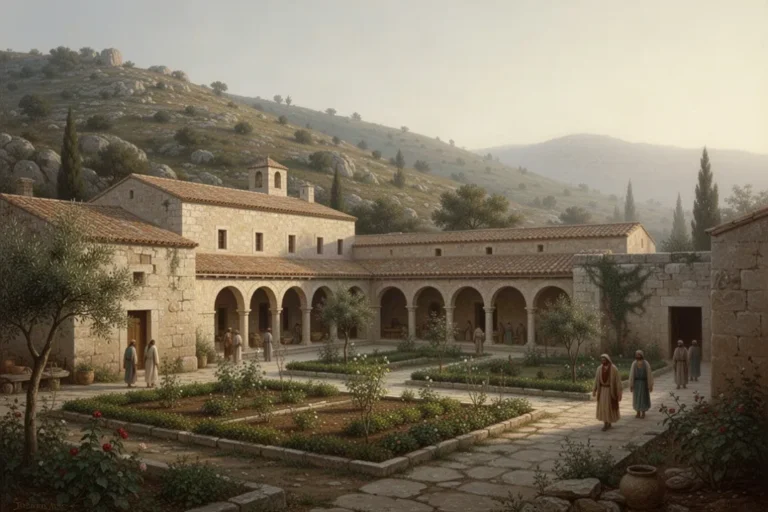
Many historic monasteries were established in locations that supported solitude, water, food production, and protection. Hills, forests, islands, valleys, and remote coastlines offered distance from crowded settlements and created conditions for concentrated religious practice.
Practical concerns mattered as much as spiritual ones. Communities needed reliable water, arable land, building materials, roads, and access to supporters. A monastery might be remote enough for quiet but close enough to receive food, donations, students, or pilgrims.
Some sites grew into economic and cultural centers. Monasteries preserved books, trained clergy, offered lodging, developed farms, copied manuscripts, operated schools, and provided medical or charitable assistance. Their influence could extend far beyond the walls.
Architecture often reflects these needs. A traditional European monastery may be arranged around a cloister, an enclosed walkway surrounding a courtyard. The chapel or church, chapter house, refectory, dormitory, kitchen, library, workshops, gardens, and guest areas are positioned to support communal life.
Monasteries in other regions may have courtyards, prayer halls, stupas, shrines, meditation caves, residential cells, assembly spaces, or gardens. The architecture can communicate theological ideas, local materials, climate, and social relationships as clearly as it provides shelter.
What monasteries do in the modern world
Modern monasteries are not all isolated from public life. Many operate retreat programs, schools, farms, publishing houses, museums, guesthouses, or charitable projects. Some provide spiritual direction, addiction recovery support, prison ministry, environmental education, or assistance to local communities.
Monastic communities also preserve forms of knowledge that might otherwise disappear. Their libraries and archives may contain religious texts, music, artwork, agricultural records, languages, and historical documents. Some institutions digitize collections or collaborate with universities and museums.
Environmental work has become significant for some communities. Monasteries may protect forests, use organic farming methods, restore wetlands, care for threatened landscapes, or teach stewardship rooted in religious ethics. Their land can provide a quiet refuge for wildlife as well as people.
At the same time, many communities face practical challenges. Fewer people may be choosing lifelong religious vows, older buildings can be expensive to maintain, and traditional income sources may no longer be dependable. Public visits, donations, educational programs, and partnerships can help a monastery remain active without changing its essential purpose.
Respect the community’s purpose: A monastery may be historically important and visually beautiful, but it is still a living religious place for the people who reside there. Treat worship, silence, privacy, and local customs as more important than sightseeing.
How to plan a respectful monastery visit
Start by checking the monastery’s official website or contacting its office. Confirm visiting hours, admission requirements, dress expectations, photography rules, accessibility, parking, and whether religious services are open to the public.
Do not assume that a monastery accepts walk-in visitors. Some welcome daily tours but close certain areas. Others require advance registration, especially for overnight stays, retreats, meals, or guided experiences. A remote monastery may have limited transportation, few signs, and no nearby restaurants or stores.
Dress modestly and comfortably. Covered shoulders and knees are a safe choice in many religious settings, but local expectations may be stricter. Remove hats when requested, wear clothing that is not noisy or revealing, and bring layers if you will enter a cool stone church or sit quietly for an extended period.
Follow signs and remain in areas designated for visitors. Monastic cells, offices, kitchens, gardens, and workspaces may be private even when the grounds are open. If a door is closed, a path is blocked, or an area is marked for residents, do not enter or try to find a different angle for photographs.
Silence is often part of the experience. Turn off phone sounds, avoid loud conversations, and wait until you are outside a chapel or meditation hall before speaking normally. During worship, follow the behavior of the congregation without joining in practices you do not understand.
Research the institution: Learn its religious tradition, visiting schedule, and current rules.
Reserve ahead when required: This is especially important for retreats, lodging, meals, and small-group tours.
Pack appropriately: Bring modest clothing, comfortable shoes, water, and any required identification or payment.
Ask before photographing: People, ceremonies, sacred objects, and interiors may have restrictions.
Allow extra time: Quiet visits are slower than ordinary sightseeing, and schedules may change around worship.
Support the community responsibly: Consider a donation, purchase from the monastery, or payment for a program when appropriate.
Common mistakes visitors make at monasteries
Many problems come from treating a monastery like a museum without realizing that it remains a home and place of worship. A little preparation prevents most misunderstandings.
Arriving during a private service: Check the schedule instead of assuming every ceremony is open to visitors.
Using flash photography: Flash can disturb worshippers, damage sensitive objects, and violate local rules.
Expecting constant conversation: Staff and monastics may be observing silence or following a demanding schedule.
Touching sacred objects: Do not handle statues, books, relics, prayer items, or offerings unless invited.
Entering restricted spaces: A beautiful corridor or garden may be part of the community’s private living area.
Bringing unsuitable food: Some monasteries have strict dietary rules or prohibit eating outside designated places.
Assuming donations are mandatory: Give according to the monastery’s stated practice, without pressuring members for special access.
Comparing traditions casually: Ask sincere questions, but avoid reducing a living religion to a tourist attraction.
If you make a mistake, respond calmly. A quiet apology and willingness to follow directions are usually more helpful than a long explanation. Staff may have to protect the community’s routine, sacred spaces, or other visitors’ concentration.
What an overnight monastery stay is really like
An overnight stay can range from a comfortable guesthouse experience to a highly structured retreat. Some monasteries offer private rooms, meals, showers, and scheduled programs. Others provide basic accommodations and expect guests to participate in silence, meditation, worship, work periods, or shared chores.
Read the guest guidelines carefully before booking. You may need to agree to restrictions on alcohol, smoking, food, internet use, visitors, noise, pets, or departure times. A monastery is not necessarily a low-cost hotel; the purpose of the stay is usually participation in a spiritual environment.
Ask practical questions in advance. Find out whether linens are supplied, whether bedding is shared, how meals are handled, whether the building is accessible, and what happens if you need to leave early. People with medical, mobility, dietary, or religious concerns should explain their needs before arrival.
Expect the schedule to take priority over personal convenience. You may hear bells, chanting, or footsteps early in the morning. You may also find that limited conversation, simple meals, and time away from constant entertainment make the experience more reflective than a standard vacation.
Choose a place based on the kind of experience you want rather than on photographs alone. A weekend of guided meditation differs greatly from a silent Christian retreat, a pilgrimage, a study program, or a cultural tour of historic buildings.
For quiet and solitude: Look for a retreat with limited programming and clear silence periods.
For learning: Choose a community that offers teachings, lectures, guided practice, or opportunities to ask questions.
For worship: Confirm that visitors may attend the services and understand the expected participation.
For cultural history: Seek a site with tours, archives, architecture, or museums open to the public.
For service: Ask whether the community accepts volunteers and what skills or commitments are needed.
For first-time visitors: A short, guided program may be easier than a completely silent or highly austere retreat.
Be honest about your expectations. If you mainly want beautiful scenery, a historic site with public tours may suit you better than an active monastery with strict silence. If you want sustained spiritual practice, choose a community whose tradition and schedule genuinely match your purpose.
What to look for when exploring monastery architecture
When visiting a historic monastery, look beyond decorative details. Notice how the building separates communal, sacred, practical, and private areas. The arrangement often reveals how residents moved through the day and how the community balanced solitude with shared life.
A cloister commonly connects important rooms and provides a protected walkway. The chapter house may have been used for community meetings or readings, while the refectory served communal meals. The church or prayer hall typically occupies a central spiritual position, but its exact design depends on the tradition.
Look for evidence of everyday work: kitchens, wells, granaries, gardens, workshops, scriptoria, stables, or storage rooms. These spaces show that monasteries were not only places of prayer. They were also homes, farms, schools, libraries, and centers of local economic life.
Art and decoration can communicate religious beliefs, the community’s history, or relationships with patrons. Ask whether the objects are original, restored, relocated, or modern. Museums and guides can help distinguish the building’s medieval or ancient structure from later additions.
How monasteries support people who never become monastics
Most visitors will not join a monastery, and monastic communities do not generally expect them to. Their influence often reaches people through hospitality, teaching, prayer, service, and example rather than recruitment.
A person may visit for a day of silence, attend a public service, study with a teacher, receive spiritual direction, volunteer, or stay in a guesthouse. Others may connect through books, music, food production, environmental projects, or charitable programs.
The value of a monastery can be practical as well as religious. It may offer a place where people can slow down, reflect on difficult decisions, mourn, recover from stress, or learn a disciplined practice. The setting does not guarantee a particular emotional result, but its structure can create conditions that ordinary routines often lack.
For that reason, monasteries remain more than historic landmarks. They are living communities built around a different measure of time and a different idea of what daily life should serve.
Frequently asked questions
Can anyone become a monk or nun?
No. Each community has its own application and discernment process, and acceptance is not automatic. Candidates may need to spend time as visitors or residents before making permanent commitments. Requirements can include age limits, health considerations, religious formation, financial arrangements, and agreement with the community’s vows and discipline.
Are monasteries open to tourists?
Some are open for tours, worship, museums, retreats, or scheduled visits, while others maintain strict enclosure and admit only residents or approved guests. Check the monastery’s current information before traveling. Public access may cover the church or grounds but exclude living quarters, work areas, and private ceremonies.
Do monasteries charge visitors?
Policies vary. Historic sites may charge admission, while active communities may request donations or set fees for lodging, meals, classes, or retreats. A payment usually supports maintenance and hospitality, but it does not grant unrestricted access. Follow the monastery’s stated policy rather than assuming that every religious site is free.
What should I bring to a monastery retreat?
Bring modest, comfortable clothing, quiet footwear, necessary medication, toiletries, a reusable water bottle, and any required identification. Consider a small notebook if writing is permitted. Leave behind alcohol, distracting electronics, and anything prohibited by the guest guidelines. Confirm bedding, towels, food arrangements, and technology rules before departure.







Leave a Reply