Marriage, a cornerstone of countless societies and religions, often transcends the purely legal or social. It’s a deep and profound commitment, especially when viewed through the lens of a covenant. A covenant, in its essence, is a sacred agreement, a promise binding two parties together in a relationship rooted in mutual respect, responsibility, and often, divine blessings. This understanding elevates marriage from a simple contract to a deeply meaningful partnership, underpinned by spiritual values and promises.
Modern marriages, often facing immense pressures and challenges, can benefit greatly from understanding the concept of marriage as a covenant. This understanding fosters a deeper connection, built on a foundation of trust and unwavering commitment. Covenant thinking encourages proactive problem-solving and open communication, as partners recognize their shared responsibility in upholding their promises. This, in turn, fosters a sense of shared purpose and a willingness to navigate life’s complexities together.
The Biblical Understanding of Marriage as Covenant
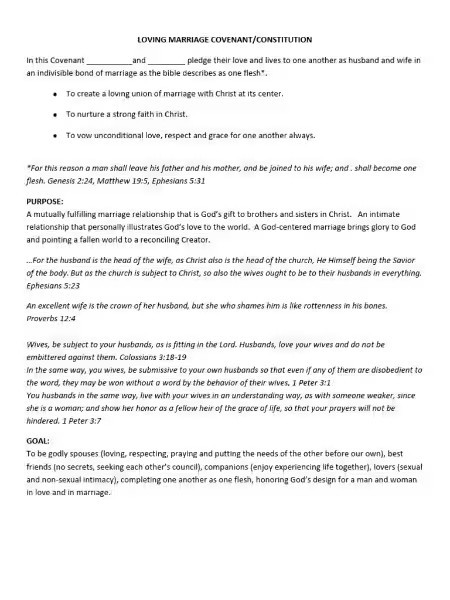
In many religions, notably Christianity and Judaism, the concept of marriage as a covenant is deeply ingrained. The Bible, for example, frequently portrays marriage as a sacred agreement between two people, often mirroring the covenant God made with His chosen people. This perspective emphasizes the mutual commitment required of the partners. This understanding emphasizes the importance of fidelity, support, and forgiveness as essential elements of a successful covenant-based marriage. For instance, in the Book of Genesis, God blesses the union of Adam and Eve, highlighting the divine approval of this sacred relationship.
This biblical perspective offers a framework for understanding marriage as more than just a legal union. It suggests that marriage is a partnership between two individuals, sanctioned by a higher power, and entrusted with the responsibility of creating a loving and stable home. This view encourages a spiritual dimension within the marital relationship, emphasizing the importance of prayer, forgiveness, and shared faith in navigating challenges. It underscores the importance of prioritizing the relationship and making it a source of strength and support for the whole family.
Applying the covenant concept to daily marital life can lead to significant improvements. Honoring vows and maintaining communication become paramount. Think of it like a solemn promise before God, not just to your partner. A covenant marriage stresses mutual respect and understanding, encouraging empathy and willingness to see things from your partner’s perspective. Transparency, openness, and honesty are crucial. This is vital in navigating disagreements and crises, as partners seek solutions together, rather than resorting to conflict or avoidance.
A few practical examples include regular date nights to nurture intimacy and connection. Active listening and meaningful dialogue about concerns or challenges are essential. Seeking professional guidance when necessary is a testament to the value placed on the sanctity of the covenant. For example, couples therapy can provide tools and strategies for strengthening the covenant and navigating difficulties with a healthy outlook. These approaches emphasize the enduring nature of the covenant, highlighting its ability to weather life’s storms and emerge stronger.
The Impact of Covenant Thinking on Personal Growth
Adopting a covenant mindset in marriage fosters personal growth within the relationship. Shared responsibility for the well-being of the partnership, and the family, fosters mutual support and understanding. This concept promotes growth in empathy, patience, and forgiveness. When a marriage is viewed as a covenant, both partners are more inclined to take responsibility for their own actions and contribute to the overall happiness of the union. For example, forgiving a partner’s mistakes becomes less about condoning the behaviour, and more about maintaining the covenant and the bond.
Furthermore, a covenant perspective promotes a deeper sense of purpose and meaning within the marriage. It’s about recognizing that the commitment isn’t just to each other, but to a joint journey of growth, healing, and mutual support. This understanding can lead to a deeper appreciation for the partnership, fostering a sense of community and togetherness. This shared growth is a significant aspect of the covenant, shaping a partnership that transcends the mundane and elevates the relationship to a higher plane of spiritual and emotional connection.
Frequently Asked Questions
What is meant by “marriage as a covenant”?
A covenant, in religious contexts, is a sacred agreement or promise between two parties, often involving mutual obligations and blessings. In the context of marriage, it signifies a commitment that goes beyond a contract, emphasizing a lifelong bond, mutual support, and a shared journey of faith and growth.
How is marriage as a covenant related to religion?
Many religions view marriage as a covenant sanctioned by God or a higher power. This perspective emphasizes the importance of the marriage commitment and often includes rituals and ceremonies that reinforce the covenant’s significance within the religious community. The specific interpretations and practices vary across different faiths.
What are the responsibilities of each partner in a covenant marriage?
Responsibilities within a covenant marriage, informed by religious teachings, generally emphasize love, faithfulness, respect, and mutual support. Specific responsibilities may vary based on the particular religious tradition, but often include nurturing the relationship, providing for the family, and seeking guidance from religious teachings on how to resolve conflicts.
How does a covenant marriage differ from a civil marriage?
A covenant marriage, often recognized in some legal systems, is a marriage grounded in a deeper commitment and adherence to religious principles. Civil marriages, while legally binding, may not include the same emphasis on religious obligations or the same support mechanisms that religious covenant marriages offer. These differences can impact legal separation and divorce.
Faith plays a central role in a covenant marriage by providing a framework for navigating challenges and maintaining the commitment. Sharing faith strengthens the couple’s connection, offering a source of guidance, support, and shared values, which can resolve conflicts and strengthen the bond over time.