Glory definition biblical: what it means in Scripture
Glory definition biblical: what it means in Scripture
The biblical definition of glory is the revealed greatness, holiness, beauty, and honor of God. In Scripture, glory can describe God’s visible presence, the honor he deserves, the praise people give him, or the future transformation of his people.
The Bible also uses “glory” for human reputation and created splendor, but God’s glory is unique. It is not merely brightness or public praise; it is the weight and worth of who God is, made known through his character, works, presence, and authority.
English Bibles translate several related biblical ideas as “glory.” In the Old Testament, the Hebrew word kabod is associated with weight, significance, honor, and splendor. Something glorious has substance and importance; it is not empty or superficial.
In the New Testament, the Greek word doxa commonly refers to honor, praise, reputation, and radiant majesty. The exact meaning depends on the passage. “Glory” may refer to God’s greatness, Christ’s heavenly status, the honor given to a person, or the glorious future promised to believers.
This range of meaning explains why no single English synonym works in every verse. Depending on the context, glory may mean divine presence, “honor,” “splendor,” “praise,” “renown,” or a visible display of God’s character.
Core definition: In biblical language, glory is the weighty greatness and worthy honor of God, revealed so that he can be recognized, praised, and obeyed.
The idea is broader than a bright light. Light sometimes accompanies God’s glory, but the light points to something deeper: God’s holiness, power, goodness, and presence. A person may see a radiant manifestation and still need to understand what it reveals about God.
Why God’s glory is central to Scripture
God’s glory is not a secondary theme added to the Bible’s main message. It helps explain creation, redemption, worship, judgment, and hope. Scripture presents God as the one who deserves ultimate honor because he is the source and ruler of everything that exists.
Creation displays God’s greatness through order, beauty, power, and dependence on him. Psalm 19 connects the heavens with the declaration of God’s glory, while Romans 1:20 explains that God’s invisible qualities can be perceived through the created world. These passages do not say that creation reveals everything about God, but they do show that it points beyond itself.
God’s glory is also revealed through his moral character. Exodus 33–34 connects God’s glory with his name and character, including his mercy, patience, faithfulness, justice, and holiness. Moses does not receive a definition based only on visible brightness; he receives a deeper disclosure of who God is.
The biblical story repeatedly shows people encountering God’s glory and responding with humility. Isaiah 6 portrays Isaiah becoming aware of God’s holiness and his own sinfulness. In Revelation 4, heavenly worship centers on God’s holiness and worthiness. The proper response to glory is therefore not admiration alone but worship, repentance, trust, and obedience.
Creation displays God’s power and wisdom.
God’s presence reveals his nearness and holiness.
His actions demonstrate justice, mercy, and faithfulness.
Jesus Christ makes God known in a uniquely personal way.
Worship recognizes that God deserves the honor creation cannot give itself.
How God’s glory appears in the Old Testament
The Old Testament often presents glory as God making his presence known among his people. The Hebrew Bible describes this presence with images such as fire, cloud, radiance, majesty, and overwhelming holiness. These signs are not decorative effects; they communicate that the living God is present and that human beings must approach him with reverence.
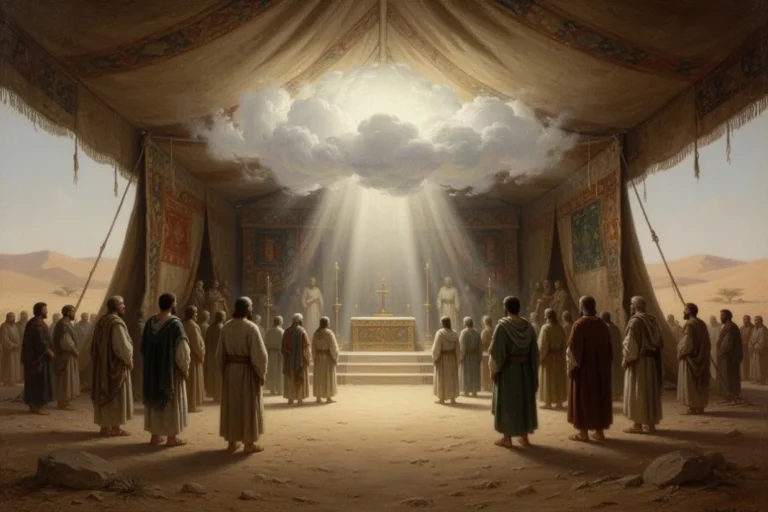
In Exodus 16, God’s glory appears in connection with his care for Israel in the wilderness. Exodus 24 describes a cloud covering Mount Sinai, where God establishes his covenant with the people. Later, Exodus 40 associates the glory of the Lord with the tabernacle, showing that God dwells among Israel while remaining holy and distinct from them.
The tabernacle and temple were not containers that controlled God. They were appointed places where God chose to make his presence known. When the temple is dedicated in 1 Kings 8, the glory of the Lord fills it so powerfully that the priests cannot continue their normal service. The scene emphasizes God’s presence and majesty, not human achievement.
The prophets also speak of glory in relation to God’s rule over all nations. Isaiah 6 presents the whole earth as filled with God’s glory, while Habakkuk 2 looks forward to a time when knowledge of the Lord’s glory will spread throughout the world. These passages give glory a universal dimension: God’s greatness is not limited to Israel or to one sacred location.
At the same time, the Old Testament warns against exchanging God’s glory for created things. Psalm 106 describes Israel’s idolatry as trading the glory of God for an image. Jeremiah 2 uses similar language to expose the foolishness of abandoning the true God. Idolatry is therefore not merely a mistake in religious preference; it is a failure to give ultimate worth to the one who alone deserves it.
How Jesus Christ reveals God’s glory
The New Testament presents Jesus as the clearest revelation of God’s glory. John 1 describes the Word becoming human and making God known. The passage connects Jesus with divine glory while also emphasizing grace and truth. This means God’s glory is not revealed only through overwhelming power; it is also seen in faithful love, mercy, truth, and self-giving service.
Jesus’ miracles are often called signs because they point beyond the event itself. In John 2, the miracle at Cana reveals his glory to his disciples. The sign matters not simply because water becomes wine, but because it identifies Jesus as the one through whom God’s power and purpose are being disclosed.
The Gospel of John also speaks of glory in relation to Jesus’ death and resurrection. Humanly speaking, the cross appears to be humiliation and defeat. In John’s presentation, however, Jesus’ death is bound up with his glorification because it reveals the depth of divine love and completes his saving mission. The resurrection confirms his victory and leads to his exaltation.
Philippians 2 describes Christ’s humility, obedience, death, and later exaltation. The movement from self-emptying service to public honor shows that biblical glory is not the same as status-seeking. Jesus does not grasp honor for selfish advantage. He receives exaltation after faithfully carrying out the Father’s will.
Hebrews 1 presents the Son as the radiance of God’s glory and the exact representation of his nature. This language means that Jesus does not merely provide information about God. He makes God’s character and identity known in a uniquely complete way. To see Christ’s compassion, authority, holiness, and faithfulness is to encounter the revelation of God’s glory.
What it means to glorify God
To glorify God means to recognize, reflect, and honor his greatness. People do not add to God’s essential glory, as if divine greatness were incomplete. Instead, they glorify him by acknowledging what is already true and by living in ways that make his character visible.
Jesus teaches in Matthew 5 that good works should lead people to honor the Father in heaven. The point is not personal religious celebrity. Good actions glorify God when they direct attention toward his goodness rather than treating the individual performer as the ultimate source of virtue.
Paul gives a broad command in 1 Corinthians 10:31: ordinary actions such as eating and drinking can be done for God’s glory. The principle reaches beyond meals. Work, speech, money, relationships, rest, and decisions can all become expressions of gratitude and obedience.
Glorifying God does not require making every conversation explicitly religious. It does require that your choices reflect truth, love, integrity, humility, and responsibility. A Christian who acts honestly when dishonesty would be profitable may glorify God. A person who forgives rather than seeking revenge may display God’s mercy. A church that serves vulnerable people may make God’s compassion more visible.
By contrast, religious activity can fail to glorify God when it is driven mainly by pride. Jesus criticizes public acts done to gain human approval in Matthew 6. The action may appear devout, but the motive seeks personal recognition rather than God’s honor.
How people reflect God’s glory
Genesis 1 presents human beings as made in God’s image. This does not mean that people possess God’s divine nature or become gods. It means that humans are created to represent God’s rule, exercise responsible care, and reflect something of his character within creation.
Human dignity is therefore connected with God’s glory. Every person has value because human life comes from God and is accountable to him. At the same time, people are not the final source of their own worth. The biblical view avoids both contempt for humanity and exaggerated self-importance.
Sin damages this reflection. Romans 3 describes humanity as falling short of God’s glory, meaning that people fail to live in the faithful, righteous relationship for which they were created. Sin turns attention inward, distorts desire, and replaces God’s rightful authority with self-rule or the worship of created things.
Restoration in Christ includes more than forgiveness for past actions. The New Testament speaks of believers being changed into Christ’s likeness. Second Corinthians 3 describes an ongoing transformation in which the Spirit enables believers to reflect the Lord’s glory with increasing resemblance to Christ.
This transformation is gradual and imperfect in the present life. It can be seen in growing patience, truthful speech, love of enemies, concern for the poor, sexual integrity, generosity, and endurance under pressure. These qualities do not earn God’s acceptance; they are evidence of a life being reshaped by God’s grace.
Glory, honor, praise, and reputation are related but different
The word “glory” overlaps with several ordinary English ideas, but the biblical context adds important distinctions. Honor is the respect or recognition given to someone. Praise is verbal or expressed approval. Reputation is what others think or say about a person. Splendor refers to impressive beauty or magnificence.
God’s glory can include all of these, but it is not limited to any one of them. God deserves honor because of who he is. He receives praise when people speak truthfully about his works. His reputation among people may be distorted, but his actual glory does not depend on human opinion.
This distinction matters when Scripture speaks about human glory. Jesus warns in John 5 about receiving glory from people rather than seeking the honor that comes from God. Human approval is unstable and limited. God’s judgment sees motives and character more clearly than public reputation does.
First Peter 1 contrasts temporary human glory with the enduring life God gives. A flower’s beauty fades, and human praise can disappear quickly. Biblical glory can refer to created beauty or status, but it repeatedly teaches that God’s glory is permanent and supreme.
What “glory” means in salvation and Christian hope
In the New Testament, glory also describes the future believers receive through union with Christ. Romans 8 speaks of a coming glory that far exceeds present suffering. The promise is not that hardship is insignificant; it is that suffering does not have the final word for those who belong to Christ.
Believers are described as waiting for the revealing of God’s glory and the renewal of creation. This future hope includes resurrection, freedom from corruption, and full conformity to Christ. The exact details are presented through several images, but the central promise is clear: God will complete his saving work.
Colossians 3 directs believers to set their minds on Christ’s heavenly reality because their true life is secured in him. When Christ appears, believers will share in his glory. This does not mean that humans become equal with God. It means they participate in the life, honor, and restoration that God graciously gives through Christ.
Second Corinthians 4 places present suffering beside an eternal weight of glory. The language recalls the biblical association between glory and weight: temporary troubles are not being called pleasant, but they are being contrasted with a far greater and lasting reality. Christian hope rests on God’s promised future, not on denying current pain.
A helpful distinction: Christian hope is not the promise of becoming independently divine. It is the promise of being raised, renewed, and brought into lasting fellowship with God through Christ.
Common mistakes when interpreting glory in the Bible
Several errors can make biblical passages about glory confusing. The surrounding verses, the type of literature, and the subject of the passage should guide interpretation. A word study is useful, but the immediate context remains decisive.
Reducing glory to physical light: Light can symbolize glory, but glory more broadly concerns God’s presence, character, authority, and honor.
Treating glory as human fame: Public recognition may be called glory in some contexts, yet Scripture often warns that human praise is temporary.
Assuming people can add to God’s greatness: Worship does not improve God. It acknowledges and reflects the greatness he already possesses.
Ignoring moral character: Biblical glory is not bare power or spectacle. God’s holiness, justice, mercy, and faithfulness are central to his glory.
Separating glory from Christ: The New Testament repeatedly presents Jesus as the decisive revelation of God’s glory.
Using one definition for every verse: “Glory” may mean honor, splendor, divine presence, or future salvation depending on the passage.
Seeking recognition while claiming to serve God: Jesus’ teaching warns that religious actions can become self-promotion when human approval is the real goal.
A practical way to read a verse is to ask what kind of glory it describes. Is the passage revealing God’s character, describing a visible manifestation, calling people to worship, warning against pride, or promising future restoration? Those questions usually clarify the meaning.
Practical ways to respond to God’s glory
Understanding glory should shape daily life rather than remain only a vocabulary exercise. Scripture connects the recognition of God’s greatness with concrete habits, relationships, and decisions.
Pay attention to God’s character. Read passages about his holiness, mercy, justice, patience, and faithfulness. Glory becomes more than an abstract idea when you see the qualities Scripture attributes to God.
Practice gratitude. Thank God specifically for creation, provision, forgiveness, wisdom, relationships, and opportunities to serve. Gratitude directs attention away from self-sufficiency.
Examine your motives. Before an impressive religious action, ask whether you want God honored or yourself admired. The same outward behavior can have very different motives.
Honor people without worshiping them. Give appropriate respect to parents, leaders, teachers, coworkers, and public servants, while reserving ultimate loyalty and worship for God.
Let conduct support confession. Truthful speech, faithful promises, compassionate service, and sexual integrity can make your stated beliefs credible.
Receive ordinary work as service. Paul’s teaching in 1 Corinthians 10 allows everyday responsibilities to become acts of faithfulness rather than divided “spiritual” and “nonspiritual” categories.
Keep present suffering in view of future hope. Biblical glory does not erase grief, but it gives suffering a larger horizon through God’s promise of restoration.
These practices do not purchase salvation or make a person worthy of God. They are responses to grace. The biblical pattern is that God reveals his glory first, people respond in faith and worship, and their lives increasingly reflect what they have come to know about him.
How to understand glory in a specific Bible passage
When you encounter “glory” in a verse, begin by identifying the subject. Is the glory attributed to God, Jesus, a human ruler, the temple, creation, or the future age? The subject often indicates whether the word means divine presence, honor, splendor, or status.
Next, examine the verbs around the word. People may see glory, give glory, receive glory, fall short of glory, or share in glory. Each phrase carries a different emphasis. “Give glory to God” focuses on acknowledgment and worship, while “beholding glory” may focus on revelation and transformation.
Finally, read the surrounding paragraph rather than isolating a single phrase. A passage about God’s glory may also explain his mercy, judgment, covenant, incarnation, suffering, or future kingdom. Those details prevent a narrow definition and show how glory functions within the Bible’s larger message.
The clearest overall picture is this: God’s glory is his incomparable greatness made known. People are called to recognize it, worship God because of it, reflect his character, reject rival objects of ultimate devotion, and hope for the day when his glory will be fully revealed.
Frequently asked questions
Is biblical glory the same as fame?
No. Fame depends on public attention and can disappear quickly. Biblical glory may include honor or reputation, but God’s glory is rooted in his unchanging character and authority. Human fame becomes dangerous when it replaces devotion to God or turns service into self-promotion. Scripture consistently treats God’s honor as more lasting and more important than approval from other people.
Can people glorify God if he already has complete glory?
Yes, but not by increasing or improving God’s essential greatness. People glorify God by recognizing what is true about him, thanking him, obeying him, and reflecting his character. Their worship and conduct make his goodness more visible to others. In that sense, glorifying God means honoring and displaying his glory rather than adding to it.
Why is glory connected with suffering in the New Testament?
The New Testament connects suffering and glory because Christ’s suffering led to resurrection and exaltation, and believers are promised a future transformation beyond present hardship. This does not make suffering good in itself or require people to remain in abuse. It means that suffering does not have the final word when God brings redemption, justice, resurrection, and lasting fellowship with him.
What is the difference between God’s glory and the glory of heaven?
God’s glory is his own eternal greatness, holiness, and majesty. The glory associated with heaven is the radiant setting and blessed condition connected with God’s presence, as well as the future honor and renewal given to his people. Heaven does not create God’s glory; it is where God’s glory is experienced and revealed without the present effects of sin.









Leave a Reply