Commentary on the Book of Exodus: God’s Deliverance and Covenant Faithfulness
Quick Answer: This commentary on the book of Exodus follows God’s rescue of Israel from slavery, His covenant making at Sinai, and His presence dwelling among His people. Exodus shows that redemption is not only an escape from bondage, but a calling into worship and obedience. As you read, look for God’s faithful character and how He forms a redeemed community to live holy lives.
Historical Context: From Egypt’s Pressure to Sinai’s Covenant
Exodus begins after the family of Jacob has grown large in Egypt. Over time, a new king rises “which knew not Joseph” and turns Israel’s growth into forced labor. The book’s first half is marked by escalating plagues, the Passover, and the deliverance at the Red Sea—events that establish God as the One who overrules empires and rescues His people.
The second half turns from escape to formation. Israel travels toward Sinai, where the Lord gives instruction for worship, justice, and holiness. The covenant is not merely a contract; it is God’s intention to make a people for His presence. Key moments—manna in the wilderness, water from the rock, and the building of the tabernacle—show that God provides and also instructs.
A helpful way to read the book is to see both the urgency of deliverance and the patience of instruction. God does not only take Israel out of Egypt; He teaches Israel how to live as His redeemed people.
Original Language Note: Key Hebrew Ideas Behind Exodus Themes
Exodus was written in Hebrew, and several recurring terms shape the book’s message. One notable theme is “covenant” language (often associated with a binding agreement), which underscores that God’s redemption leads to a relationship with responsibilities, not freedom without instruction. Another major idea is “deliverance” and “salvation,” expressed through language that emphasizes being rescued by God’s strong hand.
Exodus also highlights worship-related terms connected to service, holiness, and tabernacle patterns. Even when the precise etymology of every term is debated, the overall flow is clear: the Lord brings His people out so they can serve Him. That is why the account of miracles is closely intertwined with commands for worship.
1) God Hears, God Sends: Moses, Pharaoh, and the Meaning of Redemption
Exodus opens with suffering that is not hidden from God. Israel’s cries rise, and God responds with action. Moses is chosen not because he is sufficient, but because God is faithful. The burning bush scene is more than a personal calling; it is a declaration that God’s name, His authority, and His purposes are living realities.
As Moses confronts Pharaoh, the narrative makes clear that Pharaoh represents more than one ruler—he symbolizes the spiritual arrogance of a world that resists God. The plagues are not random. They reveal that God’s power is above Egypt’s gods, above its systems, and above its attempt to control life through oppression.
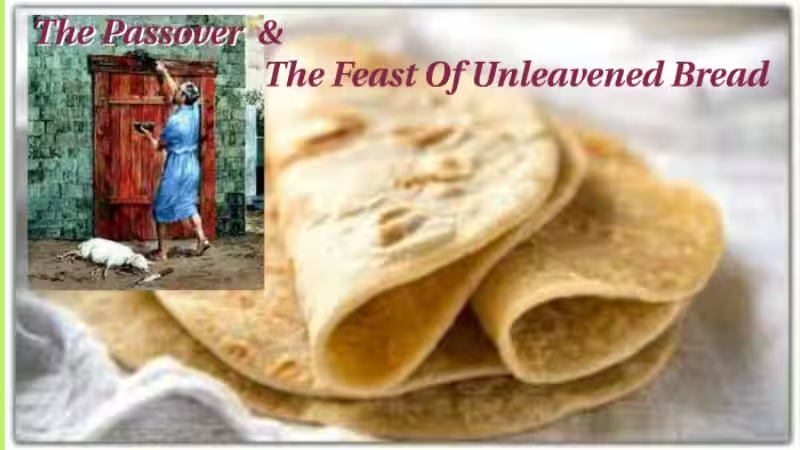
The Passover becomes the turning point where deliverance is both judged and protected. God commands Israel to mark their homes and to remember. In other words, redemption is not only something that happens; it is something that shapes memory, worship, and identity.
When Israel crosses through the sea, the book presents victory as God’s work from start to finish. This is crucial for interpretation: the people are not delivered because they are strong, but because God is strong. The sea is crossed in obedience, and the result is not merely safety—it is a new relationship with the God who fights for His covenant purposes. This is the heart of the Exodus story: a commentary on the book of Exodus must keep returning to God’s character—He hears, He acts, and He forms.
2) Sinai and the Tabernacle: Redemption that Produces Holiness and Worship
After deliverance, the greatest temptation is to treat freedom as an end rather than a beginning. Exodus answers that temptation by moving to Sinai. At the mountain, God gives laws and covenant instruction that show what His redeemed people will look like. The commandments are not arbitrary rules; they are the moral shape of a community living under God’s authority.
In the wilderness, God’s provision continues to teach dependence. Manna teaches daily trust; water teaches that God sustains life. Even when Israel complains, God’s guidance reflects His patience. The book does not hide the failures of the people, yet it portrays God’s refusal to abandon His purpose.
The tabernacle section emphasizes that God desires to dwell among His people. This is not “God at a distance,” but God among His redeemed community through a carefully appointed system of worship. Sacrifices, priesthood, and holy furnishings all point toward atonement, access, and reverence.
Crucially, Exodus shows that holiness is practical. Worship affects ethics, and obedience is not separated from reverence. This is where an Exodus Bible commentary often finds its main devotional application: God’s presence changes how we live. The redeemed people are taught to be a holy people, not to earn salvation, but because salvation has already been given.
3) Failures, Mercy, and Forward-Looking Hope
Exodus is honest about human weakness. Israel’s impatience appears quickly after covenant promises. When people lose sight of God’s character, they revert to idols and fear. The narrative therefore functions as both a warning and a hope: God’s people can fail, but God’s promises do not collapse.
One reason Exodus remains pastorally powerful is that it does not idealize its characters. It shows the cost of disobedience, but it also displays God’s mercy in renewing guidance and calling the people back to worship. Even the structure of the book—deliverance, instruction, worship—creates a pattern for readers: God saves first, then He teaches.
That pattern invites a Christ-centered reading. While Exodus is not about the New Testament directly, it prepares the reader for later biblical fulfillment: themes of Passover (a protecting blood), priestly mediation, and God dwelling with His people echo forward. In a book of exodus interpretation, these connections should increase gratitude and worship rather than reduce Exodus to symbolism.
Ultimately, Exodus calls the reader to live as someone rescued. If God brought Israel out of slavery, then spiritual deliverance has a destination: a life that worships God sincerely and walks in His ways.
How to Apply the Story of Exodus Today
First, remember that God’s deliverance produces worship. If you’ve experienced rescue—whether spiritual salvation, forgiveness, or sustained mercy—Exodus teaches you to respond with reverence, gratitude, and obedience. Second, let Exodus train your imagination for God’s power. Pharaoh’s systems once looked unbeatable, yet God showed that oppression is not ultimate.
Third, practice daily dependence. The wilderness teaches that provision often comes “today,” not only “someday.” Create rhythms of prayer and trust rather than waiting until you feel panic. Fourth, treat God’s presence as transformative. The tabernacle pattern highlights that worship is not a hobby; it is the posture of someone living under God’s authority.
Finally, respond to failures with repentance, not denial. Exodus demonstrates that God corrects and restores. When you stumble, return to God’s instructions, return to worship, and return to the truth that redemption has a purpose. A devotional study of Exodus becomes most meaningful when it moves from information to formation.
God grounds the Ten Commandments in redemption: “I am the LORD thy God, which have brought thee out.”
Deuteronomy 6:4-6
Israel is called to love God wholeheartedly, connecting worship and obedience as a lifelong pattern.
1 Corinthians 10:1-4
Paul links Israel’s wilderness experiences to spiritual lessons about Christ and God’s provision.
Hebrews 3:16-19
The wilderness generation becomes a warning about unbelief and the necessity of faith-based obedience.
Revelation 15:3-4
Heavenly worship echoes Exodus themes: God’s works are acknowledged and His holiness is revered.
Frequently Asked Questions
What is the main message of Exodus?
Exodus tells how God hears His people, delivers them from bondage, and forms them into a worshiping covenant community. The book moves from redemption (Pharaoh to Passover to the Red Sea) to instruction and holiness (Sinai and the tabernacle). God’s purpose is rescue that produces worship.
Is there a single “anchor verse” for Exodus?
Exodus does not center on one standalone verse the way some Bible topics do. Instead, the whole book builds one continuous message: God’s deliverance and God’s presence. A commentary on the book of exodus works best by tracking how each major section reinforces that theme.
How should Christians read the plagues and Passover?
Christians can read these events as demonstrations of God’s authority and as reminders of redemption. Passover highlights protection and remembrance—faith responding to God’s command. In Scripture’s fuller storyline, these patterns also point forward to greater deliverance and atonement.
What does the tabernacle teach us devotionally?
The tabernacle teaches that God desires to dwell with His people and that worship matters. Its details point to holiness, mediation, and access, showing that obedience and reverence are part of worship—not optional add-ons for believers.
A Short Prayer
Lord, thank You for hearing the cries of Your people and for delivering us according to Your mercy. Help us to respond to redemption with worship that is sincere and lives that are obedient. Teach us to trust You day by day, especially when circumstances feel like Pharaoh’s power. Draw us near to Your presence, and form us into a holy people who remember Your works. In Jesus’ name, amen.
Key Takeaway: Exodus shows that God saves not only to set free, but to form a people who worship Him faithfully.