Christian Bible distribution: how to give and receive Bibles
Christian Bible distribution: how to give and receive Bibles
Christian Bible distribution connects printed and digital Bibles with people who want to read them, often through churches, Bible societies, ministries, schools, hospitals, prisons, and community outreach programs. You can usually help by donating money or Bibles, volunteering, organizing a church collection, or partnering with an established organization.
If you need Bibles, contact a local church, Christian ministry, campus group, chaplain, or Bible society and explain how many copies you need and who will receive them. Distribution works best when the Bible format, language, reading level, and delivery method match the community rather than treating every request the same way.
Christian Bible distribution is the process of making Scripture available to people and communities through appropriate channels. It can involve printing, purchasing, translating, shipping, storing, and personally handing out Bibles. Some programs provide complete Bibles, while others distribute New Testaments, selected books, children’s editions, large-print copies, or audio recordings.
The work is broader than placing books in public locations. A responsible program considers whether people can read the language, understand the format, access follow-up support, and use the material safely. In some places, the most useful distribution method is a personal relationship through a local congregation. In others, it may be a hospital chaplain, prison volunteer, school program, or secure digital resource.
Distribution may be local, national, or international. A church might give Bibles to visitors and new members, while a larger organization may coordinate printing and delivery across several regions. The people involved can include pastors, teachers, missionaries, translators, warehouse workers, drivers, volunteers, donors, and community leaders.
Core principle: A Bible should reach people in a form they can read, keep, and use. The number of copies distributed matters less than whether the process serves real needs respectfully.
Why churches and ministries distribute Bibles
Christian communities distribute Bibles because Scripture is central to worship, teaching, personal study, prayer, and discipleship. A congregation may give a Bible to someone attending for the first time, a child beginning religious education, a couple preparing for marriage, or a person who cannot afford a copy.
Distribution can also support people during major life changes. Patients, military personnel, students away from home, people entering rehabilitation, prisoners, refugees, and families facing financial hardship may welcome a Bible when it is offered with sensitivity. The book can provide familiar prayers, moral instruction, encouragement, and a way to participate in a Christian community.
Some programs focus on basic access. They serve areas where books are scarce, household income is limited, or a Bible is unavailable in the language people speak at home. Others focus on specialized access, such as Braille, large print, audio, easy-to-read editions, or study resources for people learning English.
Distribution is also connected with literacy and education. A reading program may use Bible passages as familiar teaching material, provided participants understand the purpose and are not pressured to join a religion. Christian organizations should explain what they are offering and respect the freedom of recipients.
Where Bibles are commonly distributed
The right distribution location depends on the community, the ministry’s purpose, and local rules. A personal invitation from someone trusted is often more effective than leaving books in a place where no one is available to answer questions.
Churches and congregations: Members can receive Bibles for worship, small groups, classes, and outreach.
Schools and campus ministries: Student groups may provide Bibles through approved activities and with respect for school policies.
Hospitals and care facilities: Chaplains may offer suitable copies to patients, families, and staff who request them.
Prisons and detention facilities: Approved volunteers and chaplains may distribute copies that meet facility requirements.
Military and first-responder ministries: Specialized programs may provide compact, durable, or service-oriented editions.
Community centers and food pantries: Bibles may be available alongside other voluntary social services.
Disaster-response sites: Local churches may offer spiritual care and reading materials after emergencies.
Homes and neighborhoods: Personal relationships can make a direct invitation more respectful and useful.
Online platforms: Digital Bibles can serve people who prefer phones, computers, or audio resources.
Permission matters in every setting. A ministry should not leave books on private property, distribute inside a school without approval, or approach vulnerable people in a way that feels coercive. Good distribution protects both the recipient’s dignity and the organization’s credibility.
Who needs Bibles and what format may help
There is no single best Bible for every recipient. A young child may need a picture Bible or simplified retelling, while an adult studying theology may want a full Bible with cross-references. Someone with impaired vision may benefit from large print or audio, and a person who speaks another language may need a bilingual edition.
Before ordering large quantities, ask practical questions about the intended readers. Consider their age, language, reading ability, physical access, religious background, and preferred format. Also ask whether they already own a Bible and whether they need a particular translation used by their church.
Children: Illustrated editions, age-appropriate language, and durable covers can support supervised reading.
New readers: Clear typography, plain language, and short explanations may make the text easier to approach.
Church members: A congregation may prefer the translation used in its services and classes.
People with low vision: Large print, high contrast, audio, or screen-reader-compatible formats may be more useful.
Multilingual families: Parallel-language or separate-language editions can support shared reading.
People in institutions: Paperback, compact, or facility-approved editions may be required.
People without reliable internet: Printed books, memory cards, or offline audio may be more dependable than web access.
Translation choice should be handled carefully. Many Christians have a preferred translation because of church tradition, reading style, or study practice. A distributor should avoid presenting one edition as universally suitable and should verify that the selected version is legally available for the intended use.
How Christian Bible distribution usually works
A well-organized program begins with a specific request or identified need. The request might come from a pastor who needs copies for a congregation, a chaplain serving patients, or a community leader who wants resources in a local language. Clear information prevents waste and helps donors understand where their support goes.
Assess the need before ordering
Start by identifying the number of recipients, their language, the preferred translation, and the setting. Confirm whether the people want full Bibles, New Testaments, children’s editions, or audio resources. It is better to order fewer suitable copies than many books that cannot be used.
Select a reliable source
Sources may include publishers, Christian bookstores, Bible societies, denominational offices, nonprofit ministries, and churches with surplus inventory. Ask about copyright permission, shipping arrangements, quality control, and pricing. A low purchase price does not help if the books arrive damaged, in the wrong language, or after the outreach period has ended.
Prepare the copies for delivery
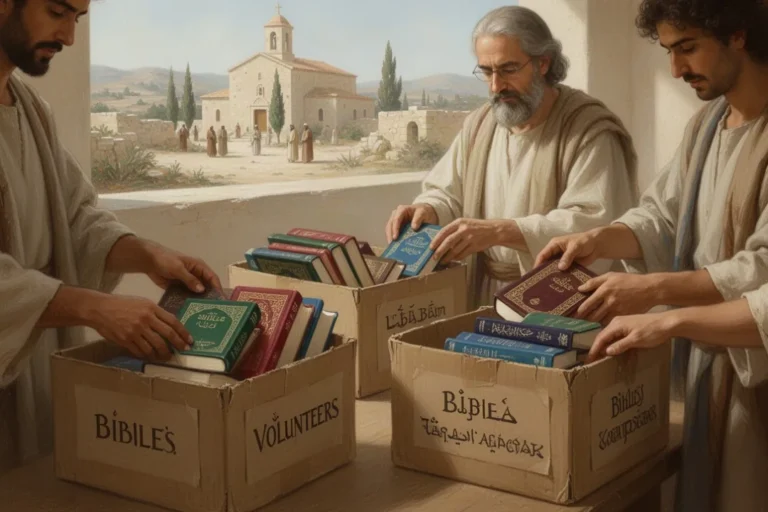
Preparation may include sorting by language, labeling boxes, checking quantities, and packing books to prevent moisture damage. Some organizations add a simple note explaining where recipients can find a church, reading group, or digital resource. Notes should be welcoming rather than demanding.
Deliver through trusted local partners
Local partners understand the community’s customs, transportation challenges, language preferences, and safety concerns. They can distribute copies in a way that avoids duplication and provides an opportunity for questions. A partner should receive clear expectations about consent, privacy, and reporting.
Follow up without pressuring recipients
Follow-up may involve a Bible study, reading guide, pastoral conversation, or help finding a local congregation. It should not require payment, public testimony, conversion, or participation in another activity as a condition of receiving a Bible. Recipients need room to decide how, when, and whether they want to continue.
Practical safeguard: When distributing through a school, hospital, prison, shelter, or disaster site, get permission from the responsible authority and follow the organization’s rules before bringing materials.
Ways to donate Bibles or fund distribution
Financial donations are often the most flexible form of support. They allow a ministry to purchase the right language and format, pay for transportation, and respond to urgent requests. A donor can ask whether funds are restricted to printing, shipping, translation, local outreach, or general operations.
Donating unused Bibles can also help, but physical books are not automatically useful. A ministry may have too many copies in a translation that is no longer used, while lacking large-print, multilingual, or children’s editions. Contact the recipient organization before sending boxes.
Give directly to a vetted Bible organization: Review its mission, financial information, and distribution practices.
Support a local church program: Ask how the church identifies recipients and handles unused copies.
Fund a specific need: Contribute toward large-print, audio, bilingual, or institution-approved Bibles.
Organize a collection: Gather requested editions rather than accepting every available book.
Cover shipping or storage: Logistics can be a major part of a distribution project.
Volunteer time: Help sort, pack, translate, transport, or lead reading groups when qualified.
Provide professional skills: Graphic design, accounting, language work, accessibility expertise, and logistics planning can strengthen a program.
Before donating, look for clear answers about how money and materials are used. A trustworthy organization can explain its distribution model, local partnerships, privacy practices, and method for measuring whether copies reach their intended recipients.
How to request free or low-cost Bibles
If you need Bibles for yourself or a group, begin with nearby Christian communities. Many churches keep extra copies or can connect you with a regional ministry. You can also contact Bible societies, denominational resource centers, prison ministries, hospital chaplaincies, and Christian bookstores that know about community programs.
Make your request specific. Explain the number of copies, language, translation, format, audience, location, and timing. If the copies are for a school, prison, shelter, or international shipment, mention any approval requirements before the organization commits resources.
Identify the readers: Describe their age range, language, reading ability, and setting.
Choose the format: Decide whether full Bibles, New Testaments, large print, audio, or children’s editions fit the need.
Contact several appropriate sources: Ask local churches and established ministries what they can provide.
Confirm costs: Clarify whether the books are free and who pays shipping, customs, storage, or delivery fees.
Plan distribution: Decide when, where, and by whom the copies will be offered.
Report responsibly: Share basic results without exposing recipients’ private information.
Some programs cannot meet every request, particularly for large quantities or uncommon languages. If that happens, ask whether the organization can recommend another provider. A clear explanation is more useful than a promise that cannot be fulfilled.
Common Christian Bible distribution mistakes to avoid
Good intentions do not remove practical or ethical problems. Distribution can waste money, create tension, or put recipients at risk when organizers skip local consultation. The following mistakes are common and preventable.
Ordering before confirming demand: Large shipments can leave organizations with unsuitable surplus.
Ignoring language preferences: A book is not accessible if recipients cannot comfortably read it.
Assuming all Christians use the same translation: Churches and communities may have different traditions.
Distributing without permission: Schools, hospitals, prisons, shelters, and private properties have their own policies.
Using a high-pressure approach: Recipients should not feel that assistance depends on prayer, conversion, or public participation.
Overlooking accessibility: Standard print excludes people who need audio, Braille, large print, or digital compatibility.
Sending damaged or outdated materials: Torn, moldy, or incomplete books should not be passed on as gifts.
Failing to budget for logistics: Shipping, storage, customs, and local transport can cost more than expected.
Sharing recipient information carelessly: Names, photographs, locations, and personal stories require consent.
Measuring only the number distributed: Counts do not show whether people received suitable copies or found ongoing support.
Another mistake is treating distribution as a substitute for relationships. Giving someone a book may be meaningful, but a person may also need help finding a church, understanding unfamiliar language, or asking questions. A respectful program offers support without assuming what every recipient believes or needs next.
Ethical and cultural standards for responsible distribution
Christian Bible distribution should respect freedom of conscience, local leadership, and personal dignity. People should know what they are being offered and should be free to decline. This is especially important when recipients depend on an organization for food, housing, medical care, education, or legal assistance.
Local Christians should have a meaningful role in planning and delivery. Outside groups may provide funding or supplies, but local leaders often understand which translations are trusted, which communities are underserved, and which approaches could cause confusion. Collaboration also makes distribution more sustainable after a short-term campaign ends.
Privacy is another central concern. Do not publish identifiable photographs or testimonies simply to demonstrate impact. Obtain informed permission, avoid exposing people in vulnerable circumstances, and use anonymous reporting when possible.
Cultural sensitivity includes more than translating words. Cover design, illustrations, clothing, names, study notes, and assumptions about family life can affect how a Bible is received. A partner who lives in the community can identify problems before materials are printed or shipped.
“Let all things be done decently and in order.” — 1 Corinthians 14:40
This passage is commonly understood as a reminder that Christian service should be orderly and considerate. Applied to Bible distribution, it supports careful planning, respectful conduct, and attention to the people being served rather than focusing only on activity totals.
Digital and audio Bible distribution
Printed Bibles remain valuable, especially where internet access is limited or people want a permanent book. Digital resources, however, can make Scripture available quickly and in many languages. They may be useful for travelers, students, people with limited storage space, and readers who prefer adjustable text.
Audio distribution can serve people with visual impairments, limited literacy, or demanding work schedules. Offline audio files may be more practical than streaming where mobile data is expensive or unreliable. A responsible provider should explain how files are accessed and whether users need a particular app or device.
Digital distribution raises its own questions. Check that the provider has permission to offer the translation, protects user data, and does not require unnecessary personal information. A download link should be accessible and safe rather than directing users through unclear advertising or aggressive registration.
Printed copies: Work well for long-term ownership, group reading, and locations with limited connectivity.
Mobile apps: Offer search, bookmarks, adjustable text, and multiple translations.
Web access: Helps people read without storing files, but depends on an internet connection.
Audio files: Support listening, accessibility, and oral learning.
Offline resources: Serve communities where connectivity is intermittent or costly.
The strongest programs may combine formats. For example, a church could provide printed copies for worship, audio options for people with disabilities, and a digital resource for commuters. The purpose is not to replace one method with another, but to remove barriers to access.
How to evaluate a Bible distribution organization
Before donating or partnering, review the organization’s public information and ask direct questions. A reputable group should be able to describe its purpose, leadership, funding, distribution areas, and relationship with local churches or community organizations.
Look for specific, verifiable explanations rather than broad claims. The organization should say what types of Bibles it provides, who receives them, how it handles personal information, and how it reports results. It should also distinguish between money spent on books, transportation, staff, administration, and fundraising.
Does the organization explain its distribution process clearly?
Does it work with local partners instead of imposing an outside plan?
Can it provide the requested language and format?
Does it follow copyright and licensing requirements?
Does it have safeguards for children and vulnerable adults?
Does it respect people who decline religious materials?
Does it report honestly when a project changes or falls short?
Does it protect recipient names, images, and personal stories?
Do not assume that a polished website proves responsible practice, and do not reject a small local ministry simply because it has fewer resources. Ask for enough information to make a reasonable decision. A transparent organization will welcome thoughtful questions about stewardship and conduct.
How to organize a church Bible distribution project
A church can begin with a modest project focused on a clearly defined group. Appoint one coordinator, confirm the need with a local partner, and establish a written budget. Include costs for books, transportation, storage, packaging, accessibility needs, and follow-up materials.
Set a collection policy before asking members to donate. Specify the acceptable translation, condition, format, and delivery date. This prevents volunteers from spending time sorting unusable books and helps donors give items that are genuinely needed.
Train volunteers in respectful communication. They should know how to offer a Bible without pressure, answer basic logistical questions, refer theological questions to a qualified leader, and protect private information. If children are involved, follow the church’s child-safety procedures and ensure appropriate adult supervision.
After the project, review what happened. Record the number and type of copies delivered, but also ask the partner whether the format was suitable, whether demand changed, and what should be improved. Use that feedback to plan the next distribution rather than repeating the same assumptions.
Finding a suitable next step
If you want to receive a Bible, contact a nearby church and state exactly what you need. If you want to donate, ask an established ministry whether it prefers funds, specific editions, volunteer help, or logistical support. If you are planning a larger project, begin with a local partner and a written assessment of the community’s needs.
The most effective Christian Bible distribution combines access with care. Suitable materials, lawful sourcing, permission, local knowledge, privacy protection, and voluntary participation all help ensure that the people receiving Bibles are treated with respect and that donated resources accomplish a useful purpose.
Frequently asked questions
Can I send used Bibles to a Christian distribution ministry?
Sometimes, but contact the ministry first. Many programs accept clean, complete copies in requested translations, while others cannot use mixed or outdated editions. Ask about condition, language, shipping, and whether local recipients actually need used books. Donating funds may be more helpful when transportation, accessibility, or specialized formats are the main priorities.
Are free Bibles available for individuals?
Free or low-cost Bibles may be available through local churches, chaplaincies, Bible societies, campus ministries, and community outreach groups. Tell the organization your preferred language, translation, and format. Availability varies by location and supply, so a church may provide a copy directly or refer you to another ministry that can meet your request.
How can a business support Bible distribution responsibly?
A business can fund a clearly defined request, sponsor accessible editions, provide warehouse or shipping help, or offer professional services such as accounting and translation. Work through a transparent organization, respect copyright, and avoid tying assistance to purchases or religious participation. Written goals and basic reporting can help everyone understand how the contribution is used.
Is digital Bible distribution as useful as printed distribution?
Digital resources are valuable for people with reliable devices, internet access, or a preference for audio and adjustable text. Printed copies remain more dependable in places with limited connectivity and are often easier to share in groups. The best option depends on the reader’s language, accessibility needs, technology, privacy concerns, and ability to keep the resource available.






Leave a Reply