Jeremiah 29:11 is a message of hope from God to the Jewish exiles in Babylon. It assures them that God had not abandoned them and that their future remained in his care, even though restoration would take time. The verse points to peace, hope, and a future, but it does not promise immediate success or a trouble-free life.
Many people turn to this passage during uncertainty, grief, career changes, or major decisions. Its encouragement becomes clearer when you read it with the surrounding verses: God told the exiles to build homes, raise families, seek the welfare of Babylon, and wait faithfully for the time when he would bring them home.
Jeremiah 29 is a letter from the prophet Jeremiah to the people of Judah who had been taken from Jerusalem to Babylon. Their exile was painful and disruptive. They had lost their homeland, their political independence, and the familiar center of their worship. Many would have wondered whether God had rejected them permanently.
God’s message addressed that fear. Through Jeremiah, he told the exiles that their situation was not the end of their story. He knew the plans he had for them, and those plans were directed toward their welfare rather than destruction. He promised a future and hope, although the people would need to wait through a long period of displacement.
The passage therefore combines comfort with patience. It does not say that every individual desire would be fulfilled on a preferred schedule. It says that God remained faithful to his covenant people and was working toward their eventual restoration.
Central idea: Jeremiah 29:11 reassures you that hardship does not mean God has abandoned you, while the surrounding passage teaches that his purposes may unfold more slowly and differently than you expect.
How Jeremiah 29:11 fits with the verses around it
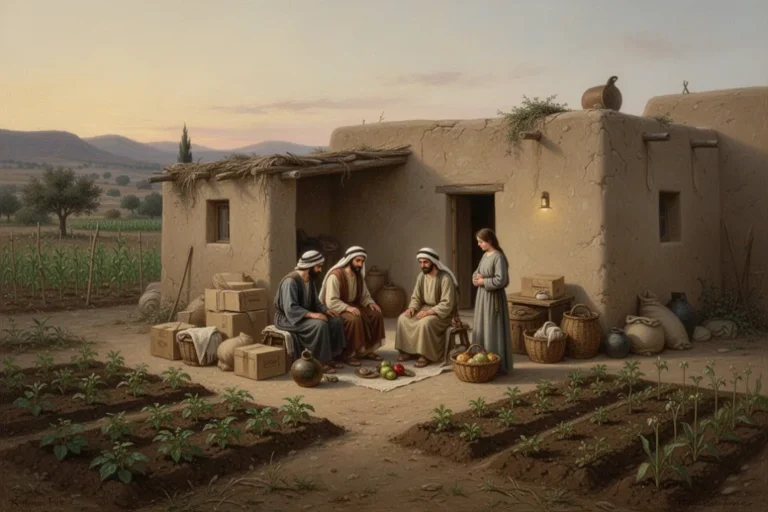
Verse 11 is often read by itself, but the surrounding instructions provide essential context. In the earlier part of the letter, God tells the exiles to settle in Babylon, build houses, plant gardens, marry, and raise children. He also tells them to seek the peace and prosperity of the city where they live.
That instruction would have sounded surprising. Babylon was the power that had conquered Judah and carried its people away. Yet God did not tell the exiles to stop living, caring for their families, or serving their neighbors. He called them to practice faithful living even in an unwanted place.
Jeremiah 29 also warns the people not to believe prophets who promised a quick return. The false message offered a shorter and more comfortable timeline than God had given. The authentic message required them to accept that waiting was part of God’s plan.
Later in the chapter, God promises to hear his people when they call to him and to restore them after the appointed period of exile. The hope of verse 11 is therefore connected to prayer, perseverance, community responsibility, and eventual restoration.
Settle faithfully: Make a meaningful life where you are instead of treating the present as worthless.
Serve others: Seek the good of the wider community, even during personal hardship.
Reject false urgency: Do not assume every promise of immediate relief comes from God.
Keep praying: Bring your fears and hopes to God while you wait.
Trust the long view: God’s purpose may extend beyond the timeline you would choose.
What “plans for peace” means in Jeremiah 29:11
English translations use slightly different wording for the idea often rendered as “plans for peace” or “plans for welfare.” The underlying sense is broader than comfort or material success. It describes God’s intention to care for his people and move them toward wholeness rather than ruin.
This does not mean the exiles would avoid difficulty. They were already living with loss, uncertainty, and the consequences of national disaster. God’s good purpose existed within a difficult season, not only after every problem had disappeared.
The same distinction matters when you apply the verse today. God’s care may involve strength to endure, wisdom for a decision, reconciliation, faithful relationships, or a deeper dependence on him. A hopeful future is not always identical to financial gain, professional advancement, physical healing, or a particular relationship.
Jeremiah 29:11 gives hope without reducing hope to personal convenience. It directs attention toward God’s character and faithfulness rather than treating the verse as a guarantee that every preferred outcome will happen.
Why Jeremiah 29:11 does not promise immediate success
The people who first received this promise had to wait for the exile to end. The chapter describes a period long enough for families and communities to establish roots. Some of the original hearers would not live to see the return themselves. That fact prevents a shallow reading in which the verse guarantees quick relief.
God’s promise was real, but its timing was longer than many people wanted. The exiles were asked to remain faithful in ordinary responsibilities while they waited. They were not told to put their lives on hold until the promised future arrived.
For a modern reader, this can change how the verse is used. You may pray for a new job, recovery, a restored marriage, or an answer to a major question. Jeremiah 29:11 can support hope, but it should not be used to predict a specific result or date.
A careful response sounds like this: “God has not abandoned me, and I can trust his purposes even while I do not know the outcome.” That conviction is stronger and more honest than claiming that every disappointment must soon turn into the exact blessing you imagined.
How to apply Jeremiah 29:11 during a difficult season
The passage offers practical guidance for seasons when your circumstances feel temporary, unfair, or confusing. Its message is not passive optimism. The exiles were told to take responsible action, contribute to their community, and continue seeking God while they waited.
You can apply that pattern in several ways. Care for the responsibilities already in front of you. Invest in relationships instead of withdrawing completely. Make wise plans without assuming you control the outcome. Pray honestly, and seek counsel from people whose lives show patience and integrity.
It can also help to separate hope in God from confidence in one particular scenario. You may hope for healing while remaining open to the support and wisdom needed if healing takes longer. You may pursue a goal while accepting that a different opportunity could better serve your long-term good.
Name the hardship clearly. Avoid pretending that pain is insignificant or that faith requires denying reality.
Identify your present responsibilities. Ask what needs your attention today: family care, work, health, prayer, finances, or service.
Choose faithful actions. Take practical steps that reflect wisdom rather than panic or wishful thinking.
Limit predictions. Let the verse give you confidence in God without turning it into a forecast about a specific event.
Build patient support. Share your situation with trusted people who can pray, listen, and offer grounded advice.
Review your hope regularly. Ask whether you are trusting God’s presence or only demanding one particular outcome.
Common mistakes when quoting Jeremiah 29:11
Jeremiah 29:11 is often printed on graduation cards, wall art, and encouragement notes. Using it to encourage someone is not wrong, but the verse can lose its depth when the historical setting is ignored. Several common mistakes make the message sound more certain or more individualistic than the passage itself.
Removing the exile: The promise was given to a displaced community, not originally as a private guarantee of personal achievement.
Promising a painless life: The exiles still endured a long and difficult period after receiving the message.
Guaranteeing a chosen outcome: The verse does not identify a particular job, spouse, house, grade, or financial result.
Using “purpose” as pressure: Someone in grief may need compassion more than a demand to discover a grand plan immediately.
Ignoring patient faithfulness: The surrounding verses call people to work, serve, pray, and wait rather than simply expect a sudden change.
Applying the promise carelessly: Christians should distinguish the original promise to the exiles from broader biblical truths about God’s care for his people.
A more responsible use is to acknowledge both sides of the passage: God’s purpose is hopeful, and the path may include uncertainty, delay, sacrifice, and responsibilities that cannot be skipped.
Waiting in this chapter is not empty time. God tells the exiles to build, plant, marry, raise children, and seek the welfare of their city. Their lives still matter before the promised restoration arrives. They are not required to know every detail of the future before acting faithfully in the present.
That principle can help when you feel suspended between what has ended and what comes next. A waiting season may include ordinary work, medical appointments, difficult conversations, learning, budgeting, parenting, or caring for someone else. These activities can seem unrelated to a larger purpose, but the passage treats everyday faithfulness as significant.
Waiting also tests the voices you trust. Jeremiah’s audience heard confident predictions that the exile would end quickly. The chapter reminds readers that certainty is not the same as truth. If someone uses the verse to sell guaranteed success or to set an exact timetable for your life, caution is appropriate.
Hope in Jeremiah 29:11 is not permission to ignore the present; it is a reason to live faithfully in the present while trusting God with the future.
How Christians can read the verse without ignoring its historical audience
Christians often read Old Testament promises in light of the whole Bible, but responsible interpretation begins by asking what a passage meant to its first hearers. Jeremiah 29:11 first addressed Judah’s exiles as a people. It was tied to their covenant story, their judgment, and God’s promise to restore them to their land.
That historical meaning should not be erased. At the same time, the passage reveals enduring truths about God: he remains attentive to his people, he can sustain them through displacement, and his purposes are not defeated by present circumstances. Those truths can shape Christian faith without turning the verse into a personal contract for unlimited prosperity.
Other biblical passages add balance. Jesus teaches his followers to expect trouble in the world while trusting his presence, and the New Testament repeatedly connects hope with endurance. Romans 8 speaks about God working for good within the lives of those who love him, while James 1 connects trials with perseverance. These passages also require careful reading and do not promise that every event will feel good.
Reading Jeremiah 29:11 alongside the wider biblical story produces a steadier kind of hope. You can trust God’s goodness, pray for real needs, pursue wise action, and admit that you do not know precisely how a situation will unfold.
How to use Jeremiah 29:11 when comforting someone else
The verse can be meaningful in a note, prayer, or conversation, especially when someone needs reassurance that hardship has not made them forgotten. The way you present it matters. Start by listening to the person’s actual situation rather than immediately applying a promise to it.
Someone who has lost a loved one may not need to hear that a better opportunity is coming. A person facing infertility, illness, unemployment, or divorce may find a confident prediction painful if the promised outcome does not occur. Compassion leaves room for lament, questions, and uncertainty.
You might say that Jeremiah 29:11 reminds you that God has not abandoned them and that their present circumstances do not define the whole of their future. Then offer practical help: a meal, transportation, childcare, a listening ear, or prayer. Hope becomes more credible when it is accompanied by faithful presence.
When writing the reference in a card or message, consider adding its context. Explain that the original audience was living in exile and was told to keep building a life while waiting for restoration. This makes the verse more than a slogan; it becomes an invitation to endure with trust and practical faithfulness.
Personal study becomes more useful when you ask questions that connect the verse with its context and your own situation. Read the full chapter, compare a few reliable Bible translations, and pay attention to who is speaking, who is listening, and what actions are commanded.
What circumstances led the people into exile?
What did God ask them to do while they waited?
Which nearby verses explain the meaning of peace, hope, and restoration?
Am I treating the verse as a promise about God’s character or as a guarantee of my preferred result?
What faithful responsibility is in front of me today?
Where do I need patience, wise counsel, or practical support?
These questions help keep the passage connected to real life. They also protect you from using one encouraging sentence as a shortcut around the harder work of prayer, discernment, responsibility, and endurance.
What hope Jeremiah 29:11 can offer today
Jeremiah 29:11 speaks powerfully to people who feel displaced, delayed, or unsure of what comes next. Its first audience had lost control over their circumstances, yet God told them that their future was not outside his knowledge. That assurance can steady you when plans change or when the next step is unclear.
The verse does not answer every question. It does not explain why a particular loss occurred, identify the exact timing of relief, or remove the need for wise action. Its strength lies elsewhere: it directs you toward a God whose purposes are ultimately for the good of his people and whose faithfulness continues through seasons of waiting.
A grounded way to pray: Ask God for courage to handle today’s responsibilities, patience for the future you cannot control, wisdom to recognize sound guidance, and trust that your hardship is not the final word.
Read in context, Jeremiah 29:11 offers more than a promise of personal success. It offers hope with roots: hope shaped by God’s faithfulness, tested by delay, expressed through service, and sustained through prayer. That is why the verse continues to speak to people who are waiting for restoration while trying to live faithfully where they are.
Frequently asked questions
Is Jeremiah 29:11 a promise that everything will work out exactly as I want?
No. The verse promises God’s hopeful purpose for his people, not every individual outcome or preferred timeline. Its first audience faced years of exile before restoration. You can use it to trust God’s care and future without assuming that a specific job, relationship, healing, or financial result is guaranteed.
Who was Jeremiah 29:11 originally written for?
Jeremiah 29:11 was written for the Jewish people from Judah who had been taken into exile in Babylon. God told them to establish ordinary lives, seek the good of the city where they lived, and wait for his timing. The immediate promise concerned their community’s eventual restoration after exile.
What should I read with Jeremiah 29:11?
Read at least Jeremiah 29:1-14, since the surrounding verses explain the audience, circumstances, waiting period, and practical instructions. Jeremiah 29:10 is especially relevant because it connects the hope of verse 11 with God’s promise to visit and restore the exiles at the appointed time.
Can I use Jeremiah 29:11 to encourage someone who is grieving?
Yes, but use it gently and avoid promising a specific outcome. Acknowledge the person’s pain first, then explain that the passage shows God has not abandoned people in hardship. Offer presence and practical help alongside the reference, rather than using the verse to dismiss grief or pressure someone to feel hopeful immediately.







Leave a Reply