Bible stories for adults: 12 profound stories to read
Bible stories for adults: 12 profound stories to read
The best Bible stories for adults are not only about ancient miracles or heroic victories. They explore grief, ambition, betrayal, forgiveness, injustice, marriage, leadership, doubt, and the difficult choices people make under pressure.
Start with stories such as Joseph and his brothers, David and Bathsheba, Job, the Good Samaritan, and the Prodigal Son. Read the surrounding chapters, pay attention to the characters’ motives, and ask what the story reveals about God, human behavior, and your own decisions.
Children often encounter Bible stories as clear accounts of good people overcoming bad people. Adults usually notice something more complicated: faithful people can make serious mistakes, innocent people can suffer, and a decision that seems wise in the moment can create consequences for years.
The Bible includes family conflicts, political struggles, economic hardship, moral failure, and spiritual uncertainty. Its characters are rarely presented as flawless examples. Abraham lies to protect himself, Moses hesitates, David abuses power, Jonah resents mercy, Peter denies Jesus, and Martha struggles with anxiety while trying to serve others.
That complexity makes the stories useful for mature reflection. You can read them as religious teaching, historical and literary narratives, or mirrors for questions you already face. A story may challenge your beliefs while still giving you language for fear, hope, responsibility, or reconciliation.
Reading tip: Do not reduce every story to one simple moral. Ask what each major character wants, what they fear, what they misunderstand, and how the consequences unfold.
Twelve Bible stories for adults to read first
The following selection covers a broad range of human experiences. The references identify the main passages; reading a few chapters before and after them will often clarify the setting and the characters’ choices.
Joseph and his brothers — Genesis 37–50: family resentment, trauma, power, and the slow work of forgiveness.
Ruth and Naomi — Ruth 1–4: grief, loyalty, migration, survival, and unexpected belonging.
David and Bathsheba — 2 Samuel 11–12: power, sexual exploitation, denial, and accountability.
Elijah at Mount Carmel and in the wilderness — 1 Kings 18–19: public courage followed by exhaustion, fear, and recovery.
Job — Job 1–42: suffering, simplistic explanations, protest, and the limits of human certainty.
Jonah — Jonah 1–4: resentment, prejudice, reluctant obedience, and compassion for people we dislike.
The Good Samaritan — Luke 10:25–37: neighborliness, social boundaries, and practical mercy.
The Prodigal Son — Luke 15:11–32: shame, resentment, family identity, and the cost of restoration.
Zacchaeus — Luke 19:1–10: public reputation, wealth, repentance, and changed priorities.
Jesus in Gethsemane — Matthew 26:36–46: dread, loneliness, prayer, and moral courage.
Peter’s denial and restoration — Luke 22:54–62; John 21:15–19: failure, grief, forgiveness, and renewed responsibility.
Paul and Philemon — Philemon; related context in Acts: faith, social power, reconciliation, and the challenge of changed relationships.
How to read a Bible story with adult understanding
A thoughtful reading does not require advanced theological training. A simple process helps you move beyond asking only, “What lesson should I learn?” and toward understanding the story as a whole.
Read the complete scene. Include the verses before and after the familiar part. A famous encounter may look different when you see the conflict that led to it and the consequences that followed.
Identify the people with power. Ask who can make decisions, control resources, influence public opinion, or harm someone else. Power often explains actions that seem confusing at first.
Notice what remains unsaid. Silence, missing information, repeated phrases, and abrupt changes can reveal tension. Do not assume that the narrator approves of every action described.
Separate description from approval. Biblical narratives often report violence, deception, jealousy, or injustice without presenting those actions as models to copy.
Track the consequences. Look for immediate results and longer-term effects on families, communities, and faith. A choice may solve one problem while creating another.
Compare the story with its larger biblical setting. Themes such as mercy, justice, covenant, humility, and care for outsiders appear across many books rather than in only one passage.
Apply the story carefully. Ask what principle transfers to your life and what belongs specifically to the ancient setting. Application should be thoughtful, not forced.
Joseph and his brothers: what forgiveness does and does not erase
Joseph’s story begins with family favoritism and resentment. His brothers sell him into slavery, deceive their father, and assume the problem is gone. Years later, Joseph rises to authority in Egypt during a famine, while his brothers arrive seeking food without recognizing him.
Adults may recognize several layers in this narrative: childhood trauma, family systems, survival under oppression, and the temptation to use power against people who once caused harm. Joseph has the ability to punish his brothers, but he does not immediately offer easy reconciliation. He tests them and creates situations that reveal whether they have changed.
The story does not claim that the betrayal was good or necessary. Joseph eventually interprets his survival within a wider providential purpose, but that belief does not make slavery acceptable or remove the pain. The distinction matters: finding meaning in suffering is different from calling the original harm righteous.
Read Genesis 42–45 for the gradual recognition scene, then continue through Genesis 50. Pay attention to Judah’s changed behavior and to the family’s difficult movement from concealment toward truth. Forgiveness here involves honesty, changed conduct, and a new relationship with boundaries—not pretending the past never happened.
Ruth and Naomi: loyalty during grief and displacement
Ruth opens with loss. Naomi becomes widowed and loses her sons, leaving her vulnerable in a society where family support was closely tied to survival. Ruth, also widowed and from a foreign people, chooses to remain with Naomi rather than return to a more familiar life.
The story is often remembered as a romance because Ruth later meets Boaz. Its emotional center, however, is the bond between two women facing economic insecurity. Ruth works to gather leftover grain, Naomi plans for their future, and Boaz uses his social and legal position to provide protection.
For adult readers, Ruth raises questions about migration, caregiving, widowhood, and the risks taken by people with few resources. Ruth’s loyalty is not sentimental. She enters an uncertain country, adopts a new community, and works within limits she did not choose.
The book also challenges narrow ideas about who belongs. Ruth is a Moabite, yet she becomes part of Israel’s story and family line. Read the entire four-chapter book in one sitting if possible. Its compact structure makes it easier to observe how ordinary acts of generosity shape a family’s future.
David and Bathsheba: power, abuse, and accountability
David and Bathsheba’s story in 2 Samuel 11–12 should not be described as a simple affair between two equal partners. David is the king. He sees Bathsheba, summons her, sleeps with her, and then arranges for her husband Uriah to be placed in deadly military danger when the pregnancy becomes known.
The narrative exposes the connection between unchecked authority and moral self-deception. David can command soldiers, control information, and shape the official story. Nathan’s confrontation forces him to see the injustice through a parable about a wealthy man taking a poor man’s beloved lamb.
Adults should resist interpretations that place equal blame on Bathsheba for being seen or summoned. The text centers David’s misuse of power. It also does not present repentance as a way to escape every consequence. David admits wrongdoing, yet violence and instability continue within his household and kingdom.
This story is especially relevant when reading accounts of leaders, supervisors, clergy, celebrities, or family members who have influence over others. A private apology may be sincere, but accountability also requires truth, protection for those harmed, and structural limits on future abuse.
Job: suffering without easy explanations
Job is one of the strongest choices for adults who have experienced serious loss or who are tired of shallow answers about suffering. Job is portrayed as a righteous man whose life collapses through a series of disasters. His friends insist that suffering must prove he has committed some hidden sin.
Job refuses their explanation. He grieves openly, questions God, and insists that his experience cannot be explained by a neat formula. His speeches show that lament can be an expression of faith, because he continues addressing God rather than treating the relationship as irrelevant.
The book does not give readers a complete reason for every tragedy. Its opening chapters provide a frame, but Job himself does not receive that explanation. When God speaks near the end, the response emphasizes the vastness and complexity of creation rather than offering a tidy defense.
That can feel unsatisfying, but it is also a warning against confident judgments about another person’s pain. Job’s friends speak at length and are eventually criticized for misrepresenting God. When someone suffers, presence and compassion are often more faithful than speculation.
For difficult experiences: Never use Job to tell a grieving person that suffering is secretly a lesson, punishment, or proof of weak faith. The book gives space for protest and rejects simplistic explanations.
Jonah: when compassion reaches people you resent
Jonah is sent to warn Nineveh, a city associated with violence and hostility toward Israel. Instead of going, he flees by sea. After a storm and a dramatic rescue, Jonah eventually delivers the message, and the city responds with repentance.
The surprising conflict comes afterward. Jonah is angry that God shows mercy to Nineveh. He would rather see his enemies judged than forgiven. The story ends with God questioning Jonah’s narrow concern for his own comfort while the city contains a great number of people and animals.
Adults can read Jonah as a story about moral tribalism. We may want justice for people who harm our community, yet mercy for ourselves. We may support compassion in theory but resist it when the recipient is a political opponent, an abusive institution, or a group we fear.
Jonah is also a short, sharply structured book with humor and irony, although its message is serious. The prophet is not condemned because he cares about justice. He is challenged because he wants compassion to stop at the boundary of his own group.
The Good Samaritan: turning compassion into action
In Luke 10, a religious law expert asks Jesus what must be done to inherit eternal life and then asks who qualifies as a neighbor. Jesus answers with a story about a wounded traveler who is ignored by a priest and a Levite but helped by a Samaritan.
The Samaritan belongs to a group viewed with suspicion and hostility by many Jewish listeners. That makes the story more demanding than a general instruction to be kind. It asks whether the person you distrust can become an example of faithful action, and whether your definition of neighbor is too narrow.
The helper does more than feel sympathy. He approaches the injured man, treats his wounds, transports him to an inn, pays for care, and promises to cover further expenses. Compassion becomes visible through time, money, risk, and practical attention.
The story does not require you to place yourself in danger without limits or to solve every crisis alone. It does challenge indifference. In modern life, that may mean calling emergency services, supporting a shelter, reporting abuse, accompanying a vulnerable neighbor, or refusing to treat another person’s suffering as an inconvenience.
The Prodigal Son: shame, resentment, and unequal forgiveness
Jesus’ story in Luke 15 is commonly called the Prodigal Son, but the older brother deserves equal attention. The younger son demands his inheritance, leaves home, wastes the money, and returns when he has reached desperation. The father welcomes him with celebration instead of requiring a public performance of shame.
The older brother is furious. He has remained home and worked faithfully, yet he feels overlooked when his irresponsible sibling receives a feast. His anger exposes a different form of distance from the father: obedience has become a record of debts owed to him.
The story explores two kinds of alienation. One person leaves physically and returns; the other stays physically but becomes emotionally separated by resentment. The father goes out to both sons, showing that restoration is not limited to those who have made obvious mistakes.
Adults may connect with the story through family estrangement, addiction, unequal treatment, or the difficulty of rebuilding trust. Welcome does not automatically restore every privilege or erase every consequence. The parable focuses on the father’s expansive mercy while leaving the older brother’s response unresolved.
Zacchaeus: repentance that changes financial behavior
Zacchaeus is introduced in Luke 19 as a chief tax collector and a wealthy man. His profession places him within a system that many people regarded as exploitative, and his wealth gives him status despite public contempt. He climbs a tree to see Jesus, who then chooses to stay at his house.
The encounter produces a public response. Zacchaeus promises to give a substantial portion of his possessions to the poor and to repay anyone he has defrauded with more than he took. The story presents repentance as reordered priorities and concrete restitution, not merely private regret.
That emphasis matters for adults because religious language can become a substitute for changed conduct. A person who has harmed others may need to return money, accept oversight, disclose the truth, or give up access to positions that enabled the harm.
The passage does not provide a detailed legal program for every situation. It does show that spiritual transformation reaches habits involving wealth, reputation, and power. Zacchaeus does not simply say that he feels different; he describes what he will do differently.
Jesus in Gethsemane: fear, prayer, and moral courage
Before his arrest, Jesus goes to Gethsemane with his disciples. The Gospel accounts describe intense distress, repeated prayer, and the disciples’ inability to remain awake with him. Jesus faces suffering he does not desire, yet he continues toward the responsibilities he understands as his mission.
This scene is valuable for adults who assume that courage means feeling no fear. Jesus’ courage includes honest emotional resistance. He does not disguise dread as calm certainty or shame his disciples for failing to offer perfect support.
The scene also avoids romanticizing suffering. Jesus asks whether the cup before him can be removed. His eventual acceptance is not an argument that every painful situation should simply be endured. People facing domestic abuse, exploitation, or preventable danger should seek protection and help rather than treating harm as spiritually required.
Read Gethsemane alongside the arrest and crucifixion accounts. The movement from private prayer to public action shows how inner honesty can coexist with outward responsibility. Prayer does not eliminate anguish, but it can clarify what a person is willing to do and what must be entrusted beyond personal control.
Peter’s denial and restoration: failure does not have the last word
Peter confidently promises loyalty to Jesus, but during the arrest and trial he denies knowing him. The denials are followed by recognition, grief, and a painful awareness that his confidence exceeded his courage.
In John 21, the risen Jesus asks Peter three times whether he loves him. The repeated questions echo the three denials, but the exchange is not designed merely to humiliate Peter. Jesus gives him responsibility for caring for others, turning a history of failure into a setting for renewed service.
The story distinguishes forgiveness from pretending nothing happened. Peter’s failure is remembered, yet it does not permanently define his usefulness. Restoration includes truth, grief, and a new assignment rather than a return to untested confidence.
This pattern can help adults think about recovery after betrayal, professional mistakes, addiction, or public shame. Rebuilding trust takes time and evidence. A person may be forgiven while still needing training, supervision, or limits that protect others.
Philemon: reconciliation under unequal power
Philemon is a brief New Testament letter connected with Onesimus, who is described in the context of an enslaving household. Paul appeals to Philemon regarding Onesimus and asks him to receive this person as a beloved brother rather than treating him according to the old social relationship.
The letter requires careful reading because it comes from a world shaped by slavery and unequal legal status. It should not be used to minimize the violence of enslavement or to demand that harmed people return to unsafe relationships. Its language about changed identity raises questions about what faith requires when an existing social arrangement dehumanizes someone.
Paul appeals rather than simply commands, which makes the letter complex. The reader must consider who bears risk, who has authority, and what genuine reconciliation would require. A modern application should include freedom, safety, restitution, and the dismantling of abusive control—not only polite personal feelings.
Philemon is useful for workplaces, churches, and families where people speak warmly about unity while avoiding unequal treatment. Reconciliation becomes credible when the person with greater power accepts real costs and changes the relationship in practice.
Questions that reveal deeper meaning in any Bible story
Some stories are familiar enough that readers rush through them. Focused questions slow the reading and help you notice details that a standard moral summary can miss.
What problem does each character think they are solving? A harmful action may begin with fear, ambition, loyalty, or a desire for control.
Who is vulnerable, and who is protected? Look beyond the central hero to servants, children, widows, foreigners, the poor, and people whose voices are limited.
Where does someone refuse to tell the truth? Deception often shapes the plot long before the consequences appear.
What does the story criticize? The target may be pride, religious performance, economic exploitation, tribal hostility, or false certainty.
What kind of change occurs? Is it emotional, financial, relational, political, or spiritual? Strong applications identify the actual change rather than using vague language.
What remains unresolved? Not every story provides a complete repair. Unresolved tension may be part of the message.
Ways to use Bible stories for personal or group study
For personal reading, choose one story and spend several days with it rather than reading a long list quickly. On the first reading, follow the plot. On the second, mark repeated words and changes in mood. On the third, write down one assumption the story challenges.
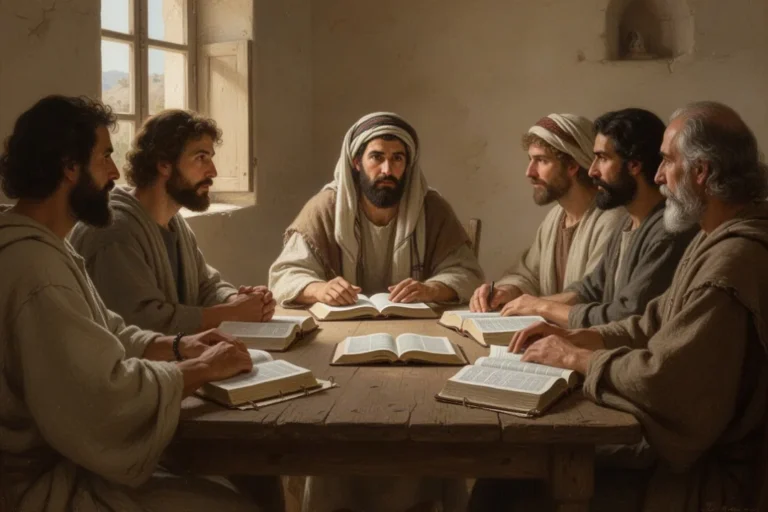
A small group can divide a story into scenes and ask each person to describe what they observe before discussing application. This keeps the conversation grounded in the passage. It also gives room for different responses, especially when the story involves suffering, injustice, or family conflict.
These practices make study more focused:
Read in two translations if you have access to them, especially when a sentence feels unclear. Compare meaning rather than treating every wording difference as a contradiction.
Use cross-references carefully. Related passages can add context, but do not let a familiar verse erase the specific tension of the story you are reading.
Write a one-sentence observation before writing a personal application. For example: “David controls the information and the people around him.”
Name the limits of your application. A modern reader can learn from Ruth without assuming every widowed person should make the same choices she made.
Pair reflection with action. If a story confronts greed, consider a concrete financial decision. If it confronts resentment, consider an honest conversation or a healthier boundary.
The most meaningful Bible stories for adults are rarely the ones that flatter the reader. They expose motives, question easy judgments, and show how private decisions affect other people. Reading them slowly can deepen religious faith, strengthen moral imagination, and make difficult human experiences easier to name.
Frequently asked questions
Which Bible story is best for adults who are dealing with suffering?
Job is a strong starting point because it allows grief, anger, doubt, and questions without reducing suffering to a simple punishment. The book also warns against giving confident explanations for another person’s pain. Psalms of lament and the Gospel accounts of Jesus’ suffering can provide helpful companion readings.
Are Bible stories meant to be taken as moral examples?
Not always. Some stories describe betrayal, violence, abuse of power, or deception without endorsing those actions. Read the narrative closely, distinguish description from approval, and consider how the wider Bible addresses justice, mercy, responsibility, and protection for vulnerable people.
What is a good Bible story for a couples’ or family discussion?
Ruth and Naomi offers a thoughtful starting point because it addresses grief, loyalty, economic insecurity, and belonging. The Prodigal Son can also prompt discussion about family resentment, unequal treatment, forgiveness, and the difference between welcoming someone and instantly restoring every form of trust.
How long should I spend studying one Bible story?
There is no required schedule. A short narrative such as Ruth can be read in one sitting and revisited over several days. Longer accounts, such as Joseph’s story, benefit from multiple sessions. Read for plot first, then return to examine motives, power, consequences, and modern application.











Leave a Reply