Biblical families: stories, patterns, and practical lessons
Biblical families: stories, patterns, and practical lessons
The Bible presents family as a place of love, responsibility, conflict, faith, and growth—not as a picture of constant perfection.
From the first pages of Genesis through the early church, biblical families include married couples, parents and children, siblings, widows, extended households, and communities joined by faith. Their stories show both the good families can nurture and the harm caused by favoritism, deception, abuse of power, jealousy, and neglect.
That honest picture matters. Scripture does not suggest that a family must look a certain way to have value, nor does it hide the struggles of people who are trying to live faithfully together. Instead, it repeatedly points toward faithfulness, compassion, truth, justice, forgiveness, and care for vulnerable people.
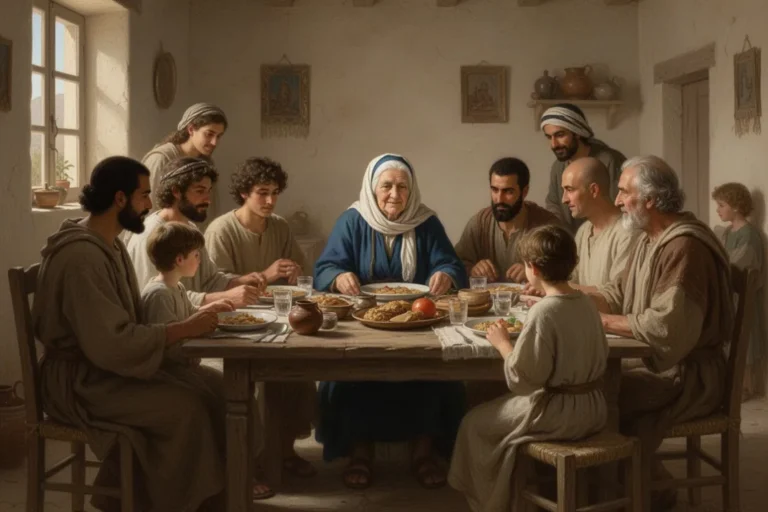
Modern readers often picture a household as parents and their children living together. Biblical families could be broader. A household might include grandparents, unmarried relatives, servants, workers, widows, and other people who depended on the head of the household. The word “family” can also refer to a wider clan or a whole people connected by ancestry.
Marriage and parenthood are important biblical relationships, but they are not the only relationships Scripture honors. The Bible gives serious attention to siblings, in-laws, adopted relationships, friendships, mentors, and neighbors. Ruth’s loyalty to Naomi is a powerful example of family commitment that reaches beyond biological ties.
Jesus also expanded the way his followers understood spiritual belonging. When he identified those who do God’s will as his family, as recorded in Mark 3:31-35, he did not dismiss biological relatives. He showed that faithful relationships can create genuine belonging and that loyalty to God should shape every other relationship.
A helpful reading principle: A family story in the Bible is not automatically a family pattern to copy. Some passages describe human behavior; they do not approve everything the people in the story did.
What Adam and Eve reveal about the first biblical family
Adam and Eve are presented in Genesis as the first human couple and the beginning of humanity’s family story. Genesis 1-2 describes human beings as made in God’s image and gives marriage a framework of companionship, shared purpose, and mutual belonging. The account emphasizes that people are not meant to live in isolation.
Genesis 3 then shows how disobedience damages family life. Fear replaces openness, blame replaces responsibility, and shame affects the couple’s relationship with one another. The story does not present family pain as proof that relationships have no value. Instead, it shows how sin disrupts trust, communication, work, and shared responsibility.
Their sons Cain and Abel add another dimension. Cain’s jealousy leads to violence against his brother in Genesis 4. The account warns that unaddressed resentment can grow into destructive action. It also shows God confronting Cain rather than ignoring the harm caused within the family.
Readers should not treat these chapters as a complete marriage manual. They establish broad themes: human dignity, companionship, responsibility, consequences, and the need for grace. They also remind families that conflict must be faced honestly rather than concealed behind blame.
How Abraham’s family shows faith, conflict, and consequences
Abraham’s household is one of the most significant family stories in Genesis, but it is far from simple. Abraham and Sarah receive a promise connected with descendants, yet they experience long periods of uncertainty about having a child. Their waiting produces fear, impatience, and decisions that create painful consequences.
Sarah’s servant Hagar becomes the mother of Ishmael after Sarah gives her to Abraham, as described in Genesis 16. The arrangement reflects the customs and power structures of the ancient world, but the resulting conflict is deeply personal. Hagar is mistreated and sent away, while Ishmael’s future is uncertain. Genesis also portrays God hearing Hagar’s distress and preserving her and her son.
Isaac, the son of Abraham and Sarah, becomes the child associated with the covenant promise. Yet the family’s history includes tension between Ishmael and Isaac and painful fear surrounding Abraham’s test in Genesis 22. These events invite careful reading because they include real suffering, unequal power, and difficult moral questions.
The story of Abraham’s household teaches that faith does not remove the effects of poor decisions. It also shows that God’s concern extends to people who are vulnerable or pushed to the margins. Hagar is not treated as invisible in the biblical narrative. Her experience challenges readers to notice those with less power inside a family system.
What Isaac, Rebekah, Jacob, and Esau teach about favoritism
Isaac and Rebekah’s family includes twin sons, Esau and Jacob, whose rivalry begins before their birth. Genesis 25-27 describes a household marked by parental preference: Isaac favors Esau, while Rebekah favors Jacob. That division contributes to deception, competition, and estrangement.
Jacob obtains Esau’s birthright and later receives the blessing intended for Esau through a scheme involving Rebekah. The deception may appear to succeed in the short term, but Jacob must flee because Esau plans to harm him. The family pays a long price for using manipulation to secure status and inheritance.
Jacob later experiences similar pain as a father. He loves Rachel’s son Joseph more openly than his other sons, and the famous special garment in Genesis 37 becomes a visible symbol of favoritism. Joseph’s brothers respond with hatred, eventually selling him and deceiving their father about what happened.
These accounts offer a clear warning: children notice unequal treatment, and favoritism can turn ordinary sibling differences into deep resentment. Parents cannot always make every child feel identical, but they can practice fairness, avoid comparisons, and refuse to use one child against another.
How Joseph’s family moves from betrayal to reconciliation
Joseph’s story develops across Genesis 37-50. His brothers betray him, he is taken to Egypt, and he later rises to authority during a famine. Years afterward, the brothers come to Egypt for food without recognizing him. Their reunion forces the family to confront the consequences of what they did.
Joseph does not pretend the betrayal never happened. He tests his brothers and observes whether they have changed, especially in their treatment of Benjamin. Judah’s willingness to offer himself in Benjamin’s place suggests a significant transformation from the earlier sale of Joseph.
When Joseph finally reveals his identity, he provides food and protection for the family. His interpretation of events emphasizes God’s ability to bring good from human wrongdoing, but that interpretation does not make the brothers’ actions acceptable. Providence is not the same as permission.
Joseph’s family offers several practical insights:
Reconciliation may require truth about what happened, not a quick demand to forget it.
Changed behavior matters more than emotional claims of regret.
Forgiveness can coexist with wise boundaries and a realistic view of harm.
Family restoration often develops over time through tested trust.
The story also cautions against using religious language to pressure victims into immediate closeness with people who remain unsafe. Biblical reconciliation includes repentance, responsibility, and a changed relationship—not merely the avoidance of conflict.
What Ruth and Naomi show about loyal family care
Ruth and Naomi provide one of Scripture’s clearest portraits of family loyalty formed through loss. Naomi loses her husband and sons, leaving her widowed and vulnerable. Ruth, a Moabite widow and Naomi’s daughter-in-law, chooses to remain with her rather than return to her own people.
Ruth 1 records Ruth’s commitment in language that expresses shared people, shared future, and shared faith. The passage is often used at weddings, but its original setting is a bereaved woman refusing to abandon an older relative who has little social protection. Ruth’s loyalty is about daily care, economic survival, and belonging, not only romantic devotion.
Boaz later acts as a protector and redeemer within the social and legal customs of the time. He notices Ruth’s vulnerability, treats her with dignity, and provides a path toward security. The book ends with a child, Obed, who becomes part of the family line leading to David.
This story broadens the meaning of family. Care may come through in-laws, friends, neighbors, and people from different ethnic backgrounds. It also demonstrates that widows and immigrants should not be treated as burdens. Faithful family life includes practical generosity, not only affectionate words.
What Hannah and Samuel reveal about parenting and dedication
Hannah’s story in 1 Samuel 1-2 centers on grief, prayer, and the desire for a child. She is mocked by Peninnah, another woman in her husband Elkanah’s household, and her distress is misunderstood by Eli, the priest. Hannah eventually gives birth to Samuel and dedicates him to service at the sanctuary.
Her story should not be reduced to a promise that every prayer for a child will be answered in the same way. It speaks more directly about a woman whose pain is taken seriously by God and whose voice matters even when others misread her. Hannah’s prayer also shows that spiritual dedication involves releasing control, not treating a child as personal property.
Samuel grows within a religious community, but the next generation exposes a troubling contrast. Eli’s sons behave corruptly, and Eli fails to restrain them adequately, according to 1 Samuel 2-3. The narrative does not blame every parental failure for every child’s behavior, but it does recognize the responsibility of leaders to confront serious wrongdoing.
Families can learn from both sides of this account: children need room to grow into their own calling, and adults must not ignore harmful conduct simply because the person involved is related to them.
What David’s family reveals about power and parental failure
David’s family story includes marriage, political power, sexual wrongdoing, grief, rivalry, and rebellion. In 2 Samuel 11, David abuses his authority by taking Bathsheba and arranging circumstances that result in the death of her husband, Uriah. The Bible does not present David’s power or later religious importance as an excuse for this harm.
The consequences affect the household and the wider kingdom. David’s sons Amnon and Absalom become involved in severe conflict, and David’s responses are often inconsistent. He grieves deeply, but he also struggles to exercise just and effective leadership within his home.
This story is especially important for readers who may be tempted to idealize famous biblical figures. David can be remembered as a poet, king, and person of faith while still being held accountable for abuse of power. Admiration must not erase the experience of victims.
Families and religious communities should never use a leader’s position, reputation, or spiritual language to conceal exploitation. Biblical narratives often expose the damage caused when authority is used for selfish purposes, even when the person holding that authority is publicly honored.
How Mary, Joseph, and Jesus model protective care
The birth narratives in Matthew 1-2 and Luke 1-2 portray Mary and Joseph responding to an extraordinary and dangerous situation. Mary faces social vulnerability, while Joseph must decide how to act when he learns that she is pregnant. He chooses a course that protects her from public disgrace and accepts responsibility for caring for the child.
After Jesus’ birth, Matthew describes Joseph taking Mary and Jesus to Egypt to escape Herod’s violence. The family’s movement is shaped by danger, displacement, and the need for protection. This part of the story matters because it shows the holy family not as untouched by hardship but as a household seeking safety.
Luke also presents Jesus as a child who grows within a family and a religious culture. When Jesus remains in the temple at age twelve, Mary and Joseph search for him anxiously. The episode shows both the child’s developing sense of vocation and the parents’ concern. It does not erase the ordinary tension that can occur as children mature.
These accounts highlight protective responsibility, courage, obedience, and the dignity of ordinary caregiving. They also offer comfort to families experiencing migration, uncertainty, or fear: vulnerability is not evidence that a household has been abandoned by God.
What Jesus teaches about family obligations and spiritual belonging
Jesus speaks about family in ways that challenge both neglect and idolatry. He honors the command to respect parents and criticizes religious practices that allow people to avoid caring for their parents, as seen in Mark 7:9-13. Family obligations cannot be pushed aside through pious excuses.
At the same time, Jesus refuses to make biological ties the highest authority. When relatives attempt to control his ministry, the Gospel accounts show him setting boundaries around his calling. In Matthew 10:34-39, he warns that loyalty to him may create conflict, even within a household.
Jesus’ teaching about discipleship is not permission to be careless or cruel toward relatives. It means that family loyalty must be ordered by truth and faithfulness. A person should not obey a family member when that demand requires injustice, abuse, or denial of conscience.
Jesus also creates a community that includes people who may be lonely, excluded, or separated from their relatives. His attention to children, widows, outsiders, and the sick demonstrates that spiritual family should become a source of welcome rather than another place where vulnerable people are controlled.
How the early church treated households and single people
The early Christian communities included married couples, parents, children, widows, unmarried people, enslaved people, wealthy patrons, and those with limited resources. Acts and the letters of Paul describe believers sharing meals, resources, teaching, prayer, and hospitality across household lines.
Priscilla and Aquila appear as a married ministry partnership in Acts 18 and related passages. They teach Apollos more accurately and host a church in their home. Their example shows that Christian service was not limited to one gender or restricted to public religious spaces.
Timothy’s faith is connected with the influence of his mother Eunice and grandmother Lois in 2 Timothy 1:5. The passage recognizes the spiritual contribution of women in his family, while other New Testament passages show that faith is also nurtured through congregations, teachers, and mentors.
Paul’s discussion of marriage in 1 Corinthians 7 gives substantial attention to unmarried people. He does not treat singleness as a defective stage that everyone must leave behind. Scripture therefore gives dignity to different household situations, including marriage, widowhood, singleness, and life within a faith community.
What biblical household teaching requires from family members
Several New Testament passages address relationships inside Christian households. Ephesians 5-6, Colossians 3, and 1 Peter 3 speak about spouses, children, parents, servants, and household conduct. These texts are sometimes quoted selectively to demand submission from wives or obedience from children while ignoring the responsibilities placed on husbands, parents, and people with social power.
A responsible reading pays attention to the whole passage. Husbands are commanded to love sacrificially, parents are warned not to provoke or crush their children, and all believers are called to humility and service. The biblical direction is not a license for domination. Authority is accountable to love, justice, and the welfare of the person under its care.
The ancient references to servants or slaves require particular care because the social system of the Roman world was not identical to modern employment. These texts should never be used to defend human ownership or excuse abuse. Christians today should read them alongside the Bible’s teaching about human dignity, justice, freedom, and love of neighbor.
Common mistakes when applying biblical family stories
Family passages are most useful when read with context and humility. Several mistakes can turn a complicated story into harmful advice.
Copying every biblical household: Scripture records polygamy, favoritism, deception, violence, and abuse without presenting each as a model.
Ignoring cultural setting: Ancient inheritance, marriage, slavery, and household customs shaped the original situations and should not be transferred carelessly into modern life.
Using forgiveness to avoid accountability: Forgiveness does not require continued access to someone who remains dangerous or unrepentant.
Blaming victims for family conflict: A person who is abused, betrayed, or abandoned is not responsible for another person’s wrongdoing.
Treating marriage as the only valuable household: Biblical communities include widows, singles, extended relatives, and people joined through faith.
Demanding uniformity: Faithful families may differ in culture, size, personality, and structure while practicing care and integrity.
Equating parental control with biblical authority: Children need guidance and protection, but humiliation, intimidation, and violence are not righteous discipline.
Safety comes first: If a family relationship involves violence, coercive control, sexual abuse, or credible threats, seek help from trusted people and appropriate local services. Biblical language should never be used to keep someone in danger.
Practical ways to apply biblical family values
The broad themes in these stories can become concrete habits. You do not need to recreate an ancient household to practice biblical faithfulness. You can bring the values of Scripture into ordinary conversations, decisions, and patterns of care.
Tell the truth without humiliating people. Joseph’s story shows that honest confrontation can be part of restoration. Speak about specific actions and consequences rather than attacking someone’s entire character.
Replace favoritism with attentive fairness. Learn each child’s needs and strengths without ranking siblings. Fairness may not mean giving everyone the same thing; it means refusing to use affection or resources as a weapon.
Protect people with less power. Notice children, widows, immigrants, elderly relatives, disabled family members, and anyone financially dependent on others. Ask what practical safety and support require.
Set boundaries that support truth. A boundary may limit conversations, visits, financial involvement, or contact. Clear limits can protect relationships from becoming more destructive.
Practice repair after conflict. A genuine apology names the harm, avoids excuses, accepts consequences, and changes behavior. Reconciliation should grow from restored trust rather than pressure.
Make room for chosen and spiritual family. Invite isolated people into meals, celebrations, prayer, and practical support. Hospitality can become a meaningful form of family care.
Share responsibilities. Household service should not fall automatically to one person. Discuss money, caregiving, chores, emotional labor, and decision-making openly.
Honor different life circumstances. Do not treat singleness, infertility, widowhood, divorce, adoption, or blended-family life as proof of spiritual failure.
These practices are not methods for making every family peaceful. Some conflicts involve deep injury, addiction, mental illness, poverty, or unsafe behavior that cannot be solved by better communication alone. Biblical wisdom includes seeking counsel, protection, medical care, legal support, and help from mature community leaders when those resources are needed.
How to study a biblical family story responsibly
Begin by reading the entire passage rather than relying on a single memorable verse. Ask who is speaking, who has power, what social customs shape the event, and which consequences follow. Pay attention to the experiences of people who receive little attention in the family’s public story.
Next, separate description from instruction. A narrative may show deception without approving it, or report violence without commanding it. Compare the story with wider biblical themes such as justice, protection of the vulnerable, love of neighbor, honesty, and the worth of every person.
Finally, apply the passage to your own life with care. Ask whether your interpretation increases truth, safety, responsibility, mercy, and dignity. If an application excuses cruelty, silences a victim, or elevates family reputation above justice, it needs to be reconsidered.
“Let all that you do be done in love.” — 1 Corinthians 16:14
That brief instruction offers a useful measure for family life. Love in the biblical sense is not mere sentiment or avoidance of hard conversations. It seeks another person’s good, tells the truth, accepts responsibility, protects the vulnerable, and refuses to make power the measure of worth.
Frequently asked questions
Does the Bible describe one ideal family structure?
No. Scripture includes married couples, large households, widows, single people, blended relationships, adoptive or foster-like care, and spiritual communities. Marriage and children are honored, but biblical faithfulness is not limited to one household arrangement. The consistent concern is how people treat one another—with loyalty, justice, protection, generosity, and responsibility.
Are biblical family stories meant to be copied exactly?
No. Some stories describe jealousy, polygamy, deception, violence, or favoritism without endorsing those actions. Read each account in context and compare it with broader biblical principles. A narrative can teach through warning as well as example. Ask what the story reveals about consequences, human weakness, God’s concern, and responsible relationships.
What does the Bible say about family conflict?
Biblical accounts treat conflict honestly and encourage truth, repentance, forgiveness, and repair. They do not require pretending that harm did not happen. Healthy reconciliation depends on accountability and changed behavior. When abuse or danger is present, creating distance and seeking protection may be wiser and more faithful than maintaining ordinary contact.
How can churches support people whose families are difficult or absent?
Churches can provide dependable community through meals, practical assistance, mentoring, childcare, visitation, counseling referrals, and inclusion in ordinary celebrations. Leaders should avoid pressuring people to reconcile with unsafe relatives. A supportive church respects privacy, believes credible reports of harm, and treats single adults, widows, divorced people, and those without nearby relatives as full members of the community.








Leave a Reply