Yahweh Sabaoth meaning: “The Lord of hosts” explained
Yahweh Sabaoth meaning: “The Lord of hosts” explained
When you hear the name Yahweh Sabaoth in a prayer, sermon, or Bible study, you may wonder what “hosts” means. Does it refer to angels, armies, stars, or something else? The short answer is that Yahweh Sabaoth means “the LORD of hosts”—a name that presents the God of Israel as the supreme ruler over heavenly beings, earthly armies, and every power under his authority.
The Hebrew expression is usually written YHWH tseva’ot or YHWH tsebaoth. “Yahweh” represents the divine name of Israel’s God, while Sabaoth comes from the Hebrew word tseva’ot, meaning “hosts,” “armies,” or organized groups. The title emphasizes God’s authority, protection, and kingship, especially when his people face danger, injustice, or political turmoil.
Plain meaning: Yahweh Sabaoth describes God as the Lord who commands the hosts of heaven and earth. It is not a reference to the Sabbath, and “hosts” does not mean a group of party guests.
Yahweh is the personal covenant name associated with the God who revealed himself to Moses. English Bibles traditionally represent this name with LORD in small capitals, distinguishing it from the ordinary Hebrew word for “lord” or “master.” Many Jewish readers pronounce the name as Adonai when reading Scripture aloud, while “Yahweh” is common in academic and Christian settings.
Sabaoth is an English transliteration of the Hebrew plural tseva’ot. The singular form can refer to an army, a military force, or an organized group. Depending on the passage, the plural can point to heavenly armies, human armies, or the ordered forces of creation. Translators usually render the full title as the LORD of hosts or the LORD of armies.
The expression is therefore more than a descriptive phrase such as “a powerful God.” It is a royal and military title. It portrays Yahweh as the commander-in-chief whose authority is greater than the authority of kings, nations, armies, spiritual powers, or any other force people may fear.
Why “hosts” can mean more than human armies
The word hosts has a broader meaning in the Bible than modern readers may expect. In some contexts it clearly refers to soldiers or military forces. In other contexts, it describes heavenly beings or the vast array of created powers that stand under God’s command.
That range of meaning explains why English translations retain the traditional phrase “LORD of hosts.” The wording leaves room for the title’s full scope. Yahweh is not merely a tribal war god who helps one army defeat another. He is portrayed as the ruler over every legitimate force in heaven and on earth.
Depending on the passage, “hosts” may suggest:
Israel’s armies, which remain subject to God’s authority rather than possessing ultimate power.
Heavenly beings, including the angelic servants who appear in prophetic visions.
The stars and celestial order, which biblical writers sometimes describe as a heavenly host.
All organized powers that God can summon, restrain, or direct to accomplish his purposes.
This does not mean that every occurrence gives the word exactly the same emphasis. One passage may focus on divine protection, another on judgment, and another on God’s holiness. The central idea remains consistent: Yahweh rules over forces that human beings cannot control.
How Yahweh Sabaoth appears in the Bible
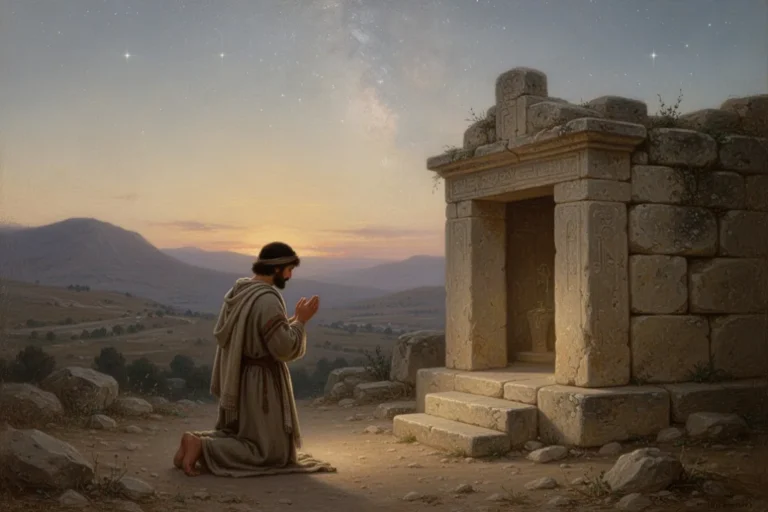
The title becomes especially prominent in the books of the prophets, but it also appears in earlier biblical narratives. One of its early and memorable uses occurs in the opening chapters of 1 Samuel, where Hannah prays to the LORD of hosts while facing deep personal distress. The title places her private need before the God who possesses authority over the greatest powers.
In the historical books, the name can appear when Israel’s military situation, leadership, or worship is under discussion. It reminds readers that victory does not ultimately depend on troop strength, political influence, or human strategy. God’s sovereignty stands above the battlefield.
The prophets use Yahweh Sabaoth with particular force. Isaiah repeatedly presents the LORD of hosts as holy and exalted, while also showing that human pride and national power cannot escape his judgment. Jeremiah uses the title in messages about Jerusalem, Judah, foreign nations, and the consequences of rebellion. The name appears frequently in Haggai, Zechariah, and Malachi, where it accompanies promises of restoration, correction, and renewed worship.
In the prophetic books, the title often carries two meanings at once. It offers comfort to people who feel threatened, because God is stronger than their enemies. It also offers warning to the powerful, because God can judge every nation and institution that acts unjustly.
“Holy, holy, holy is the LORD of hosts.” — Isaiah 6:3, paraphrased
Isaiah’s vision connects the title with overwhelming holiness. The heavenly beings are not celebrating military strength alone; they are declaring that God’s glory fills the whole earth. The phrase therefore joins power and purity. Yahweh’s command is not arbitrary force. It belongs to the holy ruler who judges evil and remains faithful to his covenant.
Yahweh Sabaoth and the idea of God as king
Calling God “the LORD of hosts” presents him as a king with a court, a kingdom, and forces at his command. The image overlaps with other biblical descriptions of God as King of Israel, King of glory, and ruler over the nations. It communicates rank and authority in language ancient audiences understood immediately.
Human rulers often claimed power through armies. A king’s soldiers defended borders, enforced decisions, and displayed his strength. The title Yahweh Sabaoth makes a direct theological claim: God’s authority exceeds every human throne. Even the strongest empire is temporary and accountable to him.
This royal meaning also corrects a common misunderstanding about divine power. The title does not mean God is simply a larger version of a human commander who seeks conquest for personal ambition. Biblical passages connect the LORD of hosts with justice, covenant faithfulness, mercy, and holiness. His power serves his character.
That combination matters when reading difficult passages. The name may appear beside warnings of judgment, but it can also appear beside promises that God will defend the vulnerable, restore his people, and establish what is right. The same sovereign authority that confronts oppression can become a source of hope for those who cannot protect themselves.
What Yahweh Sabaoth means for fear and protection
Many people encounter this name when they are afraid: afraid of violence, unfair treatment, illness, financial uncertainty, or forces that seem beyond their influence. Yahweh Sabaoth speaks directly to that experience by asserting that no threatening power is ultimate.
The title does not promise that believers will never suffer or that every conflict will end quickly. The Bible itself uses the name in settings where people are grieving, oppressed, displaced, or waiting for justice. Its message is more grounded: God remains sovereign even when circumstances look uncontrolled.
For Hannah, the title accompanied a personal prayer. For the prophets, it addressed national crisis and moral failure. For later readers, it can shape prayer by shifting attention from the apparent size of a problem to the greater authority of God. This is not denial of danger. It is a declaration that danger does not have the final word.
Helpful perspective: Praying to Yahweh Sabaoth is not a request for God to serve your personal agenda. It is an acknowledgment that God is the rightful ruler, defender, and judge, and that your situation remains under his greater authority.
The title can also challenge the way you think about protection. Biblical protection does not always mean immediate escape from hardship. Sometimes it means courage, endurance, wisdom, justice, or the preservation of faithfulness through a difficult season. The LORD of hosts is powerful, but his purposes are not limited to the outcome you would choose.
How the title relates to angels and heavenly beings
Some readers hear “hosts” and think specifically of angels. That association has a strong biblical basis, since Scripture depicts heavenly beings serving around God’s throne and carrying out his commands. The title can therefore evoke the heavenly army and the invisible realm that stands under God’s rule.
Still, “hosts” should not automatically be reduced to “angels” in every verse. The Hebrew expression is wider than a technical name for one category of spiritual beings. It can include heavenly forces, earthly armies, and cosmic order, depending on the surrounding passage.
This broader understanding prevents two opposite mistakes. First, it keeps readers from treating Yahweh Sabaoth as merely an angelic title. Second, it prevents the title from being interpreted only as a metaphor for human warfare. The name reaches beyond both categories to express God’s universal command.
When biblical visions show heavenly attendants praising God, the focus is not on curiosity about the spirit world. The focus is on God’s holiness and authority. Heavenly beings serve him; they do not rival him. The title directs attention away from the hosts themselves and toward the Lord who commands them.
How Christians understand Yahweh Sabaoth
Christian readers generally understand Yahweh Sabaoth through the Old Testament’s revelation of God and through the New Testament’s presentation of Jesus. The title remains a name for the one God of Israel, whose sovereignty is not replaced by a different deity or limited to one historical period.
The New Testament usually preserves the expression in transliterated form rather than translating it every time. For example, James 5:4 refers to “the Lord of Sabaoth” when condemning the exploitation of workers. The context is significant: the title appears as a witness against injustice. The God who commands the hosts hears the cries of people who have been denied what they are owed.
Romans 9:29 also uses the expression while discussing the remnant of Israel and God’s preservation of a faithful people. There, the title highlights God’s power to preserve and judge even when human circumstances appear bleak. These New Testament uses continue themes already present in the prophets: God rules, God hears, and God holds the powerful accountable.
Christian worship may use “Lord of hosts” in hymns, liturgies, prayers, and songs. When used carefully, the title can express reverence for God’s holiness, confidence in his rule, and humility before his authority. It should not be used as a slogan for human aggression or as a claim that every side in a conflict automatically has God’s approval.
What Yahweh Sabaoth does not mean
Because the phrase sounds unfamiliar, several misunderstandings are common. Correcting them helps preserve the title’s biblical meaning instead of forcing it into a modern assumption.
It does not mean “Yahweh of the Sabbath.” “Sabaoth” resembles the English word “Sabbath,” but the two words come from different Hebrew terms and have different meanings.
It does not mean that God approves every human war. The title asserts God’s authority over armies; it does not give every army a divine endorsement.
It does not refer only to angels. Heavenly beings may be included, but the word can describe a wider range of organized powers.
It does not portray God as cruel or chaotic. Biblical use connects divine power with holiness, justice, covenant faithfulness, and moral accountability.
It does not function as a magic formula. Saying the Hebrew title aloud does not control events or guarantee a desired result.
These distinctions matter because religious titles can be detached from their context. A phrase about God’s sovereignty can be misused to justify human domination, while a phrase about divine protection can be turned into a promise of effortless success. The biblical context resists both distortions.
Practical ways to read and pray with the name
If you want to understand or use Yahweh Sabaoth in personal prayer, begin with the passage where the title appears. Ask what kind of situation surrounds it. Is the writer facing war, injustice, spiritual opposition, personal anguish, national collapse, or a promise of restoration?
Then pay attention to what the title reveals about God and what it asks of people. It may call for trust, repentance, courage, patience, or a renewed commitment to justice. The name is most meaningful when it shapes your response rather than merely adding impressive language to a prayer.
Read the surrounding verses. Do not build a doctrine from the title alone. Observe who is speaking, what problem is present, and what God promises or commands.
Identify the “host” in context. Decide whether the passage emphasizes human armies, heavenly beings, the stars, or God’s authority over all organized powers.
Connect power with holiness. Remember that the LORD of hosts is also morally pure and committed to justice.
Bring a specific concern to God. Name the fear, conflict, or responsibility instead of using the title in vague language.
Leave room for God’s wisdom. Ask for faithful action and discernment, not merely for God to produce your preferred outcome.
A simple prayer might acknowledge God as the Lord of hosts, ask for protection and wisdom, confess any desire to control others, and seek courage to do what is right. Such a prayer reflects the title’s balance: confidence in divine authority and humility about human plans.
Common mistakes when explaining Yahweh Sabaoth
People often make interpretive mistakes when they treat one English word as if it had only one fixed meaning. “Hosts” is an example. Its meaning becomes clearer through the literary and historical setting of each passage.
Assuming the word is connected to the Sabbath: Check the Hebrew terms rather than relying on similar English sounds.
Making the title exclusively military: Include the heavenly and cosmic dimensions when the passage points beyond human soldiers.
Ignoring the prophetic setting: The title often appears alongside warnings about injustice, pride, false worship, or national violence.
Using the name to claim political certainty: God’s sovereignty does not mean that your nation, party, church, or personal plan has unquestionable divine backing.
Separating power from character: Read the title alongside biblical themes of holiness, mercy, faithfulness, and judgment.
Expecting instant protection: The title offers confidence in God’s ultimate rule, not a guarantee that believers will avoid every painful circumstance.
Another mistake is pronunciation anxiety. English speakers may say Yah-way Sabaoth, while other traditions use different pronunciations and transliterations. The central issue is not achieving one universally agreed English pronunciation. It is understanding the meaning and reverence attached to the name.
How to pronounce Yahweh Sabaoth
In common English, Yahweh Sabaoth is often pronounced approximately YAH-way SAB-bay-oth. The second word may also be pronounced sa-BAY-oth or in another way depending on the speaker’s tradition. Transliterating Hebrew sounds into English is not perfectly consistent.
“Yahweh” represents a scholarly reconstruction of the pronunciation of the Hebrew divine name. “Sabaoth” follows the Greek form that became familiar through early Christian usage and traditional English Bible language. Modern translations may use “LORD of hosts” rather than the transliterated form.
You do not need to use the transliteration to understand the title. Reading “the LORD of hosts” in an English Bible communicates the same central idea. The transliterated expression can be helpful when studying biblical names, worship traditions, or the connection between Old and New Testament passages.
Why this name still matters
Yahweh Sabaoth speaks to a permanent human concern: what happens when the forces around you appear stronger than your ability to respond? The biblical answer is not that danger is imaginary. It is that God’s authority is greater than the powers that intimidate, oppress, or confuse you.
The name also challenges self-reliance. Human institutions, weapons, wealth, popularity, and political influence may have real effects, but none possesses final authority. The LORD of hosts stands above them and judges how power is used. That message can humble the strong and encourage those who have been pushed aside.
At the same time, the title invites careful faith rather than simplistic confidence. If God is the Lord of hosts, then his people are not free to use his name to sanctify revenge or domination. They are called to trust his judgment, pursue justice, resist evil without pretending to control history, and remain faithful when results are delayed.
In its fullest biblical sense, Yahweh Sabaoth means that the covenant God is the sovereign Lord over every host—heavenly, earthly, and cosmic. The name carries both reassurance and accountability: reassurance because no opposing power is ultimate, and accountability because every human power answers to the holy ruler who sees and judges all things.
Frequently asked questions
Is Yahweh Sabaoth the same as Lord of hosts?
Yes. “Yahweh Sabaoth” is the Hebrew-based form, while “the LORD of hosts” is the traditional English translation. Some Christian writings also use “Lord of Sabaoth,” following the Greek wording found in the New Testament. All three expressions point to God as the sovereign ruler over heavenly and earthly powers.
Does Sabaoth mean Sabbath?
No. The words only sound similar in English. “Sabaoth” comes from a Hebrew term related to armies or organized hosts, while “Sabbath” comes from a different Hebrew word associated with ceasing, rest, and the seventh day. Yahweh Sabaoth should therefore be understood as “the LORD of hosts,” not “the LORD of the Sabbath.”
Should I use Yahweh Sabaoth in personal prayer?
You may, especially if the title helps you remember God’s sovereignty and holiness. You can also pray using the familiar English form, “Lord of hosts.” The value is not in treating the phrase as a formula, but in responding thoughtfully to what it expresses: trust in God’s authority, dependence on his wisdom, and a commitment to act justly.
Does “Lord of hosts” mean God supports every military force?
No. The title says that armies and other powers are under God’s authority; it does not declare that every army or political cause has God’s approval. Biblical prophets often used the name while condemning violence, pride, exploitation, and injustice. God’s rule over human power also means that human power is accountable to him.







Leave a Reply