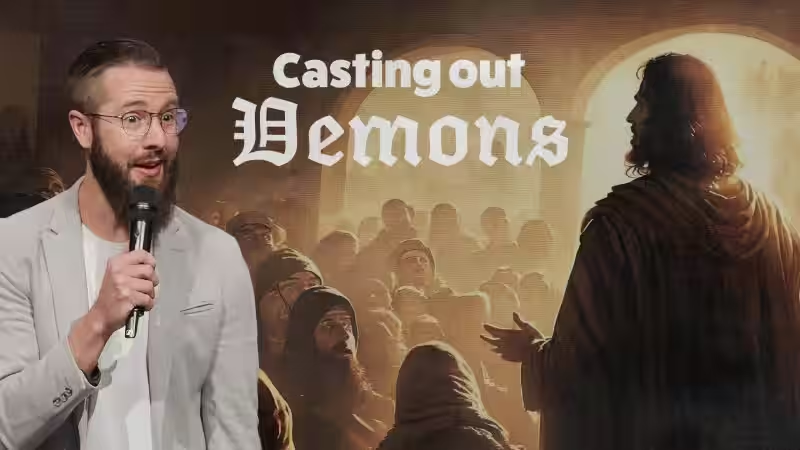
The concept of demonic possession, while often portrayed in popular culture, is a multifaceted topic in the Bible. It’s not a simple, straightforward issue, but rather a complex tapestry woven from various accounts and interpretations. Understanding these accounts requires careful consideration of the historical context, cultural norms, and varying theological perspectives. Demonic influence, as described in Scripture, encompasses a range of challenges, from subtle temptations to overt control. A key takeaway is that the Bible doesn’t offer a single, universally agreed-upon definition or explanation of possession.
Many biblical accounts depict people experiencing profound and unsettling symptoms. These could include unusual physical behaviors, speech patterns, and even violent actions. These events were often seen as a direct intervention by powerful spiritual forces. Imagine a family grappling with a loved one who suddenly exhibits uncontrollable outbursts or speaks in unknown tongues. This would have been very disturbing in ancient communities, with limited medical understanding. This is precisely the kind of situation the biblical accounts depict.
The Bible doesn’t offer a consistent, scientific approach to understanding these phenomena. Instead, the narratives often present spiritual explanations. These interpretations varied among different cultures and eras within the ancient world. Some accounts emphasize the power of prayer and spiritual warfare as a means of combating these forces. Other passages might highlight the role of individual sin or spiritual weakness in opening oneself up to such influence.
For example, consider the story of the man with an unclean spirit in Mark 9. The man’s symptoms were profound and frightening. Jesus’ response focused on casting out the spirit and restoring the man to a healthy state. This highlights a belief that spiritual forces could actively harm individuals. However, other passages might interpret similar behaviors as stemming from mental illness or societal pressures. It’s crucial to remember that our understanding of the past is always influenced by our present-day context.
Modern interpretations of demonic possession are diverse. Some Christians believe in a literal, supernatural understanding of demonic possession. They view these accounts as historical realities, where spiritual entities directly influence individuals. This approach often emphasizes the importance of prayer and spiritual protection. A literal approach often involves actively confronting and casting out these entities.
Others understand the biblical accounts metaphorically. They might view demonic possession as a representation of negative influences that affect human behavior and decision-making. These influences could include psychological distress, societal pressures, or even personal vices. This metaphorical interpretation is more likely to align with contemporary psychological and sociological understanding. For example, a person struggling with addiction might be seen as influenced by an unseen force rather than a literal demonic presence. This approach often focuses on helping the person overcome internal struggles.
Modern Application and Conclusion
Understanding the Bible’s accounts of demonic possession is crucial for navigating modern discussions about mental health, spiritual experiences, and cultural differences. Modern psychology and psychiatry provide valuable frameworks for understanding human behavior and mental well-being. These modern theories often offer helpful perspectives. The crucial element is the careful consideration of the biblical accounts within their historical context, and understanding the varying interpretations of those accounts by different readers and communities.
Ultimately, the Bible presents a complex and multifaceted understanding of spiritual realities. It’s essential to approach these accounts with an open mind and a commitment to thoughtful interpretation. This requires recognizing the diverse range of possible interpretations within a text and accepting that a single, universally agreed-upon answer may not fully capture the richness and nuance of the subject matter. We can draw lessons about the human condition and the spiritual battles that individuals may face from these texts, but it is important not to impose modern assumptions onto ancient narratives. This allows for a more nuanced and respectful engagement with the Bible’s teachings.
The Bible describes instances where individuals are afflicted by evil spirits. These accounts often involve individuals experiencing unusual physical or behavioral changes, speaking in tongues, or performing acts of violence. Different interpretations exist regarding the nature and extent of demonic possession, ranging from literal interpretations to more symbolic understandings. Some argue these accounts represent spiritual afflictions, while others see them as expressions of mental illness or societal issues of the time.
What is religion?
Religion is a complex system of beliefs, values, and practices related to the spiritual realm. It often involves a concept of the divine, the supernatural, or the sacred, and may include rituals, ceremonies, and codes of conduct. Religions vary widely in their beliefs, practices, and interpretations, impacting individuals’ lives and shaping cultures.