Throughout history, people have wrestled with the concept of spiritual warfare. The idea of demons, or evil spirits, influencing human behavior and causing distress has been a common thread in various cultures and religions. Understanding this phenomenon, and how scripture addresses it, can provide clarity and hope for those seeking answers and guidance. This exploration will delve into scriptural accounts of demon possession and the methods of deliverance, while encouraging a deeper understanding of the power of faith and prayer.
Our modern understanding of the term “demon” can be challenging. The word often evokes images of fearsome creatures, but biblical accounts often describe demons as forces that disrupt and corrupt. These entities, according to scripture, aim to hinder God’s plan and lead individuals away from a righteous path. It’s important to approach these narratives with sensitivity; they are not meant to be taken literally in all circumstances, but rather as powerful metaphors for negative influences within ourselves and the world around us. Think of them as manifestations of emotional or mental struggles, rather than purely external entities.
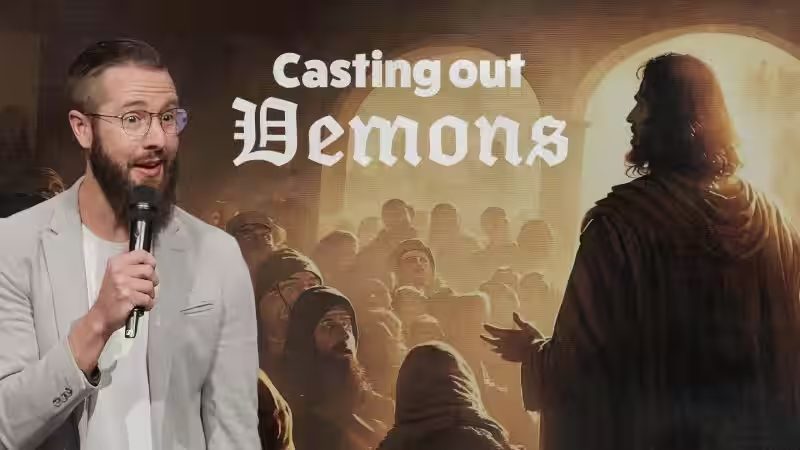
The Bible, particularly the Gospels, offers numerous accounts of Jesus casting out demons. These stories often highlight the power of Christ’s authority and compassion. For example, consider passages where Jesus confronts and commands the demons. This showcases a powerful method of dealing with harmful situations. Such stories emphasize that deliverance isn’t just about dismissing the demons, but also about restoring the individual to wholeness. The healing went beyond just the physical, but also the emotional and mental.
These accounts show us that deliverance is not a simple formula. It often involves a complex interplay of faith, prayer, and the recognition of the source of the problem. Think of it like repairing a broken machine. You need to identify the problem (the demon) and then the solution (deliverance) isn’t just throwing more parts at it, but also addressing the root causes. Recognizing that sometimes, the demons are simply symbolic representations of our own battles is a critical step in the process.
Recognizing the Signs and Symptoms
While the Bible offers guidance, distinguishing between genuine demonic influence and other mental health issues is crucial. Symptoms of demonic oppression, as described in scripture, are often manifested as compulsive behaviors, unusual phobias, and a profound sense of despair and hopelessness. Consider the biblical accounts; they highlight the torment and distress experienced by those influenced, underscoring the need for compassion and understanding. This can include:
Persistent negative thoughts and feelings
Extreme emotional outbursts
Loss of control over actions
Demonstrating knowledge or abilities beyond one’s comprehension (this one needs careful consideration)
However, it’s essential to remember that these symptoms can also be associated with other conditions like anxiety, depression, or personality disorders. It’s never appropriate to diagnose or attempt to treat someone without a professional assessment. A compassionate and objective approach is key, recognizing the need to consult qualified mental health professionals for accurate diagnosis and treatment. It’s crucial to seek professional help when dealing with these complex issues. Example: a person experiencing unusual and persistent fears might be suffering from an anxiety disorder, not a demonic influence.
The Role of Faith and Prayer
Scriptural accounts consistently emphasize the importance of faith and prayer in casting out demons. Faith, in this context, isn’t blind belief, but rather a confident trust in God’s power and a passionate desire for transformation. Prayer isn’t simply a ritual; it’s a powerful tool for connecting with the divine, seeking guidance, and expressing our deepest needs. Prayer, in conjunction with seeking professional help, can play a pivotal role in spiritual healing. Jesus’s interactions with people suffering highlight the deep need for both compassion and professional support.
Prayer, combined with a commitment to faith, provides a pathway for healing. It creates a space for healing and transformation, and fosters a belief in the possibility of overcoming challenges. Think about the power of a collective prayer or a supportive community. A strong support network and a belief in the possibility of healing can be a substantial force in the battle against negativity. It is important to understand the limits of our own ability and to rely on appropriate authorities and experts to provide comprehensive care.
In conclusion, scripture offers compelling insights into the nature of spiritual warfare and the power of faith in overcoming negative influences. Interpreting these accounts requires understanding the nuances and context of the biblical narratives while seeking professional help for accurate diagnosis and treatment. Remember to approach these issues with sensitivity and compassion, recognizing the interconnectedness of physical and spiritual well-being. Recognize that God’s love extends to everyone, and faith, coupled with professional care, can provide comfort and healing in times of need.
Ultimately, the most important aspect is to focus on the power of love, compassion, and faith in order to navigate these complex issues and seek guidance from qualified professionals. Remember that spiritual healing is often a journey, not a destination, and a holistic approach that combines faith, prayer, and professional help can lead to a more fulfilling and meaningful life.
Frequently Asked Questions
What does the Bible say about casting out demons?
Various passages in the Bible describe Jesus and his disciples casting out demons. These accounts often highlight Jesus’ authority over evil spirits and the power of faith in driving them out. Different interpretations exist regarding the specific application and meaning of these passages in modern life.
In many religious traditions, demons are considered spiritual entities, often associated with evil or destructive forces. Their nature and existence are debated and interpreted differently across various faith systems.
Can demons be cast out today?
Views on this vary. Some religious traditions emphasize the continued possibility of demonic activity and deliverance, while others may interpret the biblical accounts in different ways or see them as symbolic rather than literal.
How can I protect myself from demons?
Different religious traditions offer different approaches to spiritual protection. Some may recommend prayer, faith, or specific rituals, while others may focus on living a righteous life or maintaining strong spiritual connection.
What is the role of religion in dealing with demonic activity?
Religions often provide frameworks for understanding and responding to issues related to spiritual forces, including demons. These approaches can range from prayer and rituals to ethical conduct and community support.