What does Sabbath mean? Its biblical meaning and practice
What does Sabbath mean? Its biblical meaning and practice
Sabbath means a set-apart period for rest, worship, and renewal, traditionally observed from Friday evening to Saturday evening in Judaism. The word comes from the Hebrew term Shabbat, related to the idea of stopping or ceasing. In the Bible, Sabbath rest is connected with God’s rest after creation, Israel’s freedom from slavery, and the practice of trusting God rather than treating work as the source of security.
For Jewish people, Sabbath is a weekly holy day with specific religious practices. Many Christians understand Sabbath through the teachings of Jesus and observe a day of worship and rest on Sunday, although Christian traditions differ. The central idea is not merely choosing a day off; it is making room for God, people, worship, and restoration by deliberately stepping away from ordinary work.
The English word Sabbath comes from the Hebrew Shabbat, which carries the sense of stopping, ceasing, or resting. That meaning helps explain why Sabbath is first presented as a change in activity rather than simply a religious meeting. A person stops the normal pattern of labor and treats the time as distinct from the rest of the week.
The creation account in Genesis 1–2 describes God completing creation and resting on the seventh day. The passage does not portray God as tired or in need of recovery. Instead, God blesses and sets apart the seventh day, establishing a pattern in which work is followed by purposeful rest.
Sabbath therefore has a deeper meaning than physical relaxation. It marks time as holy, meaning dedicated to God. It also gives human beings permission to stop producing, earning, managing, and competing for a period of time. Rest becomes an act of worship because it recognizes that life does not depend entirely on human effort.
The command to keep the Sabbath appears among the Ten Commandments in Exodus 20 and Deuteronomy 5. In Exodus, the command points back to creation. In Deuteronomy, it also points back to Israel’s deliverance from Egypt. These two explanations give the practice two complementary meanings:
Creation: human beings are made for a rhythm that includes both work and rest.
Freedom: people who were once forced to labor without freedom must not recreate that oppression for themselves or others.
Trust: stopping work expresses confidence that God remains provider and ruler even when people are not producing.
Community: servants, workers, animals, and household members are included in the benefit of rest.
That last point is significant. Biblical Sabbath is not designed only for the person with a flexible schedule or a comfortable job. The command extends rest to employees, household workers, immigrants, and animals. Its social dimension challenges systems in which some people rest only because others must continue working without relief.
At its center, Sabbath means stopping ordinary work to honor God, receive rest, and make sure others are able to rest as well.
Why Sabbath is important in Jewish tradition
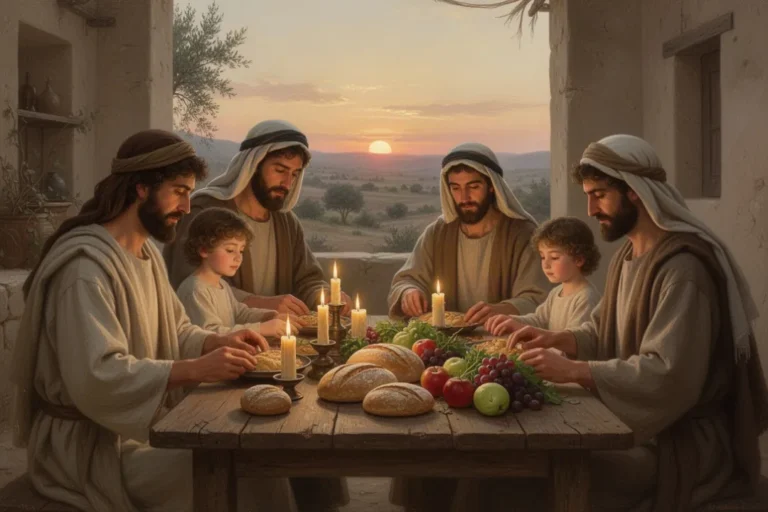
In Judaism, Shabbat is the weekly Sabbath observed from Friday before sunset until Saturday after sunset. The exact timing follows the Jewish practice of beginning days in the evening. Families and communities welcome the Sabbath with prayers, meals, blessings, and the lighting of candles, then mark its close with a ceremony commonly called Havdalah.
Shabbat is not simply an individual wellness practice. It is a covenant sign and a central part of Jewish religious life. It joins weekly observance with the story of the Jewish people: creation, liberation from Egypt, covenant with God, and life as a community shaped by sacred time.
Traditional Jewish practice includes restrictions on forms of creative labor, often described through categories derived from the work associated with the ancient sanctuary. The details can be complex and vary among Orthodox, Conservative, Reform, and other Jewish communities. Practices may involve limits on cooking, writing, carrying certain items, using electronics, traveling, or handling money, depending on the community and individual observance.
These restrictions are not meant to make the day pointless or gloomy. They help create a boundary around the Sabbath so that ordinary concerns do not take over. Instead of treating the day as a shorter workday filled with errands, a person prepares beforehand and gives attention to prayer, meals, study, family, hospitality, and rest.
Attending synagogue services or spending time in prayer.
Reading and discussing Scripture or other Jewish teachings.
Resting from regular employment and household production.
Ending the Sabbath with Havdalah after nightfall on Saturday.
The meal itself can be an important expression of holiness. Ordinary food, conversation, and family life are not rejected; they are received with gratitude and placed within sacred time. The Sabbath shows that worship can include a table, a song, a walk, a conversation, and a peaceful interruption of the usual schedule.
Jewish tradition also treats Sabbath as a reminder of human dignity. A person is more than a worker, consumer, student, or business owner. By refusing to measure every hour by productivity, Shabbat offers a regular experience of freedom from economic pressure.
How Jesus and the New Testament approach the Sabbath
The Gospels show Jesus observing Jewish religious life while also challenging interpretations that placed burdens on people. Several Gospel accounts describe disagreements between Jesus and some religious leaders about what was permitted on the Sabbath. The issue was not whether the Sabbath mattered. The disagreement concerned how its purpose should be understood and applied.
Jesus healed people on the Sabbath, allowed his disciples to gather food while traveling, and emphasized that the Sabbath exists for the good of human beings. In Mark 2:27–28, his teaching presents Sabbath as a gift intended to serve people rather than a mechanism for harming or humiliating them. In Matthew 12:1–14, the discussion of Sabbath includes mercy, human need, and doing good.
These passages do not present Jesus as dismissing rest or worship. They show him opposing a use of religious rules that ignored compassion, hunger, illness, and human dignity. The Sabbath should support life, not prevent people from receiving necessary help.
The New Testament also records Paul’s teaching about disputes over special days. Romans 14:5–6 says that believers may differ in how they regard particular days, while Colossians 2:16–17 warns against judging people over festivals, new moons, or Sabbaths. These passages are part of why Christian groups differ over whether believers are required to observe the seventh-day Sabbath in the same way as Israel under the Mosaic covenant.
Hebrews 4 uses the idea of God’s rest in a broader spiritual sense. The passage connects Sabbath rest with entering God’s rest through faith, while still using language that encourages God’s people to receive that rest. Christians interpret this passage differently, but it is commonly understood as pointing beyond a calendar rule to trust in God’s completed work.
Jesus’ approach gives Christians several principles for thinking about Sabbath:
Rest is a gift, not a punishment or a test of spiritual superiority.
Mercy belongs within Sabbath practice, especially when someone needs healing, food, care, or protection.
Religious observance should serve human flourishing rather than create needless burdens.
People should not use Sabbath practices to judge others whose convictions or traditions differ.
Christian denominations apply these principles in different ways. Some observe Saturday as the Sabbath. Others observe Sunday, the traditional day of Christian worship associated with Jesus’ resurrection, and call it the Lord’s Day. Some treat Sunday as a day for church and rest but do not identify it strictly with the seventh-day Sabbath. Others believe that the Sabbath command remains important as a weekly pattern while allowing freedom about the specific day.
A Christian view of Sabbath should hold together two truths: regular rest matters, and compassion matters more than rigid rule-keeping when someone’s genuine need is at stake.
What Sabbath rest includes beyond sleeping
Sabbath rest can include physical sleep, but it means more than recovering from fatigue. It is a deliberate pause from the activities that normally define the week. For one person that may mean stepping away from paid employment; for another, it may mean setting aside schoolwork, business administration, household projects, or constant digital communication.
The goal is not to create a perfect day with no responsibilities. Parents, caregivers, medical workers, and others may have duties that cannot simply be suspended. Sabbath practice asks how a person can create real limits around unnecessary work while still meeting essential needs and caring for vulnerable people.
A helpful Sabbath may contain several kinds of rest:
Physical rest: sleeping, sitting quietly, walking at an easy pace, or taking a break from demanding labor.
Mental rest: stepping away from deadlines, constant decisions, news, and performance pressure.
Spiritual rest: praying, worshiping, reading Scripture, singing, or receiving silence before God.
Relational rest: sharing an unhurried meal, visiting friends, or giving focused attention to family.
Emotional rest: setting down the demand to solve every problem immediately.
Ethical rest: making sure your pause does not depend on unfairly shifting excessive work onto someone else.
Sabbath also differs from entertainment. Watching a show or scrolling through a phone may feel restful, but those activities can also leave you overstimulated or distracted. A Sabbath question is not simply, “What do I enjoy?” It is, “What helps me become attentive to God, people, and the life I am receiving?”
That answer will not look identical for everyone. A quiet person may need solitude, while someone who lives alone may find renewal through a shared meal. A physically demanding worker may need sleep and gentle recreation. A person whose job involves screens may choose a technology boundary, while another person may use technology to participate in worship.
There is also a difference between rest and avoidance. Sabbath does not require pretending that difficult problems do not exist. It creates enough distance to approach them with greater wisdom instead of reacting from exhaustion. Some people find that prayer, journaling, or a walk helps them acknowledge anxiety without letting it control the entire day.
How to practice a meaningful Sabbath today
Beginning a Sabbath practice usually works better when you start with a manageable rhythm rather than attempting to redesign your entire life at once. Choose a recurring period, decide what ordinary work you will pause, and prepare for predictable needs beforehand.
For many people, a practical starting point is a half-day or a consistent evening and morning. The biblical pattern is a full day, but a person with shift work, caregiving responsibilities, or an unpredictable schedule may need to adapt the rhythm while preserving its purpose. Consistency and intention matter more than creating an impressive schedule.
These steps can help you establish a Sabbath practice:
Choose the time. Select a weekly period that can be protected as reliably as possible. Jewish observance begins Friday evening, while many Christians use Sunday or another agreed period.
Define what you will stop. Name the activities that make the period feel like ordinary work, such as email, paid tasks, shopping, school assignments, or household projects.
Prepare in advance. Finish essential errands, cook simple food, communicate your availability, and handle urgent messages before the Sabbath begins.
Plan a positive purpose. Include worship, prayer, Scripture, nature, music, hospitality, creative activity, or unhurried conversation instead of merely trying to endure inactivity.
Protect other people’s rest. Avoid creating unnecessary demands for family members, employees, service workers, or guests.
Review the experience. Afterward, consider what restored you, what created pressure, and what boundary needs adjustment next time.
A Sabbath does not have to be expensive. It can involve a home-cooked meal, a walk, reading, singing, prayer, board games, visiting someone, or sitting without a productivity goal. The value lies in the intentional change of pace, not in buying special products or arranging an elaborate event.
Work schedules require honest planning. A nurse, police officer, restaurant employee, caregiver, or emergency responder may need to observe a different day or divide rest into protected periods. Someone who works multiple jobs may have very little free time. In such cases, Sabbath principles can still guide the search for a recurring time of rest, worship, and release from nonessential demands.
Families should also discuss what Sabbath means together rather than imposing one person’s ideal on everyone else. Children may need active play, and caregivers may need support instead of additional religious labor. A healthy practice distributes preparation fairly and leaves room for joy, accessibility, and genuine renewal.
Technology deserves special attention because it can quietly bring work into every room. You might silence business notifications, keep a phone away during meals, avoid checking work accounts, or use a shared device only for worship and essential communication. The right boundary depends on your responsibilities, but the purpose is clear: create a period in which attention is not constantly claimed by outside demands.
Common misunderstandings about the Sabbath
One common misunderstanding is that Sabbath means doing absolutely nothing. Biblical Sabbath is better understood as ceasing from ordinary labor, not refusing every form of movement or activity. Worship, hospitality, meals, walking, helping someone, and acts of mercy can all fit within a day devoted to God and human well-being.
Another misunderstanding is that Sabbath is only for religious professionals or people with easy lives. The biblical command addresses the whole community, including workers and dependents. Its purpose is especially relevant for people whose labor is often treated as invisible or endlessly available.
Some people also assume that Sabbath is simply a personal self-care technique. Rest does benefit mental and physical health, but biblical Sabbath has a wider focus. It involves relationship with God, responsibility toward others, gratitude for creation, and resistance to exploitation. It asks not only how you feel after resting but also whether your patterns allow others to rest.
At the other extreme, Sabbath can be misunderstood as a test of religious worthiness. A person may feel guilty for needing flexibility or may judge others for observing a different day. The New Testament’s teaching about differing convictions cautions against turning Sabbath practice into a competition or a tool for condemnation.
Finally, Sabbath is not the same as a vacation. A vacation may happen once or twice a year and often requires travel, planning, and spending. Sabbath is weekly and ordinary. Its power comes from returning again and again to a rhythm that says your value does not depend on constant output.
At its fullest, Sabbath brings together stopping and receiving. You stop treating every moment as an opportunity for production, and you receive time as a gift. You remember that God is not honored by burnout, that people need rest, and that a faithful life includes both meaningful work and deliberate release from work.
Frequently asked questions
Is Sabbath Saturday or Sunday?
In the biblical pattern and Jewish tradition, Sabbath is the seventh day, observed from Friday evening to Saturday evening. Many Christians worship on Sunday because it is associated with Jesus’ resurrection, while some Christian groups observe Saturday as Sabbath. Other Christians treat Sabbath as a weekly principle of worship and rest without requiring one specific day. Practices depend on religious tradition and personal conviction.
Does Sabbath mean you cannot do any work?
Sabbath means stopping ordinary, nonessential work, but it does not require ignoring urgent needs or refusing acts of mercy. Caregiving, medical work, protecting someone, preparing necessary food, and helping a person in distress can fit the Sabbath’s purpose. The biblical emphasis is on rest, worship, human dignity, and trust in God rather than on applying restrictions in a way that causes harm.
Can Christians practice Sabbath today?
Yes, many Christians practice a weekly Sabbath or a related rhythm of worship and rest. They may set aside Sunday, Saturday, or another regular period for church, prayer, family, rest, and freedom from routine work. Christian traditions differ about whether Sabbath is a binding command, but many agree that regular rest and worship are valuable spiritual disciplines.
What should I do on a Sabbath?
You might worship, pray, read Scripture, share a meal, spend time with loved ones, walk, enjoy nature, visit someone, or rest quietly. Beforehand, identify the tasks that make the period feel like work and prepare for them in advance. Choose activities that restore attention and gratitude, while avoiding unnecessary demands on other people.


Leave a Reply