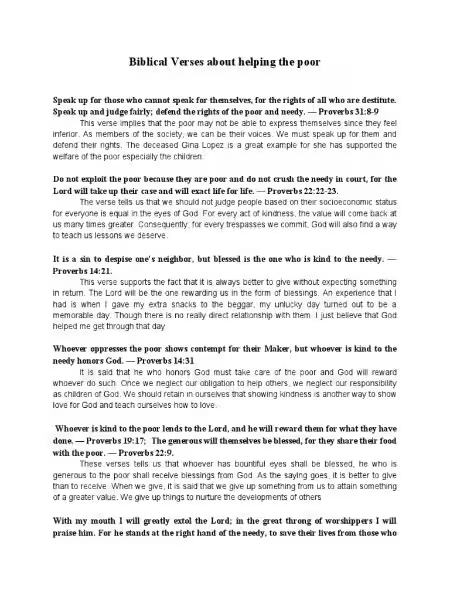
Throughout history, across cultures and faiths, the presence of poverty and those living in it has been a constant reality. The poor will be with us always, a phrase that speaks to the enduring nature of societal challenges. This reality, often acknowledged within religious frameworks, compels us to consider not just the existence of poverty, but also the responses it inspires within our communities and faiths.
Many religious traditions emphasize compassion and empathy for the vulnerable. Kindness towards the poor is often seen as a fundamental tenet. Consider the parable of the Good Samaritan; it highlights the importance of actively seeking out and helping those in need, regardless of social standing. This concept is echoed in many other religious teachings, emphasizing the interconnectedness of humanity and the responsibility we have towards those less fortunate. Religious texts and teachings frequently offer guidelines on how to support the poor, often focusing on providing material assistance and, more importantly, offering spiritual and emotional support.
A Multifaceted Perspective: Understanding Poverty Through Religious Lenses
Different faiths and religious traditions offer various perspectives on poverty. Some religions emphasize the importance of social justice, highlighting the need for systemic changes to address the root causes of inequality. Other faiths may focus more on individual responsibility, encouraging self-sufficiency and hard work as paths to overcoming poverty. For example, some religions might counsel against excessive indulgence and advocate for frugality in order to better manage resources. Examples include the concept of tithing in Christianity, or the emphasis on mindful consumption in certain Buddhist practices.
It’s important to recognize that these perspectives aren’t mutually exclusive. Often, a holistic approach is necessary, combining individual effort with societal action. The poor will be with us always, but their situations can be mitigated – in fact, their situations should be mitigated – through these varied approaches and active intervention. A good analogy here might be a doctor treating a patient: while the doctor might prescribe medicine, they also consider the patient’s overall lifestyle. This multifaceted approach, considering both individual and societal factors, is crucial to addressing the complex issue of poverty.
The Role of Religion in Alleviating Poverty
Religious organizations play a significant role in aiding the poor. Charity work, community outreach, and direct support for vulnerable populations are common activities. Consider soup kitchens run by churches or temples, or initiatives to provide housing and education to those in need. Religious leaders often serve as advocates and catalysts for change, encouraging their followers to engage with and support those living in poverty. These examples demonstrate the practical application of religious values to tackle tangible issues.
Beyond material assistance, religious institutions often offer a sense of community and belonging that can be crucial to those facing difficult circumstances. This supportive network provides emotional and spiritual comfort, which is often just as important as material aid. Faith-based initiatives can offer a framework for hope and resilience in the face of hardship. For instance, support groups within religious communities can provide a safe space for individuals experiencing poverty to share their struggles and build mutual support.
Challenges and Criticisms
While religion often provides valuable support for the poor, there are also criticisms and challenges to consider. Some critiques argue that religious institutions may sometimes perpetuate inequalities through their practices or teachings. For example, some argue that particular religious teachings might inadvertently create a sense of fatalism or resignation towards poverty. Acknowledging these criticisms is crucial to fostering a more effective and just response to poverty.
Ultimately, the poor will be with us always in various forms. The challenge lies in finding ways not just to alleviate their suffering, but also to engage with the systems that contribute to poverty. A nuanced and practical approach, one that considers both individual responsibility and systemic change, is key. This can be achieved through collaborative efforts, informed by the values and principles of various faiths, making sure to address both the immediate needs and the underlying causes of poverty.
Frequently Asked Questions
What does “the poor will be with us always” mean?
This statement, often attributed to religious texts, signifies that poverty and hardship will persist in society. It doesn’t necessarily imply a lack of effort to alleviate poverty, but rather acknowledges its enduring presence.
How does this align with religious teachings on helping the poor?
Many religions emphasize compassion and charity towards the less fortunate. While acknowledging the enduring presence of poverty, religious teachings often encourage acts of kindness, support, and social justice to mitigate suffering and promote a more equitable society.
Does this mean there’s no hope for eliminating poverty?
No. The statement simply recognizes the historical and ongoing reality of poverty. Religious and secular efforts to combat poverty are still crucial and can make a positive impact.
If poverty is always with us, why should we help the poor?
Religious and ethical frameworks often emphasize the importance of compassion, empathy, and justice. Helping the poor is seen as a moral imperative, a way to reflect divine/universal values, and a means of building a more just and compassionate society.
What are some examples of religious responses to poverty?
Many religions have advocated for social programs, charitable initiatives, and advocating for policies that support the poor. Examples include food banks, shelters, micro-loans, and advocating for fair wages and economic opportunity.