The Mount of Transfiguration: Meaning and Bible Story
The Mount of Transfiguration: Meaning and Bible Story
The Mount of Transfiguration is the mountain where Jesus’ appearance changed before Peter, James, and John, revealing his divine glory. The event appears in Matthew 17:1–8, Mark 9:2–8, and Luke 9:28–36.
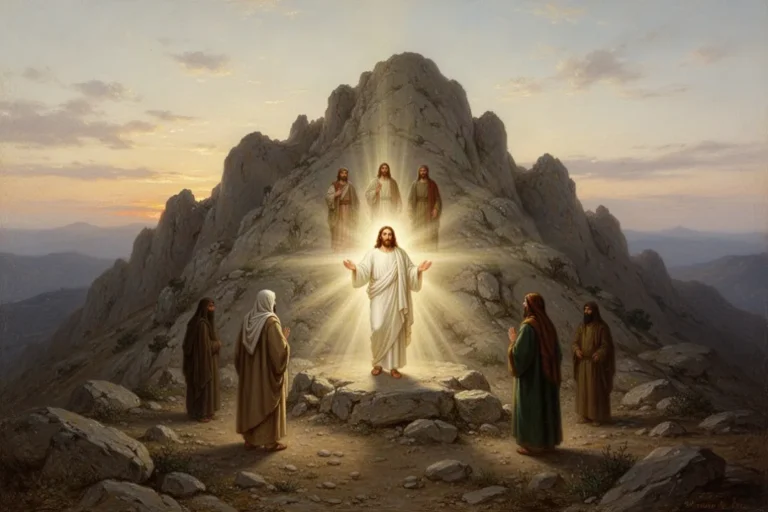
During this extraordinary moment, Jesus’ face and clothing became brilliantly radiant. Moses and Elijah appeared with him, and a cloud surrounded the disciples as a heavenly voice identified Jesus as God’s beloved Son. The scene confirmed Jesus’ identity and directed the disciples to listen to him.
Jesus took Peter, James, and John up a high mountain after teaching his disciples about his identity and the suffering he would face. The Gospel accounts place the event shortly after Peter confessed that Jesus was the Messiah and Jesus began explaining that he would be rejected, killed, and raised again.
At the mountain, Jesus was transfigured, meaning his visible appearance was dramatically changed. Matthew describes his face shining like the sun and his clothes becoming intensely white. Mark emphasizes the dazzling whiteness of his clothing, while Luke focuses on the change in Jesus’ appearance as he prayed.
Moses and Elijah then appeared and spoke with Jesus. Luke identifies the subject of their conversation as Jesus’ approaching departure, or “exodus,” in Jerusalem. This conversation connects the mountain scene directly with the cross, resurrection, and Jesus’ completion of his mission.
Peter responded by suggesting that three shelters or tents should be made: one for Jesus, one for Moses, and one for Elijah. Luke explains that Peter did not fully understand what he was saying, partly because the disciples were sleepy and overwhelmed by the event.
Before Peter finished speaking, a bright cloud covered them. A voice from the cloud declared that Jesus was God’s beloved Son and instructed the disciples to listen to him. The disciples fell facedown in fear, but Jesus came to them, touched them, and told them not to be afraid.
When they looked up, they saw no one except Jesus. As they came down the mountain, Jesus instructed them not to tell others about the vision until after the Son of Man had been raised from the dead.
The central message: The Transfiguration is not mainly about identifying a particular mountain. It is about revealing Jesus’ glory and confirming that his path through suffering leads to resurrection.
Why Jesus went up the mountain with three disciples
The Gospel writers do not present the climb as a random retreat. Jesus went up to pray, and he chose three witnesses from the larger group of disciples. Peter, James, and John also appear together at other significant moments, including the raising of Jairus’ daughter and Jesus’ prayer in Gethsemane.
The three disciples formed a small circle of witnesses for events that the entire group did not see. Their presence at the Transfiguration and Gethsemane creates a meaningful contrast: on the mountain they saw Jesus’ glory, while in the garden they saw his anguish before the crucifixion.
Luke especially connects the Transfiguration with prayer. Jesus went up the mountain to pray, and the change in his appearance occurred while he was praying. This detail presents glory not as a performance for the crowd but as a revelation connected with his relationship with the Father.
The mountain also creates distance from the crowds. Jesus had been teaching publicly, healing, and responding to questions about his identity. The private setting allowed the disciples to receive a deeper revelation before returning to the confusion, need, and opposition below.
What the word “transfiguration” means
The English word transfiguration refers to a profound change in outward appearance. The New Testament accounts do not describe Jesus as becoming a different person. Instead, they show his existing identity being revealed in a visible and extraordinary way.
Jesus remains recognizable throughout the scene. He is still the teacher who has been traveling with the disciples, yet his appearance displays a glory that ordinary human vision had not revealed. The event therefore joins continuity and revelation: the same Jesus is seen more fully.
The account differs from stories in which a person is temporarily transformed into an animal, a deity, or another human figure. Jesus does not change into someone else. His appearance shines, and the disciples receive a glimpse of his heavenly majesty.
That distinction matters for Christian interpretation. The Transfiguration is commonly understood as a disclosure of Jesus’ divine glory, not as the moment when he becomes divine. The event makes visible who he already is.
Moses and Elijah are two of the most important figures in Israel’s Scriptures. Their appearance beside Jesus signals that the Transfiguration is connected with God’s covenant history, the law, the prophets, and the hope of redemption.
Moses is associated with the law and with a previous mountain revelation. He encountered God on Mount Sinai, where he received the covenant law. His face later reflected the glory associated with that encounter, although the Gospel account presents Jesus’ radiance as uniquely his own.
Elijah represents the prophetic tradition and is closely associated with Mount Carmel, divine revelation, and Israel’s call to return to faithful worship. The final prophetic expectations in the Old Testament also connect Elijah with the time when God would prepare his people for what was coming.
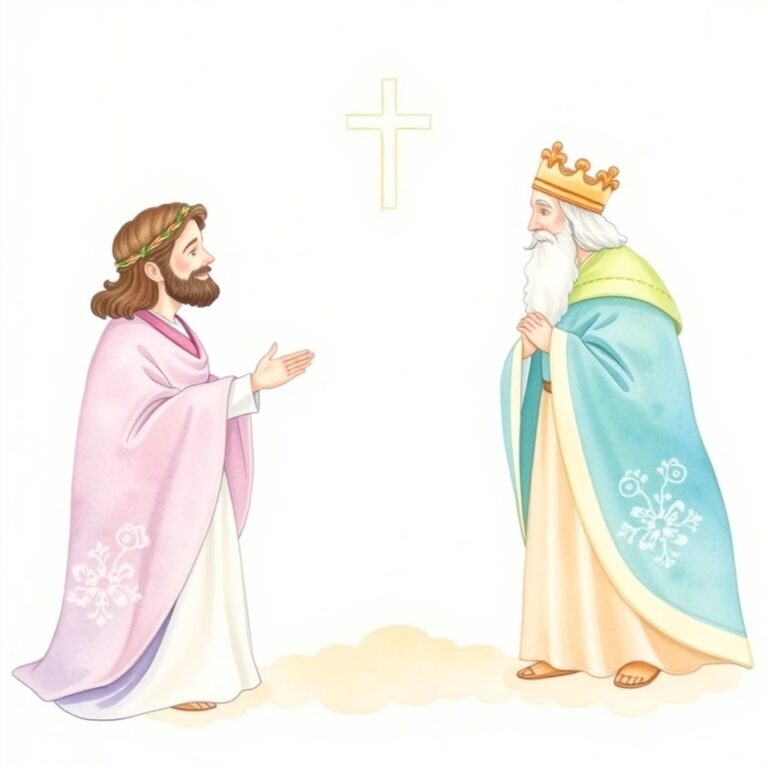
Together, Moses and Elijah can represent the law and the prophets. Their presence indicates that Jesus does not stand outside Israel’s story. Rather, the story points toward him, and his mission brings its promises toward fulfillment.
Luke’s description adds another layer. Moses and Elijah speak with Jesus about his departure in Jerusalem. The word used can recall an exodus, making a connection with Israel’s escape from slavery and suggesting that Jesus’ death, resurrection, and ascension will accomplish a greater act of deliverance.
The scene also establishes Jesus’ authority over both figures. Moses and Elijah appear alongside him, but the heavenly voice directs the disciples to listen to Jesus. The law and prophets are honored, yet Jesus is the decisive voice.
What the heavenly voice means
The voice from the cloud identifies Jesus as God’s beloved Son and tells the disciples to listen to him. This is the central spoken declaration in the event. It confirms Jesus’ unique relationship with the Father and gives the disciples a clear response to his teachings about suffering.
Peter had recently recognized Jesus as the Messiah, but the disciples struggled to accept that the Messiah would be rejected and killed. The heavenly command corrects any attempt to reshape Jesus’ mission according to human expectations. They must listen even when his path does not match their preferred idea of victory.
The voice also echoes the earlier baptism of Jesus, where a heavenly declaration identifies him as God’s beloved Son. At the baptism, the message is heard as Jesus begins his public ministry. At the Transfiguration, it comes as he turns toward Jerusalem and the cross.
The cloud carries biblical associations with God’s presence. In Israel’s wilderness journey, a cloud was connected with God’s guidance and glory. The cloud at the Transfiguration therefore signals more than unusual weather; it represents a divine manifestation surrounding the revelation.
The command to listen remains important for Christian readers. The disciples are not told merely to admire the light or preserve the experience. They are told to hear Jesus, including his difficult teaching about sacrifice, service, death, and resurrection.
Why Peter wanted to build three shelters
Peter’s proposal to build three shelters is one of the most discussed details in the account. He appears to want to preserve the moment and provide a place for Jesus, Moses, and Elijah. His words show reverence, but they also reveal confusion about what is happening.
Luke says the disciples were weighed down with sleep, and Peter spoke without fully understanding the situation. The proposal may reflect an attempt to respond practically to an overwhelming spiritual experience. Peter sees three glorious figures and assumes that three equal shelters are appropriate.
The heavenly voice interrupts the proposal. The disciples are not directed to organize a permanent shrine or to treat Jesus as one honored figure among three. The command to listen to Jesus establishes a clear distinction: Jesus is not merely an additional representative of the law and prophets.
Peter’s reaction also reflects a common human tendency. When people experience something meaningful, they may try to hold on to it, define it, or recreate it immediately. The Transfiguration does not allow the disciples to remain on the mountain. They must return to the people and the mission below.
There is no biblical evidence that the disciples built shelters there. The story moves quickly from the vision to the descent, where Jesus encounters a suffering child and the disciples face their continuing need for faith and understanding.
How the Transfiguration points toward the cross
The glory of the mountain cannot be separated from Jesus’ coming suffering. In all three Gospel accounts, the event occurs near teachings about the cross. The disciples see his majesty before they must confront the scandal of his rejection and death.
Matthew and Mark place the event after Jesus warns that he will suffer, be killed, and rise again. Peter had objected to this prediction, showing that he expected the Messiah’s role to look different. The Transfiguration confirms Jesus’ authority precisely when the disciples are tempted to reject his explanation of what lies ahead.
Luke emphasizes the conversation about Jesus’ departure in Jerusalem. The radiant mountain is therefore not an escape from the mission. It prepares Jesus and the disciples for the journey toward Jerusalem, where the mission will reach its decisive stage.
The contrast between glory and suffering is essential. Christian faith does not treat the cross as an accidental interruption of Jesus’ kingship. The Transfiguration shows that the one who will suffer is also the glorious Son, and that the suffering must be understood in light of resurrection.
The event may have strengthened the three disciples for the distress of Gethsemane. They would later struggle to remain awake while Jesus prayed in anguish. Even if they did not fully understand the mountain vision at the time, its memory would help them see that Jesus’ humiliation did not erase his true identity.
How the Transfiguration points toward the resurrection
Jesus tells the disciples to wait before reporting what they saw, specifically until after the Son of Man had risen from the dead. This instruction links the Transfiguration to the resurrection, which is the key to understanding the vision.
Before the resurrection, the disciples could easily interpret the shining appearance as an isolated miracle or an indication of future political power. After the resurrection, they could understand it as a preview of Jesus’ glorified existence and a confirmation of his identity.
The radiant appearance also helps explain why the resurrection is not simply a return to ordinary life. Jesus is not merely restored to the condition he had before his death. The Gospel message presents resurrection as victory over death and entrance into transformed, imperishable life.
The instruction to remain silent for a time also shows that religious experiences need proper context. The disciples had witnessed something real, but they did not yet have the complete meaning. The cross and resurrection would provide that meaning.
Which mountain was the Mount of Transfiguration?
The Bible does not name the mountain. Matthew and Mark call it a high mountain, while Luke simply describes Jesus going up the mountain. Because no Gospel provides a place name, claims of certainty should be avoided.
Mount Tabor has been associated with the event since ancient Christian tradition. It is a prominent hill in Galilee and became an important pilgrimage location. However, some scholars question whether Tabor fits the setting because a settlement or fortress may have occupied the summit during the period of Jesus’ ministry.
Another commonly suggested location is Mount Hermon, a much higher mountain in the northern region. Supporters of this view point to the area’s proximity to Caesarea Philippi, where Jesus and the disciples were shortly before the Transfiguration in Matthew and Mark.
Mount Hermon also fits the description of a high mountain more literally. Yet the Gospel texts do not explicitly identify it, and the proposed location remains a matter of interpretation rather than established fact.
Some readers have proposed other mountains in Galilee or the surrounding region. The lack of a named location may be deliberate or may simply reflect the way the Gospel writers presented the event. In either case, the spiritual meaning does not depend on identifying the exact summit.
Location caution: Mount Tabor is the best-known traditional site, while Mount Hermon is a frequently discussed alternative. The biblical accounts themselves do not settle the question.
How Matthew, Mark, and Luke describe the event differently
The three Synoptic Gospels share the same basic structure but emphasize different details. Comparing them helps you see the full shape of the story without treating every variation as a contradiction.
Matthew 17:1–8 highlights Jesus’ shining face and clothes, the disciples’ fear, and Jesus’ reassuring touch.
Mark 9:2–8 stresses the extraordinary whiteness of Jesus’ clothing and preserves Peter’s confused proposal in vivid detail.
Luke 9:28–36 emphasizes prayer, identifies the topic of Jesus’ conversation with Moses and Elijah, and describes the disciples’ sleepiness.
These differences reflect each Gospel writer’s presentation and theological emphasis. Matthew often highlights fulfillment and Jesus’ relationship to Israel’s Scriptures. Mark frequently presents the disciples as struggling to understand. Luke draws attention to prayer and to the divine plan unfolding in Jerusalem.
All three accounts agree on the essential points: Jesus goes up a mountain with three disciples, his appearance changes, Moses and Elijah appear, a cloud surrounds them, God’s voice identifies Jesus, and the disciples later see Jesus alone.
Practical ways to read the Mount of Transfiguration accurately
The story can be misunderstood when a detail is isolated from its setting. These reading habits help keep the event connected to the Gospel’s wider message.
Read the surrounding passages. Begin with the prediction of Jesus’ suffering and continue into the account of the descent. The mountain vision is part of a larger movement toward Jerusalem.
Do not treat the mountain’s identity as the main issue. Since the Bible does not name it, present Tabor and Hermon as proposals rather than facts.
Keep Jesus at the center. Moses and Elijah are significant, but the heavenly command specifically directs the disciples to listen to Jesus.
Do not separate glory from suffering. The Transfiguration does not promise that disciples will avoid hardship. It reveals who Jesus is as he moves toward the cross.
Notice the disciples’ limited understanding. Peter’s proposal and the disciples’ fear show that genuine witnesses did not immediately grasp the event’s full meaning.
Compare the Gospel accounts carefully. Differences in emphasis can add detail without changing the central story.
Do not assume every mountain vision has the same meaning. Biblical mountain scenes vary. Their significance comes from their context, not from the mountain setting alone.
Common mistakes people make about the Mount of Transfiguration
Several popular explanations go beyond what the Gospel texts actually say. Careful reading avoids turning a meaningful mystery into an unsupported certainty.
Calling the mountain Mount Tabor as if the Bible names it: Tabor is a traditional identification, not an explicit biblical statement.
Saying Jesus became divine on the mountain: The event reveals his glory; it does not describe his adoption or transformation into God’s Son.
Describing Moses and Elijah as equal to Jesus: They appear with him, but the divine voice singles Jesus out as the one to hear.
Treating Peter’s shelters as a successful plan: The narrative presents Peter as confused and interrupts his suggestion.
Using the event to promise constant spiritual excitement: The disciples leave the mountain and return to suffering, need, and ordinary ministry.
Ignoring the resurrection instruction: Jesus himself connects the meaning of the vision with his rising from the dead.
What the Mount of Transfiguration means for Christian faith
The event gives Christians a way to understand Jesus’ identity when appearances are misleading. He will soon look powerless in arrest, trial, and crucifixion, but the mountain reveals that humiliation does not define the whole truth about him.
It also shows that revelation and obedience belong together. The disciples see something magnificent, but the command they receive is practical: listen to Jesus. Biblical faith is not measured only by a powerful experience; it is also shown by receiving and following Jesus’ teaching.
The presence of Moses and Elijah places Jesus within the story of Scripture while also showing his unique authority. God’s earlier work is not discarded, yet the disciples are directed beyond the representatives of the past to the Son who fulfills the divine purpose.
The event offers hope without denying pain. Jesus’ glory shines before the cross, not instead of it. For Christian readers, that pattern means suffering may be real and severe without having the final word.
The Transfiguration also encourages patience. Peter, James, and John did not understand everything immediately. Some truths became clear only after Jesus’ death and resurrection. Their incomplete understanding does not make the revelation meaningless; it shows that spiritual understanding can unfold as events provide context.
Why the disciples saw Jesus alone afterward
When the cloud lifts, the disciples see Jesus only. This brief detail provides the scene’s final emphasis. Moses and Elijah have served their purpose as witnesses to the law, the prophets, and God’s saving work, but Jesus remains.
The ending does not dishonor Moses or Elijah. Instead, it shows that the revelation has reached its focal point. The disciples are not left with a collection of competing authorities. They are left with Jesus, whose words they have been commanded to hear.
This ending also prepares them for the ordinary-looking Jesus they will encounter on the road and among the crowds. The dazzling vision fades, but Jesus does not disappear from their lives. The one who shines on the mountain continues to teach, heal, suffer, die, and rise.
The Mount of Transfiguration therefore serves as a concentrated revelation of the Gospel: Jesus is the beloved Son, the fulfillment of Israel’s hope, the Lord whose glory is real, and the one whose path through Jerusalem leads to resurrection.
Frequently asked questions
Is the Mount of Transfiguration the same as Mount Tabor?
Mount Tabor is the traditional Christian location, but the Bible does not name the mountain. Mount Hermon is another frequently suggested site because of the surrounding chronology and geography in Matthew and Mark. The exact location cannot be established with certainty from the Gospel accounts.
Who witnessed the Transfiguration?
Peter, James, and John witnessed the event with Jesus. They were part of his closest group of disciples and also accompanied him during other especially significant moments. The wider group of disciples and the crowds below did not see the vision on the mountain.
What did Moses and Elijah represent?
Moses and Elijah connected Jesus with Israel’s Scriptures and God’s earlier work. Moses is associated with the law, while Elijah represents the prophets. Their appearance indicates continuity with that story, but the heavenly voice makes clear that Jesus has the decisive authority.
Why did Jesus tell the disciples not to speak about the vision immediately?
Jesus connected their testimony with his resurrection. Before the cross and resurrection, the disciples could misunderstand the vision as a sign of earthly triumph or political power. Afterward, they could explain it as confirmation of Jesus’ identity and glorified mission.








Leave a Reply