If you have seen The Greatest Story Ever Told listed in a bookstore or remembered the title from an old biblical film, you may wonder which book it refers to. The answer is usually Fulton Oursler’s historical novel about the life of Jesus Christ, first published in the mid-20th century. It retells the Gospel story in readable narrative form while adding imagined conversations, descriptions, and connecting scenes.
The book can be a useful choice if you want a continuous account of Jesus’ life rather than four separate Gospel narratives. It is not, however, a replacement for the Bible. Oursler’s work is a literary retelling based on the New Testament, and readers should distinguish biblical events from the author’s narrative additions.
The Greatest Story Ever Told is a historical and religious novel by American writer Fulton Oursler. Its subject is the life, teaching, death, and resurrection of Jesus, presented as one flowing story. The book draws primarily from the four Gospels: Matthew, Mark, Luke, and John.
Rather than reproducing the Gospel text, Oursler combines material from those accounts and supplies transitions between them. A novel needs settings, movement, and dialogue that carry the reader from one scene to the next. Those elements make the story easier to follow, but they also mean that some details come from the author’s imagination rather than from a specific biblical passage.
The title is sometimes associated with the 1965 film directed by George Stevens. The movie shares the book’s subject and title, but a film adaptation is not identical to the original text. Cast, pacing, visual choices, and screenplay decisions shape the movie in ways that do not necessarily reflect every part of Oursler’s book.
Reader’s note: Treat the book as a respectful literary retelling of the Gospel narrative, not as a modern translation, study Bible, or direct quotation of Scripture.
Who wrote the book and what perspective it uses
Fulton Oursler was a journalist, editor, and author known for writing about Christianity for a broad audience. His approach in The Greatest Story Ever Told is designed to make the story of Jesus accessible as a sustained narrative rather than as a collection of short passages.
The book presents Jesus as the central figure in a story of teaching, compassion, conflict, sacrifice, and hope. It also gives attention to the people around him, including his disciples, religious opponents, family members, Roman authorities, and ordinary people who encounter him. Their reactions help create the social and political setting of first-century Judea.
Because the work is a novel, its tone reflects Oursler’s interpretation. Readers may find the portrayal reverent and traditional, but they should still recognize that the narrative voice is not the voice of the Gospel writers. The author chooses which scenes to emphasize, how to connect them, and how to imagine the emotions or motives of characters when the biblical accounts are brief.
This distinction matters most when you are using the book for church study, personal devotion, teaching, or research. The book can prompt questions about a Gospel passage, but the passage itself remains the primary source for understanding what the Bible says.
What the story covers from Jesus’ life
The narrative follows the broad arc familiar to Christian readers. It begins with the circumstances surrounding Jesus’ birth and early life, then moves toward his public ministry, his growing group of followers, opposition from religious and political authorities, his crucifixion, and the events Christians associate with his resurrection.
The structure gives readers a sense of progression. Jesus’ public work develops through encounters with individuals and groups, teachings delivered to crowds and disciples, acts of healing, and disputes over religious authority. As the story advances, the tension between Jesus and powerful institutions becomes more pronounced.
Readers will recognize many well-known Gospel episodes, including:
Jesus’ birth and early years, as presented through the opening Gospel traditions.
His baptism and temptation, which mark the beginning of his public ministry.
The calling of disciples and the formation of a close circle of followers.
Teachings, parables, and healings that reveal his understanding of God’s kingdom and human responsibility.
Encounters with outsiders and the marginalized, which challenge social and religious assumptions.
The raising of Lazarus and the journey toward Jerusalem, especially prominent in the later Gospel narrative.
The Last Supper, arrest, trial, and crucifixion.
The resurrection appearances that form the ending of the Christian Gospel story.
These events do not appear in exactly the same order in every Gospel. Oursler’s task is to create one chronological-feeling narrative from accounts that have different emphases and arrangements. That makes the book smoother to read, but it can also hide some of the distinctive features of each individual Gospel.
How the book differs from the four Gospels
The four Gospels are separate works with their own voices, structures, and theological purposes. Matthew frequently connects Jesus’ story with Israel’s Scriptures and presents him as a teacher and fulfillment of earlier promises. Mark is notably direct and urgent. Luke emphasizes a wide-reaching message of mercy and salvation, while John uses distinctive language and extended reflections about Jesus’ identity.
The Greatest Story Ever Told brings these accounts together into one literary presentation. It may combine parallel episodes, smooth over differences in emphasis, or place events into a sequence that feels natural for a novel. The result is easier to read as a single biography, but it does not preserve every feature of the original Gospel arrangement.
There are also differences in wording. A Bible translation has a defined textual basis and follows an established translation method. Oursler writes original prose, even when he is closely following a biblical scene. His descriptions of landscapes, inner reactions, and conversations may be plausible, but they are not automatically Scripture.
If you want to compare the book with the Bible, read the relevant chapters in a reliable translation and ask three questions:
What does the biblical passage actually say? Separate direct information from assumptions you may have picked up elsewhere.
What has the novelist added? Look for descriptions, private thoughts, dialogue, and transitions that make the scene more complete.
What interpretation does the added material encourage? Consider how the author’s choices affect your understanding of a character or event.
Why readers choose this retelling
Many people turn to the book because the Gospel accounts can feel fragmented when read separately. One Gospel may begin with Jesus’ ministry, another may open with birth narratives, and each may include events that the others omit. A single narrative can provide a helpful sense of place, sequence, and character development.
The book may also appeal to readers who prefer storytelling to formal commentary. Instead of moving through explanatory notes, you encounter scenes and people. That approach can make familiar events feel connected and can help a reader who finds the Bible’s ancient setting difficult to picture.
Another reason is accessibility. A literary retelling can serve as a first step for someone who wants to understand the basic shape of Jesus’ life before studying the Gospel texts in detail. It can also give longtime readers a chance to consider familiar episodes from a different narrative angle.
Still, accessibility should not be confused with neutrality. Every retelling selects and interprets. The book’s presentation may reflect traditional Christian assumptions, and readers from different denominations or religious backgrounds may not agree with every emphasis.
How to read The Greatest Story Ever Told carefully
A thoughtful reading does not require you to reject the novel’s imaginative features. It simply helps you identify what kind of material you are reading at each point. The following approach keeps the story engaging while preserving a clear line between literature and Scripture.
1. Identify the source of each major episode
When the book presents a significant event, check which Gospel accounts include it. You do not need to stop after every paragraph. Marking the main episodes is enough to show whether a scene is strongly rooted in one Gospel, shared by several, or developed mainly through the novel’s connective storytelling.
For example, the account of Jesus’ crucifixion appears in all four Gospels, although each writer highlights different details. Other episodes appear in only one Gospel. Knowing that difference can lead you to read the scene with greater care rather than assuming every familiar detail appears throughout the New Testament.
2. Notice where dialogue becomes interpretive
Dialogue is central to a historical novel, but conversations in a retelling may extend beyond the words recorded in Scripture. A character’s response might be consistent with the Gospel portrait without being a quoted biblical statement.
Pay particular attention to private conversations between Jesus and individual disciples, imagined exchanges among religious leaders, and scenes involving minor characters. These moments can make the story vivid, yet they often reveal the novelist’s interpretation more than they provide documented historical information.
3. Keep the historical setting in view
Jesus lived in a Jewish society under Roman rule, and the Gospel accounts refer to religious customs, local communities, social boundaries, and political pressures. The book helps bring those pressures into a continuous narrative, but modern readers should not assume that a fictional description supplies a complete history of first-century Judea.
For deeper study, pair the novel with a reputable Bible commentary, historical background guide, or annotated Gospel edition. Look for resources that explain the role of the Temple, Jewish religious groups, Roman authority, village life, and the significance of Passover. These subjects illuminate the story without requiring the novel to carry every historical detail.
4. Read the ending as theology as well as narrative
The final sections move through arrest, execution, burial, and resurrection. For Christian readers, these are not merely plot developments; they are central claims about sin, redemption, death, and new life. The book’s narrative style can make the sequence emotionally powerful, but its meaning should be considered alongside the New Testament texts and the beliefs of your own Christian tradition.
The resurrection accounts themselves differ in details among the Gospels. A combined retelling may present them as one continuous sequence. Comparing the ending with Matthew 28, Mark 16, Luke 24, and John 20–21 can show how each Gospel shapes the reader’s understanding of the risen Jesus and the disciples’ response.
What the book adds through fictional storytelling
Historical fiction fills gaps that primary sources leave open. The Bible often tells you what a person did or said without describing every movement, facial expression, or private thought. Oursler uses those spaces to create atmosphere and emotional continuity.
That technique can help readers imagine the human setting of the Gospel story. A dusty road, a crowded home, a tense public debate, or a quiet conversation can feel more immediate when presented with sensory detail. The reader sees how an event might have affected the people nearby, even when the exact reaction is not recorded.
At the same time, invented detail can become persuasive. Once a scene has been vividly described, it may be difficult to remember which parts came from the Bible and which came from the novelist. The more emotionally convincing the passage, the more useful it is to maintain that distinction.
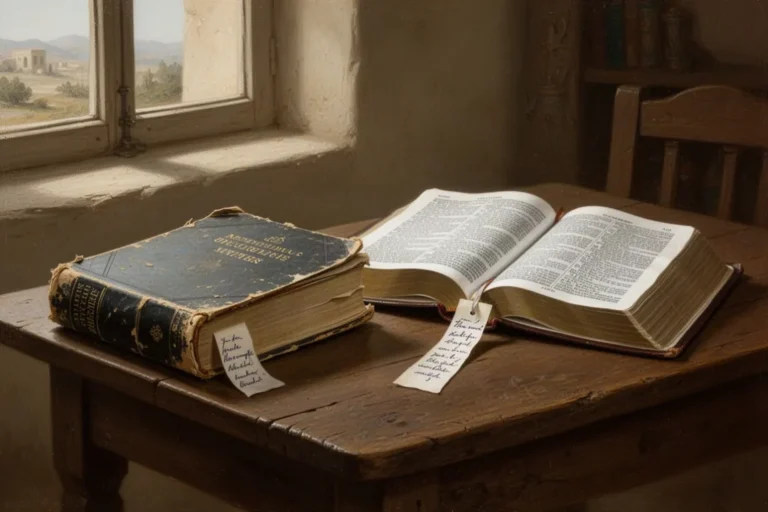
Practical method: Keep two bookmarks or notes while reading: one for Gospel references and one for questions about imagined details. This simple habit prevents a memorable fictional scene from becoming mistaken for a direct biblical account.
Is the book suitable for children, teens, or new readers?
Suitability depends on the edition, the reader’s age, and the purpose of the reading. The subject includes material that may be difficult for younger readers, especially betrayal, political violence, torture, crucifixion, grief, and religious conflict. A child-friendly adaptation may simplify the language and omit disturbing scenes, while the full novel treats the adult seriousness of the story more directly.
For teenagers or adults new to the Christian tradition, the book may provide useful narrative orientation. It can introduce major people and events before a reader moves to the Gospel texts. A parent, teacher, or church leader can help by explaining that the book is a retelling and by discussing questions about the historical and theological setting.
For children, a shorter illustrated Gospel storybook is usually more appropriate than an unabridged historical novel. Check the edition’s description, reading level, length, and treatment of the crucifixion before giving it to a young reader.
How to choose an edition
Older copies may vary in typography, cover design, print size, and editorial material. Some editions are sold as standalone novels, while others may be packaged with introductions, study notes, illustrations, or related religious material. The core title can therefore describe books that offer different reading experiences.
Before purchasing, check these details:
Author and full title: Confirm that the book is Fulton Oursler’s retelling rather than a movie tie-in, children’s adaptation, devotional collection, or unrelated work using the same phrase.
Edition and condition: Used copies may have small print, brittle pages, missing dust jackets, or handwritten notes.
Format: Compare hardcover, paperback, large-print, audiobook, and electronic editions according to how you plan to read.
Editorial material: See whether the edition includes an introduction, notes, glossary, or discussion questions.
Completeness: Make sure an abridged or adapted version is clearly identified if you want the full novel.
If you are buying for a study group, try to use the same edition for everyone. Page numbers can differ substantially between printings, and group discussion is easier when readers can locate the same passages. For a historical copy, a bookseller or library catalog can provide more reliable publication information than a marketplace listing alone.
How the book relates to the famous movie
The title is widely recognized because of the large-scale film released in 1965. That connection can lead readers to expect a screenplay-style book filled with cinematic descriptions. The novel and the film share the central subject, but they are separate works with different strengths.
A movie must tell its story through images, performances, sound, editing, and limited running time. A novel can spend more time on transitions, background, inner reflection, and secondary characters. Watching the film may help you visualize the period, but it should not be treated as a substitute for reading the book or the Gospels.
If you encounter a copy marketed as a film edition, check whether it is the original novel, a screenplay, a movie companion, or a photographic adaptation. Cover art can emphasize the film even when the underlying text remains Oursler’s book. The title alone does not always tell you which format you are buying.
The novel works best when you give it a clear role. It can be read for literary appreciation, used as a bridge into the New Testament, or discussed as an example of how religious history is adapted for a general audience. It becomes less useful when it is treated as the only source for either historical facts or Christian doctrine.
A personal reading plan might follow these steps:
Read a section of the novel without interruption so you can follow the narrative and notice its emotional emphasis.
Write down the main events and characters introduced in that section.
Read the related Gospel passages in a modern translation.
Mark additions and differences, including expanded dialogue, combined scenes, and changed sequence.
Reflect on the central theme, such as forgiveness, discipleship, authority, suffering, or hope.
Discuss questions rather than only reactions, especially when the novel’s interpretation differs from your tradition or from another Gospel.
For a group, assign one Gospel to each participant and compare how the same event appears in Matthew, Mark, Luke, or John. Then ask how Oursler’s unified narrative changes the emphasis. This approach turns the novel into a starting point for close reading rather than a replacement for it.
Questions the book can raise for modern readers
A retelling of Jesus’ life can prompt questions about how stories survive across languages, centuries, denominations, and media. Readers may ask why one event is emphasized over another, how a character’s motives are inferred, or what happens when a sacred text is reshaped as popular fiction.
It can also encourage reflection on the relationship between faith and historical storytelling. Some readers approach the book devotionally, while others read it as cultural or literary history. Neither approach removes the need to identify the work’s genre. A devotional response may be meaningful, but it should not be confused with evidence about what happened or with the wording of Scripture.
The book may be especially valuable for readers who want to understand why Jesus remains a central figure in Christian belief and Western culture. Its continuous storytelling presents the major arc clearly: a teacher gathers followers, challenges accepted boundaries, faces powerful opposition, suffers execution, and becomes the center of a resurrection faith. To explore that arc responsibly, read the novel alongside the primary Gospel accounts and allow each source to speak in its own form.
Where to begin if you want the Bible as well
If the book has sparked interest in the biblical material, start with one Gospel rather than trying to read the entire New Testament at once. Mark offers a relatively concise account of Jesus’ public ministry. Luke gives a broad narrative with attention to social outsiders and the movement toward Jerusalem. Matthew presents strong connections with Jewish Scripture, while John has a distinctive style and theological vocabulary.
Read a short section at a time and use cross-references only after you have understood the passage on its own. A Bible with clear notes can explain unfamiliar names and places, but a large number of notes may overwhelm a first reading. The aim is to see what each Gospel actually emphasizes before comparing it with the unified version in Oursler’s novel.
The Greatest Story Ever Told remains most useful as a literary doorway: it gives many readers a coherent narrative shape, creates interest in the people and events, and invites further reading. Its value increases when you appreciate its storytelling craft while keeping the Bible, historical study, and personal faith in their proper places.
Frequently asked questions
Is The Greatest Story Ever Told book the same as the Bible?
No. Fulton Oursler’s book is a historical novel based mainly on the four Gospels. It retells the life of Jesus in continuous prose and includes imagined transitions, descriptions, and dialogue. The Bible contains the primary Gospel accounts, each with its own structure and emphasis. Use the novel as a literary interpretation, not as a substitute for Scripture.
Who wrote The Greatest Story Ever Told?
The book was written by Fulton Oursler, an American journalist and author who wrote for a general audience about Christian subjects. His work presents Jesus’ life as a unified narrative, combining material from Matthew, Mark, Luke, and John. Editions may include different introductions or supplementary material, so check the title page when identifying a particular copy.
Should I read the book before reading the Gospels?
You can read it first if a continuous story will help you understand the broad sequence of events. Afterward, read at least one Gospel to see its distinct voice and emphasis. If accuracy about the biblical text matters for your purpose, read the relevant Gospel passages alongside the novel instead of relying on the retelling alone.
Is The Greatest Story Ever Told appropriate for children?
The unabridged novel is generally better suited to teens and adults because it deals with betrayal, political violence, crucifixion, grief, and religious conflict. Children’s adaptations may be more suitable, but they simplify or omit material. Review the specific edition’s age guidance, length, language, and treatment of difficult scenes before choosing it for a young reader.



Leave a Reply