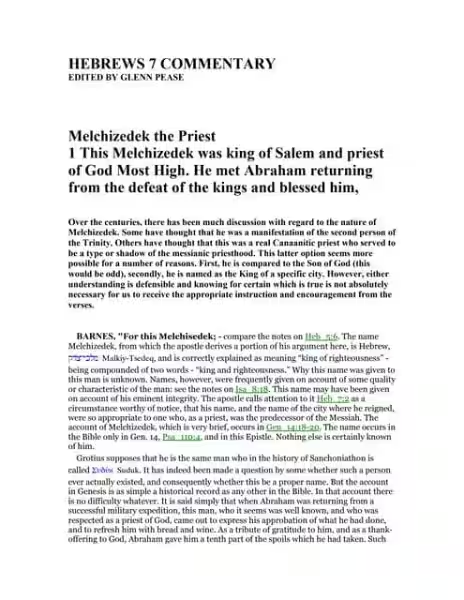
The book of Hebrews, nestled within the New Testament, offers a powerful exploration of faith and its implications. It’s not simply a historical account; it’s a theological treatise, meticulously weaving together Old and New Testament themes to reveal the superiority of Christ’s priesthood and the transformative nature of faith. This study will delve into the core concepts of Hebrews, demonstrating its relevance today. Understanding Hebrews isn’t just about academic knowledge; it’s about grasping the essence of faith that drives us personally.
This epistle isn’t a straightforward narrative. Instead, it’s an argumentative discourse, carefully constructed to persuade its Jewish audience of the validity of Jesus Christ as the ultimate fulfillment of God’s promises. It’s a passionate plea, building upon the Old Testament’s prophecies and foreshadowings, and demonstrating how those prophecies converge in Jesus. For example, the author uses the imagery of sacrifices to highlight Jesus’ ultimate sacrifice. This approach isn’t abstract; it’s designed to resonate with a specific audience, bringing them to a deeper understanding of their faith.
The Superiority of Christ’s Priesthood: A Heavenly Temple
A central theme in Hebrews is the superiority of Jesus’ priesthood compared to the Levitical priesthood of the Old Testament. This isn’t a rejection of the Old Testament; rather, it’s an evolution and a fulfillment. The author highlights how Jesus, being eternal and divine, offers a perfect and everlasting sacrifice, unlike the temporary sacrifices of the old covenant. This new covenant is superior because it rests on a better promise and a higher priest. Imagine a flawed, temporary system replaced by a perfect and enduring one – that’s the essence of the argument.
Hebrews emphasizes the concept of a heavenly sanctuary. This isn’t just a physical place; it represents a spiritual reality, a relationship with God that Jesus embodies. Moreover, the author uses the analogy of a high priest entering the Holy of Holies to represent Jesus’ ascension into heaven. This imagery is powerful, connecting the reader with the idea of a direct relationship with God through Christ. It fosters a sense of hope and confidence in the power and efficacy of Christ’s sacrifice. Key aspects of this theme include: 1) the permanence of Christ’s priesthood; 2) the perfection of His sacrifice; and 3) the accessibility of God through faith in Jesus. This is a significant shift in the understanding of religious practice, moving from rituals to a personal relationship with the divine.
Faith as the Cornerstone of Hebrews’ Message
The book of Hebrews continually reinforces the vital role of faith. Faith is not mere belief; it’s active trust and obedience. The author highlights that faith is crucial in overcoming trials and challenges. This is relatable – we all face adversity, and faith often becomes our anchor in times of struggle. Faith is not passive acceptance; it is an active response to God’s call. It’s like a strong foundation in a building, providing strength and stability during storms. Examples include the faithful patriarchs, who lived by faith, and those who endured hardship in the face of their faith – demonstrating that faith is a life lived in action and commitment, not just a set of beliefs.
Hebrews emphasizes the importance of enduring faith. The author encourages readers to persevere amidst trials and temptations, highlighting the rewards of faithfulness. This isn’t an easy path; it requires commitment and effort. It’s a life-long journey of growth and development in faith. Imagine a marathon runner; they don’t just start; they must show persistence and stamina to finish. Similarly, our faith requires consistent effort and dedication. Furthermore, Hebrews highlights that persistence in faith leads to promise realization, which is a reassuring aspect. This is a significant understanding, demonstrating that faith is not just a momentary feeling, but a continuous process of commitment.
The book of Hebrews offers practical advice for navigating the challenges of Christian life. It underscores the importance of prayer, perseverance, and fellowship. The author reminds the audience that faith is a community endeavor. Studying Hebrews can transform how we live our lives. It can ignite a fire of passion and devotion to God. It can show us our responsibilities in the faith journey alongside our privileges and blessings.
By emphasizing obedience and love, Hebrews draws a compelling picture of a life dedicated to God. The concepts of sacrifice, humility, and courage are also central. Applying the teachings of Hebrews in our daily lives leads to a stronger relationship with God and a more purposeful existence. It can also equip us with the tools to face challenges head-on, drawing strength and inspiration from God’s unwavering love and the promises He has given us. These concepts can be summarized as a calling to a deeper, more active faith.
Frequently Asked Questions about the Book of Hebrews
What is the Book of Hebrews about?
The Book of Hebrews is a letter addressed to Jewish Christians, likely in the first century AD. It explores the superiority of Jesus Christ and his work as the ultimate high priest and sacrifice, compared to the Old Testament’s system of sacrifices and priesthood. It emphasizes faith, perseverance, and the importance of living a life pleasing to God.
What is the author of Hebrews?
The authorship of Hebrews remains debated. Tradition often attributes it to Paul, but some scholars suggest a different author.
The letter is addressed to Jewish Christians who were facing persecution and doubt. They were likely struggling to reconcile their Jewish heritage with their faith in Jesus.
What are some key themes in the Book of Hebrews?
Key themes include the superiority of Jesus to the Old Testament figures and institutions, the importance of faith, perseverance in the face of trials, and the necessity of a life lived in obedience to God.
How does the Book of Hebrews relate to the Old Testament?
Hebrews uses Old Testament figures and events to demonstrate the fulfillment of prophecy in Jesus Christ. It highlights how Jesus surpasses and completes the Old Testament’s system of sacrifices and priesthood.
How does the Book of Hebrews relate to my faith today?
Hebrews can offer encouragement and guidance for anyone facing challenges in their faith. Its emphasis on perseverance, faith, and a life fully devoted to God can serve as a guide for navigating trials and living out a meaningful Christian life.