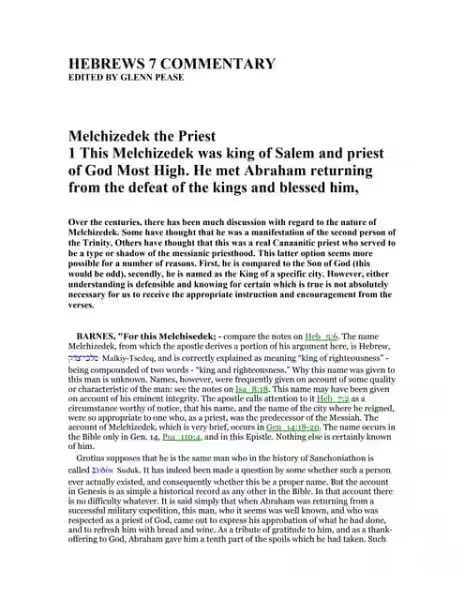
Hebrews 7 unveils a fascinating and often misunderstood figure: Melchizedek. This enigmatic priest-king, appearing seemingly out of nowhere, holds profound significance for Christians. He’s not simply a historical footnote, but a pivotal figure foreshadowing the ultimate priesthood of Jesus Christ. This chapter, rich with theological implications, offers crucial insights into the nature of Jesus’s sacrifice and the eternal nature of his priestly role. Understanding this chapter helps us grasp the entirety of Christ’s work and our place within God’s redemptive plan.
The author of Hebrews meticulously constructs an argument, drawing comparisons between Melchizedek and other figures in the Old Testament. This deliberate comparison reveals a pattern: Melchizedek’s unique and superior position ultimately points to Jesus. By understanding this parallel, we can see how Jesus transcends the limitations of the Levitical priesthood, offering a completely new and superior way to approach God. This contrasts sharply with how many Old Testament figures, including Aaron, the first high priest, had limitations, were imperfect, and ultimately had to die.
Hebrews 7 explicitly declares Melchizedek’s priesthood superior to the Levitical priesthood. This superiority doesn’t diminish the importance of the Old Testament, but rather elevates the New. It’s argued that the Levitical priesthood, established through the lineage of Aaron, was inherently temporary and imperfect. Melchizedek, on the other hand, embodies an eternal priesthood. Imagine a chain of leadership, each link representing a specific time and place. Melchizedek represents the ultimate link, the one that transcends time. Think about how Aaron’s lineage eventually faded, whereas Melchizedek’s priesthood continues unbroken, finding its fulfillment in Jesus Christ.
The author of Hebrews uses powerful language to underscore this point. Key phrases highlight the unchanging nature of Jesus’ priesthood, which, unlike those of Levitical priests, will never end. This concept is crucial for understanding the permanence of our relationship with God through Jesus. This eternal priesthood gives us assurance that our salvation is not contingent upon human weaknesses or imperfections, but firmly rooted in the divine. Think about how a human king’s reign might be limited by time or circumstance. Melchizedek, and by extension, Jesus, represents a power that transcends those limitations.
Jesus, the Perfect High Priest
Hebrews 7 directly connects Melchizedek to Jesus. The author argues that Jesus, like Melchizedek, is a priest without lineage and without descent, highlighting the profound difference between the two. This means Jesus’s priesthood is not bound by the limitations of human lineage. This point is crucial for understanding how Christ’s sacrifice transcends the confines of human history and extends to all people. The author of Hebrews asserts that Jesus is a priest forever and in doing so, asserts that Jesus’s sacrifice is a one-time offering. This is a significant difference from the Old Testament, where sacrifices were repeated. Ultimately, this demonstrates how Christ perfects all things.
This understanding has profound practical implications for our lives. Recognizing Jesus as our eternal High Priest brings a sense of comfort and security. We know that our prayers and requests are heard and answered by one who understands our human weakness and limitations, and who perfectly represents us before God. Imagine the burden of imperfection – knowing our sacrifices are flawed. With Christ, we have a perfect offering and perfect representation. Furthermore, it highlights that our relationship with God doesn’t rely on our own efforts but is rooted in Jesus’s ultimate sacrifice.
Hebrews 7 challenges us to consider the profound implications of Christ’s priesthood. It emphasizes that Jesus’s sacrifice is unique, sufficient, and eternal. This concept, beautifully portrayed through the figure of Melchizedek, offers a powerful message of hope and assurance for all believers. It’s important to remember that the purpose of this chapter is not to diminish our responsibility or moral obligations, rather it’s to shift our focus from relying on our own efforts to relying on the complete work of Christ. Jesus’s priesthood is not a task; it’s a completed victory. We are justified not on our merit, but on his.
Understanding Hebrews 7 can transform how we approach worship and prayer. It invites us to stop focusing on fleeting rituals and instead to appreciate the eternal significance of Jesus’s presence. This chapter reminds us that our relationship with God is built on a foundation of unwavering grace and unmatched perfection, not on our own efforts or achievements. It invites us to appreciate the gift of salvation and the peace and assurance that comes with it. We can then focus on living a life centered on the transformative love and sacrifice of Jesus.
Frequently Asked Questions about Hebrews 7 Commentary
What is Hebrews 7 about?
Hebrews 7 explores the priesthood of Jesus Christ, arguing that Jesus’ priesthood is superior to the Levitical priesthood described in the Old Testament. It highlights Jesus’ eternal, unchanging priesthood and the perfect sacrifice he offered.
Why is the priesthood of Jesus important?
Jesus’ priesthood is central to Christianity because it establishes him as the ultimate mediator between God and humanity. His sacrifice is sufficient to atone for sin and provides believers with ongoing access to God.
How does Hebrews 7 relate to the Old Testament priesthood?
Hebrews 7 contrasts the temporary and imperfect Levitical priesthood with the eternal and perfect priesthood of Jesus. The Old Testament priesthood foreshadowed Jesus’ ministry but was ultimately inadequate.
What is the significance of Jesus being of a different tribe (Levi)?
Jesus’ being from the tribe of Judah, not Levi, is crucial. It demonstrates that the priesthood is not tied to a specific lineage but to Jesus’ divine nature and his ultimate sacrifice.
How does Hebrews 7 address the concept of sin?
Hebrews 7 emphasizes that Jesus, being sinless, is uniquely qualified to offer a perfect sacrifice that removes sin permanently. This contrasts with the repeated sacrifices of the Old Covenant.
What are the practical implications of Hebrews 7 for Christians today?
Hebrews 7 encourages Christians to trust in the sufficiency of Jesus’ sacrifice and to approach God with confidence through him. It emphasizes the ongoing efficacy of Jesus’ priesthood in our lives.
What are some common misconceptions about Hebrews 7?
Some misunderstandings include the idea that the Old Testament priesthood was entirely without merit or that Jesus’ priesthood is a replacement for the law, rather than a fulfillment of it.
How does Hebrews 7 relate to other parts of the Bible?
Hebrews 7 connects with other passages that discuss Jesus’ divinity, his role as mediator, and the concept of a new covenant. It builds upon themes found throughout the Old and New Testaments.