Redeem definition in the Bible: meaning and significance
Redeem definition in the Bible: meaning and significance
In the Bible, to redeem means to rescue, release, or buy back someone from bondage, debt, danger, or loss. The word describes both a real act of deliverance and God’s larger work of restoring people to himself.
Redemption is therefore more than “getting a second chance.” It carries the idea that a person or possession has been trapped, forfeited, enslaved, or placed in danger, and that someone with the right and ability to act intervenes. The Bible applies this language to family responsibility, national rescue, forgiveness, freedom from sin, and the saving work of Christ.
The English word redeem is connected to the idea of paying a price to recover something. In ordinary biblical settings, a person might redeem property, rescue a relative, or recover someone who had entered slavery because of poverty. The action restored what had been lost or protected someone who could not protect himself.
The Old Testament uses more than one Hebrew word for this concept. One important term is related to the role of a family redeemer, a close relative who could act on behalf of an endangered family member. Another Hebrew term emphasizes paying a price for release or rescue. These meanings overlap, but they are not identical in every passage.
A biblical redeemer does not merely feel sympathy. The redeemer takes action, accepts responsibility, and uses available resources to bring about freedom or restoration. That is why redemption often includes both compassion and cost.
The term can also describe God’s work without suggesting that God is a helpless buyer negotiating with a stronger power. When Scripture says that God redeems his people, it presents him as the one who has authority and power to save. The language communicates the seriousness of the rescue and the value of the people being rescued.
Plain definition: Biblical redemption is God’s action to free people from slavery, danger, guilt, or loss and bring them into restored belonging.
Redemption may involve a literal price, but the price is not always the main focus. In some passages, the emphasis is on release; in others, on rescue, legal responsibility, restoration, or a new relationship with God. The surrounding passage determines which aspect is most prominent.
How redemption appears in the Old Testament
The Old Testament gives redemption a concrete social and historical setting before applying it to spiritual salvation. This helps explain why the image is so powerful. Biblical readers already understood that a person could need release from slavery, a family could lose inherited land, or a nation could stand under oppression.
Family redemption and the role of a relative
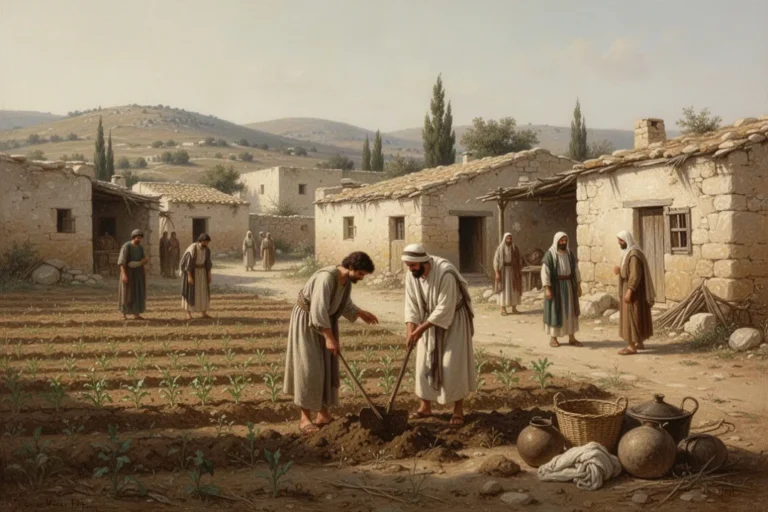
In ancient Israel, a close male relative could sometimes serve as a family redeemer. This person might recover family land, help a relative who had been sold into servitude, or seek justice after a killing. The book of Ruth presents Boaz in this role. He acts to preserve Naomi’s family line and marry Ruth, although the legal process includes another relative who has a prior claim.
Ruth does not present redemption as a vague act of kindness. It involves rights, obligations, sacrifice, and public action. Boaz has the standing to help, is willing to accept the cost, and follows the community’s legal customs. His actions provide a picture of restoration for two women facing poverty and insecurity.
Leviticus also describes provisions for recovering land and securing freedom for Israelites who had become poor. The land ultimately belonged to God, so permanent loss of a family inheritance was not treated as an ordinary business transaction. A qualified relative could redeem it under the rules given to Israel.
The exodus as God’s great act of redemption
The exodus from Egypt is one of the Bible’s central redemption images. Israel lived under forced labor and could not free itself from Pharaoh’s power. God heard the people’s cries, confronted Egypt, brought Israel out, and established a covenant relationship with the nation.
When later biblical writers speak of God redeeming Israel, they often look back to this deliverance. The exodus shows redemption as freedom from oppression, not merely an inward feeling. God rescues a people, leads them into a new life, and calls them to worship and obedience.
The language of redemption also appears in prayers and songs. The Psalms describe God as the one who redeems life from destruction, rescues the vulnerable, and delivers people from trouble. These passages do not reduce redemption to a single formula. They show that God can redeem from enemies, illness, despair, injustice, guilt, and death.
Israel’s later history adds another dimension. After rebellion and judgment, the people experienced exile and loss. Prophets such as Isaiah describe God as Israel’s Redeemer, promising to gather, restore, and bring his people home.
In these passages, redemption includes return, forgiveness, renewed identity, and restored covenant hope. God does not simply remove a punishment and leave the people unchanged. He acts to reclaim them as his own and to rebuild their future.
The Old Testament therefore develops several connected ideas:
Rescue: God brings people out of danger, oppression, and destruction.
Release: A person is freed from slavery, debt, captivity, or an overpowering enemy.
Recovery: Lost land, family standing, or communal life is restored.
Belonging: The redeemed person or people are brought back into a relationship with God.
Hope: God’s redemption reaches toward a renewed future, not only a past deliverance.
How the New Testament connects redemption with Jesus
The New Testament presents Jesus as the fulfillment of the Bible’s redemption pattern. His ministry brings release to those under sin, welcomes the excluded, forgives the guilty, and announces God’s kingdom. His death and resurrection become the central basis for Christian teaching about redemption.
Several Greek words are translated with terms such as redeem, redemption, or ransom. Some emphasize buying or releasing a captive; others emphasize being set free from a former master. The New Testament writers use these images to explain what Jesus accomplishes, while not reducing his work to one mechanical transaction.
Jesus as the one who gives his life
Jesus describes his mission in terms of giving his life for others. In Mark 10:45, he contrasts his mission with the desire for status and explains that he came to serve and give his life as a ransom for many. The statement connects service, sacrifice, and liberation.
A ransom is a price associated with release, but the verse does not provide a full theory of every detail behind the payment. It emphasizes that Jesus’ death is purposeful and representative. He gives himself on behalf of others so that they may be freed.
First Peter 1:18-19 describes believers as being redeemed from an empty way of life inherited from their ancestors, not with perishable valuables but with Christ’s precious blood. The point is not that physical wealth has no value in every setting. Rather, no ordinary material price can accomplish the spiritual rescue needed; Christ’s sacrificial life is uniquely sufficient.
Redemption from sin and condemnation
Christian redemption addresses the power and consequences of sin. Sin is not treated merely as a list of bad choices. It involves guilt before God, corruption of human desires, alienation from the Creator, and bondage to patterns people cannot overcome by willpower alone.
Ephesians 1:7 connects redemption through Christ with forgiveness. The passage teaches that believers receive release from sin and forgiveness through God’s grace. Colossians 1:13-14 uses the language of being transferred from the domain of darkness into the kingdom of God’s beloved Son, with forgiveness included in that rescue.
These passages show that redemption changes a person’s position and allegiance. The redeemed person is no longer defined by the old power that held him or her. Redemption includes pardon, but it also includes a new realm of life under Christ’s rule.
Redemption and the cross
Paul connects redemption with Christ’s death in passages such as Romans 3:24, where people are described as being justified freely by God’s grace through the redemption that is in Christ Jesus. The wording places redemption alongside justification, meaning God declares sinners righteous through his gracious action.
Galatians 3:13 describes Christ as redeeming people from the curse associated with the law by becoming a curse for them. This difficult and important statement points to Jesus bearing the judgment connected with human sin so that blessing could come to those who trust God’s promise.
Different New Testament passages highlight different aspects of the cross:
Substitution: Christ acts for sinners and bears what they could not bear themselves.
Ransom: Christ gives his life to bring people out of bondage.
Reconciliation: Christ’s work restores peace between God and people.
Victory: Through death and resurrection, Christ defeats the powers of sin, death, and evil.
Example and transformation: Christ’s self-giving love creates a new pattern for his people.
These descriptions are complementary rather than competing definitions. Together they show that redemption is costly, gracious, relational, and victorious. The resurrection confirms that Jesus’ saving work is not ended by death.
What Christians mean by redemption from sin
When Christians say that Jesus redeems them, they usually mean that God saves them from sin’s guilt, power, and ultimate consequence. Redemption begins with God’s grace, not with a person earning acceptance through moral improvement.
That does not mean human choices are irrelevant. The New Testament calls redeemed people to repentance, faith, obedience, and a changed way of life. These responses do not purchase redemption; they are the fitting response to a rescue already provided by God.
Redemption is different from simply being forgiven
Forgiveness is a central part of redemption, but the terms are not interchangeable. Forgiveness addresses the removal of guilt and the cancellation of an offense. Redemption adds the idea of release from bondage and restoration to belonging.
A person might be forgiven a debt, for example, without recovering the property that was lost or rebuilding the relationship that was damaged. Biblical redemption reaches toward a fuller restoration. God forgives sinners, brings them into his family, and begins renewing their lives.
Redemption is different from self-improvement
Self-improvement starts with the assumption that a person can become acceptable through discipline, education, or better habits. Christian redemption begins with the recognition that sin creates a problem deeper than poor performance. People need grace and reconciliation, not merely stronger techniques.
Good habits matter after redemption. Prayer, Scripture, generosity, confession, community, and service are ways redeemed people learn to live in freedom. They are not methods for forcing God to accept them.
Redemption is both present and future
The New Testament speaks of redemption as something believers already possess through Christ. They have forgiveness, a new standing before God, and the beginning of a transformed life. At the same time, creation and human bodies still experience decay, suffering, and death.
Romans 8:23 describes believers as waiting for the redemption of their bodies. This points to the future completion of salvation, when God’s renewal reaches the whole person and ultimately creation itself. Christian redemption is therefore already experienced but not yet complete.
Keep the time frame clear: Christians can say they are redeemed now while still waiting for the final restoration of their bodies, relationships, and the created world.
What biblical redemption means for everyday life
The meaning of redemption affects how Christians understand their identity. A redeemed person is not simply someone who escaped punishment. The person has been claimed by God, released from an old master, and given a new purpose.
That identity can change how you respond to failure. Redemption does not pretend that sin was harmless or that consequences never matter. It means failure does not have the final word for someone who turns to God. Confession can be honest because acceptance rests on God’s grace rather than a perfect record.
Redemption also changes how Christians view people who are suffering. The biblical pattern calls believers to act for the vulnerable rather than offering only sympathy. Care for the poor, protection of the exploited, restoration of broken relationships, and advocacy for justice all reflect the Bible’s concern for people who cannot secure their own freedom.
This does not mean Christians can redeem other people in the same ultimate sense as God. Human beings cannot remove another person’s guilt before God or control another person’s spiritual response. They can, however, participate in restoration, protection, practical help, and reconciliation.
The book of Ruth offers a useful example. Boaz’s redemption is not secret or sentimental. It involves listening, respecting lawful processes, accepting sacrifice, and protecting the dignity of Ruth and Naomi. The story suggests that genuine care often requires patient, costly, concrete action.
Redemption also gives Christians a reason to resist treating people as permanently defined by their worst moment. God’s redeeming work creates room for repentance and renewal. That does not erase the need for accountability, safety, or wise boundaries. Grace and truth belong together.
You can reflect the biblical meaning of redemption by taking practical steps such as:
Receive God’s grace honestly: Admit your need instead of hiding guilt behind religious performance.
Turn from the old pattern: Repentance means changing direction, not merely feeling regret.
Repair what you can: Where appropriate and safe, confess harm, make restitution, and seek reconciliation.
Protect vulnerable people: Support those facing poverty, abuse, exploitation, or isolation through wise and practical help.
Live from a new identity: Let belonging to Christ shape your choices, relationships, priorities, and hopes.
Redemption does not promise that every earthly loss will be immediately reversed. Some consequences remain, some relationships cannot safely be restored, and some questions remain unanswered. The biblical promise is deeper: God can rescue, forgive, reclaim, and ultimately restore, even when the present situation is incomplete.
How to read redeem in a specific Bible passage
The best definition of redeem depends on the passage’s setting. Start by asking what kind of problem is being addressed. Is someone enslaved, threatened, guilty, exiled, impoverished, or spiritually lost? The answer will show which aspect of redemption the writer is emphasizing.
Next, identify who performs the redeeming action and who receives it. In a family or legal passage, a human relative may redeem property or a person. In a prayer or prophecy, God may redeem Israel. In the New Testament, Christ is the central redeemer and his people are the ones rescued.
Then consider what changes after redemption. Look for words or ideas related to freedom, forgiveness, adoption, justification, return, inheritance, holiness, or restoration. These effects help prevent an overly narrow definition.
Useful questions for studying a passage include:
What danger, debt, bondage, or loss required redemption?
What qualifies the redeemer to act?
What cost, sacrifice, or commitment is involved?
Is the result release, forgiveness, restored property, renewed identity, or all of these?
Does the passage point to a present rescue, a future restoration, or both?
For example, “redeem” in Ruth concerns family and inheritance, while “redeem” in the New Testament often concerns release from sin through Christ. Both uses share the idea of decisive rescue, but they should not be flattened into exactly the same situation.
The broad biblical definition can be stated this way: to redeem is to act at cost or with authority to free, recover, or restore what has been lost or held captive. In Christian faith, that definition reaches its fullest meaning in God’s saving work through Jesus, whose death and resurrection bring forgiveness, freedom, reconciliation, and the hope of final restoration.
Frequently asked questions
Does redeem in the Bible always mean paying money?
No. Some biblical passages use redemption in a setting involving a price, property, debt, or slavery. In other passages, the emphasis is on God’s powerful rescue, forgiveness, or restoration. The word can describe the costliness of deliverance without specifying a literal monetary payment. The context determines whether the main idea is purchase, release, protection, return, or renewed belonging.
Who is the Redeemer in the Bible?
God is repeatedly called the Redeemer of his people, especially in the Old Testament. In the New Testament, Jesus fulfills this role by giving his life, forgiving sin, and bringing people into reconciliation with God. The title does not merely mean that Jesus offers encouragement. It identifies him as the one who decisively rescues people from sin and its consequences.
Can a person redeem himself according to the Bible?
Biblical teaching presents redemption as something people cannot accomplish through their own moral effort, wealth, or religious performance. Human beings may repent, seek forgiveness, make restitution, and pursue changed lives, but God provides the ultimate rescue. In Christian belief, redemption is received through God’s grace and faith in Christ rather than earned through personal achievement.
What is the difference between redemption and salvation?
Salvation is the broader term for God’s rescue from sin, death, judgment, and every force opposed to his purposes. Redemption is one important way the Bible explains that salvation. It highlights release, recovery, and the cost of rescue. Other salvation images include adoption, reconciliation, justification, new birth, healing, and victory over evil.






Leave a Reply