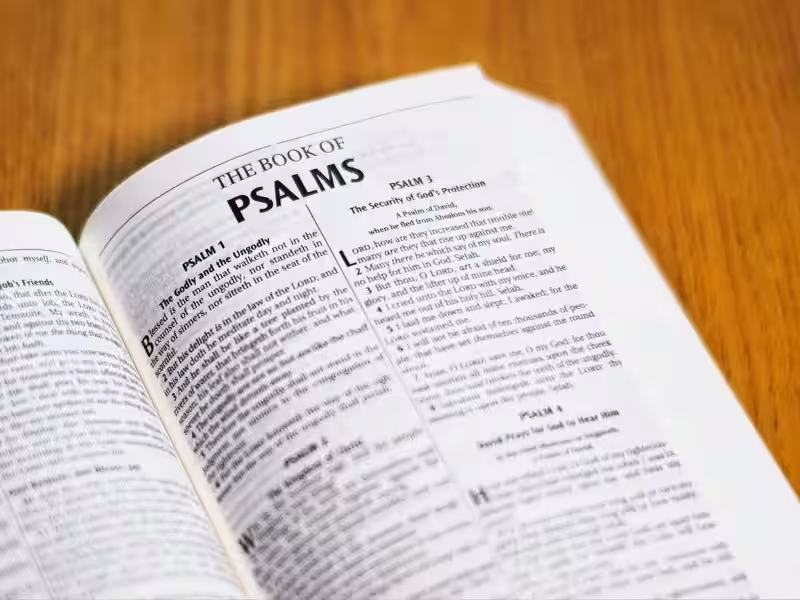
The Psalms, a collection of ancient Hebrew poems, offer a profound glimpse into the human experience, particularly the often-difficult realities of suffering. These deeply emotional expressions of faith, doubt, and longing resonate across centuries, providing solace and inspiration to believers today. Understanding the different types of suffering portrayed in the Psalms allows us to connect with our own struggles and find strength in the shared human experience. Understanding these poems is more than just academic study; it’s about recognizing a universal language of pain and resilience.
The Psalms aren’t just abstract religious texts. They’re powerful accounts of real people wrestling with real struggles. Imagine a shepherd feeling overwhelmed by the weight of the world, a king facing betrayal and injustice, or a parent grieving the loss of a child. These experiences, so vividly portrayed in the Psalms, are relatable to anyone who has ever experienced hardship. We’re all familiar with feelings of despair, anxiety, and loss. The Psalms remind us that these feelings are not unique to our individual circumstances; they are shared, and have been for millennia.
The Psalms explore a wide spectrum of suffering. From physical ailments and persecution to emotional turmoil and spiritual doubt, these poems offer a kaleidoscope of human pain. Consider Psalm 22, a powerful lament that expresses the anguish of abandonment and deep despair. This Psalm, and others like it, highlight the vulnerability of the human spirit when faced with overwhelming difficulty. It’s important to recognize that these various forms of suffering are not mutually exclusive. Often, individuals face multiple hardships simultaneously, as exemplified in Psalm 13.
Furthermore, the Psalms also address the difficult questions about suffering’s purpose and meaning—a common struggle for many. Sometimes, the Psalms express uncertainty and questioning about God’s role in suffering, as seen in Psalms 44 and 88. Other times, they offer solace and reassurance, suggesting that even in the bleakest of times, there is hope. For instance, Psalm 23, with its famous imagery of the shepherd and the valley of the shadow of death, is a powerful reminder of hope and guidance during times of hardship.
Finding Strength in Lament and Praise
A critical element in understanding the Psalms’ approach to suffering is the interplay of lament and praise. Lament, a heartfelt expression of sorrow and anguish, is often a necessary first step in processing suffering. Psalm 77 is a masterful example of this. Allowing ourselves to feel the pain and express it openly can be a powerful act of healing. This doesn’t mean giving up, but acknowledging the difficult reality of the moment. This raw honesty allows us to then transition to a place of praise and faith, even in the midst of suffering. Imagine seeking comfort in the comforting words of Psalm 139, celebrating the divine presence and wisdom.
The Psalms don’t offer simplistic answers to suffering. Instead, they provide a space for confronting the pain and finding strength within ourselves and in the divine. The Psalms’ emphasis on praise, even in the face of suffering, is often a testament to the resilience of the human spirit. This is beautifully illustrated in Psalm 103, which praises God for His unending compassion and mercy, even when we feel unworthy of them. Furthermore, the Psalms guide us to engage in active prayer and reflection, to find strength in community and trust in a higher power.
The Psalms’ wisdom transcends time and culture. Their powerful language of hope and despair, strength and vulnerability, provides a powerful framework for navigating modern life’s challenges. We can use these texts to process loss, cope with adversity, and find a deeper connection to faith and ourselves. In a world that often feels overwhelming and uncertain, the Psalms serve as a comforting and inspiring guide through times of trouble. This is exemplified by Psalm 116, where the author expresses gratitude and trust in God even after facing great fear and peril.
Ultimately, the Psalms about suffering provide more than just historical insights. They offer practical tools for navigating personal struggles. These timeless texts encourage us to acknowledge our pain, find comfort in faith, and ultimately, discover strength and hope. By engaging with these profound words, we gain a deeper understanding of ourselves and the human experience, and find ways to find solace in the midst of suffering. Learning to use the Psalms in our own lives requires a willingness to engage with them thoughtfully, and to allow their wisdom to guide us toward a place of peace and resilience.
Frequently Asked Questions
What are some Psalms about suffering?
Psalms 22, 38, 44, 69, 88, and 130 are often cited as examples of psalms expressing suffering and lament.
What is the role of suffering in religion?
Different religions have varying perspectives on the role of suffering. Some see it as a test of faith, a path to spiritual growth, or a consequence of sin. Others may view suffering as a mystery or an unavoidable part of the human condition.
Religious texts often offer explanations for suffering that range from divine punishment for wrongdoing to the existence of free will, natural disasters, or the inherent evil in the world.
What coping mechanisms do religious texts suggest for dealing with suffering?
Many religious texts encourage prayer, meditation, seeking support from others, trusting in a higher power, and finding meaning in adversity.
How do different religions view the relationship between faith and suffering?
The relationship between faith and suffering varies. Some religions emphasize that faith can help one endure and find meaning in suffering, while others may acknowledge the difficulty of faith in the face of suffering.
What is the significance of lament in religious traditions?
Lament, as seen in psalms and other religious texts, acknowledges suffering and pain without necessarily seeking immediate solutions. It can be a way of expressing human emotion and dependence on a higher power.
Can suffering lead to spiritual growth?
Some religious perspectives suggest that suffering can be a catalyst for spiritual growth and deeper connection with a higher power.