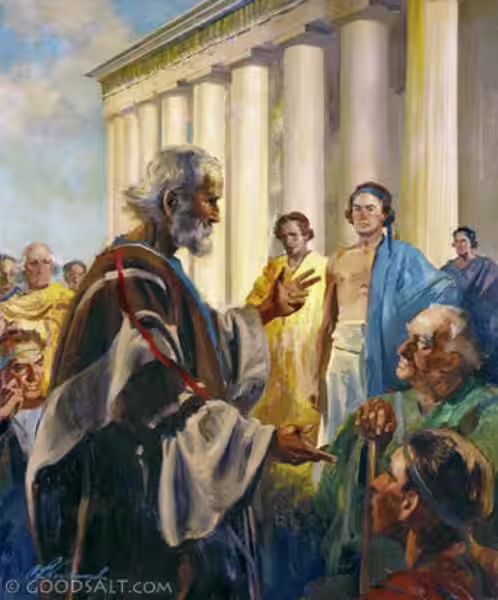
Paul’s journey to Athens, a bustling hub of intellectual and philosophical discourse, was a pivotal moment in the early spread of Christianity. This vibrant city, steeped in ancient Greek thought and home to numerous schools of philosophy, presented a unique challenge and opportunity for the apostle. His message, a blend of Jewish tradition and a new understanding of God, clashed with, and resonated with, the existing beliefs. Paul’s encounter with the Athenians offered a glimpse into the complexities of religious conversion and the challenges of bridging cultural divides.
Imagine Paul, standing on Mars Hill, a prominent location in Athens, facing a diverse crowd. He saw before him philosophers, poets, and ordinary citizens, each with their own ideas about the divine. This diverse audience presented a unique challenge, demanding a presentation that resonated with their worldview. Crucially, his message had to be nuanced, engaging, and relevant to their very different beliefs about the nature of divinity. This wasn’t just about delivering a sermon; it was about initiating a dialogue, fostering understanding, and potentially planting the seeds of a new faith.
Athenian society revolved around a rich pantheon of gods, with each deity representing specific aspects of life and nature. The concept of a single, all-powerful God, as Paul proclaimed, was fundamentally different. This difference created a significant hurdle. Paul’s sermon was not merely a statement of faith; it was a response to the very ideas and beliefs prevalent in Athens. Imagine trying to explain the concept of the Trinity to someone who only knows of Zeus and Hera. It required a certain degree of adaptability and understanding. Key differences in belief included:
The nature of the divine: Multiple gods vs. One God.
The role of humanity: Participation in the divine vs. submission to a singular God.
The path to salvation: Rituals and offerings vs. faith and righteousness.
This inherent conflict highlighted a critical aspect of Paul’s mission: the delicate balancing act between respecting existing traditions while introducing a new perspective. Understanding the existing belief system was crucial for effective communication. Paul’s approach required a keen insight into the cultural context of Athens. It wasn’t about dismissing the old beliefs entirely, but instead, it was about presenting an alternative that offered a potential framework for a different understanding of life and the divine.
The “Unknown God”: A Bridge to Belief
A pivotal moment in Paul’s Athenian sermon was his reference to an “unknown god.” This subtle yet powerful gesture acknowledged the Athenians’ existing reverence for the divine without contradicting the core tenets of his message. It recognized that many people were already searching for something beyond what they understood. This acknowledgment of the “unknown god” can be seen as a crucial bridge between the old and the new. Imagine a scientist finding a new element – they first acknowledge the previously known elements, and then describe the new element. Paul used this approach.
By acknowledging the “unknown god,” Paul wasn’t simply appeasing the crowd. He was weaving a narrative that connected the familiar with the unfamiliar. This clever strategy offered a point of common ground, allowing him to subtly introduce the concept of the Christian God, the known God. His speech was not a dismissal of existing beliefs but a connection; a bridge to a deeper understanding of the divine. Paul’s approach was remarkable for its respect and, importantly, its relevance to the audience’s existing beliefs, which made the message more accessible and engaging.
The outcome of Paul’s sermon in Athens was not a mass conversion. Instead, it was a mix of interest, ridicule, and outright rejection. Some were intrigued by the new ideas, while others remained skeptical or hostile. Many philosophers and some people, though not all, were challenged. It wasn’t a complete victory, but it certainly wasn’t a failure either. This experience exemplified the delicate dance of religious evangelism, recognizing that the process wasn’t always linear or immediate.
Ultimately, Paul’s preaching in Athens was an attempt to bridge the gap between two vastly different cultures and belief systems. It showcased the potential for dialogue and understanding, even – or perhaps especially – amidst conflict. His approach underscored the importance of respecting existing traditions while introducing new ideas. By acknowledging the unknown god, Paul effectively built a bridge to a more comprehensive understanding of the divine, a concept that resonated with many people and helped spread the message of the Christian God.
Frequently Asked Questions about Paul’s Preaching in Athens
What was the context of Paul’s preaching in Athens?
Paul, a missionary, traveled to Athens, a significant intellectual center of the ancient world, to spread the Christian message. He observed the city’s rich religious landscape, a mix of diverse beliefs and philosophies.
What were the key themes of Paul’s preaching?
Paul’s message centered on the resurrected Jesus Christ, arguing that God’s plan for salvation involved this historical figure. He also emphasized monotheism and the importance of a right relationship with God.
How did Paul respond to the philosophical discussions in Athens?
Paul engaged with the Athenians’ philosophical inquiries, particularly those of the Epicureans and Stoics, using their own concepts to present the Christian message. He spoke of an unknown God and the resurrected Jesus, aligning his message with their existing intellectual framework.
What was the reception of Paul’s preaching in Athens?
Paul’s preaching in Athens generated mixed reactions. Some were intrigued and receptive, others skeptical or outright opposed. A few individuals converted to Christianity, but the general response was not overwhelming.
How did Paul’s methods of preaching differ from other religious figures in Athens?
Paul’s approach differed in its focus on a specific historical figure (Jesus) and a personal relationship with God. Other religions and philosophies in Athens often emphasized abstract concepts or rituals.