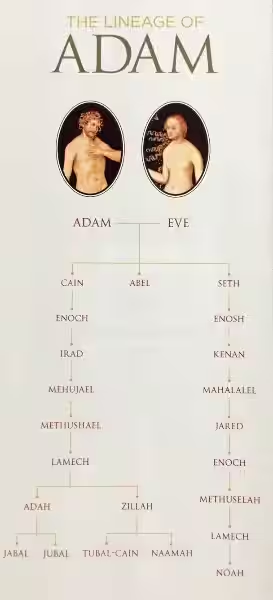
The story of Adam and Eve, a foundational narrative in Judeo-Christian tradition, often centers on the concept of original sin. This idea, deeply rooted in religious thought, describes humanity’s inherent tendency toward wrongdoing. It explores the consequences of choices made in the past and their implications for the present. It’s a complex theological concept that continues to be debated and interpreted across centuries.
This article delves into the idea of original sin, exploring its origins, interpretations, and continuing relevance in modern society. We’ll examine the narrative of Adam and Eve, analyzing its various interpretations, and how it shapes our understanding of human nature and the relationship between humanity and the divine. Furthermore, we will discuss how concepts surrounding original sin are often intertwined with concepts such as grace and redemption. We’ll also consider alternative perspectives on human nature and the problem of evil that exist alongside this traditional theological framework.
The story of Adam and Eve, found in the Book of Genesis, details the creation of humanity and the fall from grace. In this narrative, humanity is presented with a choice between obedience and disobedience. Adam and Eve are tempted by a serpent, choosing to eat the forbidden fruit, thereby incurring divine wrath and introducing sin into the world. This act is often understood as original sin, the inherited tendency towards wrongdoing that characterizes all humankind. Consequently, humanity is separated from God and subjected to suffering and death.
Early Church Fathers, like St. Augustine, profoundly shaped the understanding of original sin. They emphasized that the act of disobedience by Adam and Eve had profound consequences, not just for them, but for all subsequent generations. This concept was further refined and developed over time, leading to various theological interpretations. An important aspect to consider is that different denominations and individuals may hold slightly divergent interpretations or nuances within this fundamental theological notion. For instance, some emphasize the inherent nature of sin, while others focus on the consequences of the choice made by Adam and Eve.
The concept of original sin has profound implications for our understanding of human nature. It suggests that humans are inherently flawed and inclined towards sin. This doesn’t mean that every human act is inherently sinful, but rather that there’s a predisposition towards error and disharmony with God’s intended design. Think of it like a predisposition to a particular illness; it doesn’t guarantee the illness will develop, but it increases the susceptibility. For example, understanding your natural inclination to make certain mistakes, or struggle with particular weaknesses, can be seen as linked to the concept of original sin in a more metaphorical sense.
This predisposition has led to various reflections on human behavior and moral responsibility. The idea of original sin prompts us to examine our own motivations and actions. Recognizing the presence of this inherited tendency can lead to a deeper self-awareness, thereby inspiring us to seek redemption and strive for a more virtuous life. Key questions that arise from the concept of original sin include: How do we reconcile personal responsibility with the idea of inherited sin? Can we truly overcome our inherent tendencies towards wrong-doing? How does this concept of original sin impact our understanding of grace and redemption?
Original Sin and Contemporary Relevance
Although rooted in ancient religious texts, the concept of original sin continues to hold relevance in contemporary society. The pervasive presence of suffering, injustice, and conflict in the world resonates with the idea of a flawed human nature, shaped by the consequences of Adam and Eve’s choices. It might be argued that the concept of original sin encourages introspection, accountability, and a deeper understanding of human nature. The idea that we are all flawed and prone to error can serve as a potent catalyst for personal growth and compassion for others.
Furthermore, discussions around original sin often intertwine with contemporary ethical debates. For example, the concept of inherited sin can be explored in relation to issues such as social inequalities, environmental degradation, and the consequences of our collective actions. It encourages us to consider how our individual and communal choices shape the world around us, including the implications for future generations. Modern interpretations of original sin may focus on the ways in which societal structures, or personal experiences, might exacerbate the tendencies towards wrongdoing inherited from Adam and Eve.
Conclusion: A Lasting Question
The concept of original sin, originating in the biblical narrative of Adam and Eve, continues to shape religious thought and discourse. Understanding this concept involves exploring its historical interpretations, examining its implications for human nature, and acknowledging its enduring relevance in the modern world. It serves as a powerful framework for grappling with themes of human fallibility, the nature of good and evil, and the search for redemption.
Ultimately, the concept of original sin prompts profound questions about human nature, responsibility, and the possibility of overcoming our inherent limitations. While interpretations may vary, the profound influence of this concept on our understanding of the human condition remains undeniable. Ultimately, the question remains: How can we reconcile our understanding of inherited sin with personal responsibility and the pursuit of a more just and compassionate world?
Frequently Asked Questions about the Original Sin of Adam and Eve
What is the Original Sin?
The Original Sin, as described in many religious traditions, particularly Christianity, is the disobedience of Adam and Eve in the Garden of Eden by eating the fruit from the tree of knowledge of good and evil. This act is believed to have introduced sin and suffering into the world, separating humanity from God.
What are the different interpretations of the story of Adam and Eve?
Interpretations vary. Some see it as a literal historical event, while others view it as a symbolic narrative about the human condition, the nature of choice, and the consequences of free will. The symbolic interpretations often focus on the themes of temptation, knowledge, and separation from God.
How does the story of Original Sin relate to different religions?
While the concept of “Original Sin” is most prominently associated with Christianity, similar themes of an ancestral transgression or a primordial human flaw exist in other religious traditions. For example, the idea of a fallen state, or an inherited weakness, can be found in some forms of Judaism and Islam, although the specific details and interpretations differ.
What are the consequences of Original Sin?
Different religions ascribe different consequences. In Christianity, the consequences are often described as the introduction of suffering, death, and separation from God into the world. This separation is believed to impact all humans, as we inherit a predisposition toward sin.
How is Original Sin addressed in religious practice?
Religious responses to Original Sin vary. In Christianity, atonement through faith in Jesus Christ is often cited as the means to overcome its effects. Other traditions might emphasize practices like repentance, spiritual discipline, or striving for a more virtuous life as ways to address the perceived consequences of the original flaw.