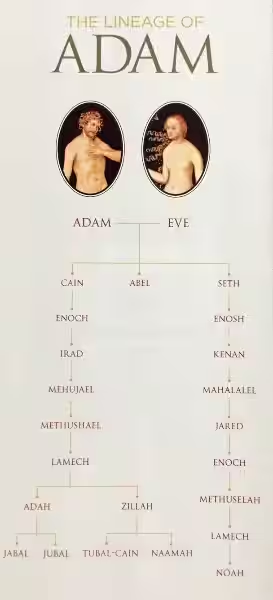
The biblical story of Adam and Eve, found in the Book of Genesis, is a foundational narrative for many religions. This primordial tale, while often simplified, offers a rich tapestry of themes about the human condition, sin, and the relationship between humanity and the divine. Understanding this story requires digging deeper than surface-level interpretations, exploring the nuances and potential interpretations of the “Adam and Eve high point.” Many interpret this moment as the peak of human innocence and connection with God, a state subsequently lost.
The story’s importance goes beyond its literal interpretation. It sparks reflection on fundamental questions about the nature of good and evil, the consequences of choices, and the meaning of life. By examining the “Adam and Eve high point,” we can gain insight into our own relationship with morality, responsibility, and the search for purpose. For instance, imagine a child’s first understanding of right and wrong; this is perhaps analogous to the primordial state described in the story.
The State of Innocence: Adam and Eve’s Initial Condition
The story depicts Adam and Eve in a state of perfect harmony with their environment and their Creator. They are placed in an idyllic garden, the Garden of Eden, with abundant resources and no need for hardship or toil. This suggests a life devoid of suffering and filled with the purest form of joy- a primal state of unblemished existence. They are given dominion over the animals and have direct communication with God. This perfect harmony represents the “Adam and Eve high point” before the introduction of sin.
This initial state of innocence highlights the importance of connection and trust. Imagine a relationship built on absolute trust and understanding, free from conflict or misunderstanding. In this context, the “Adam and Eve high point” represents a benchmark, a standard of perfect communion. It also suggests the importance of a harmonious relationship between humans and their environment, a principle often lost in modern times.
The Fall from Grace: The Loss of the High Point
The story’s crucial narrative arc revolves around the temptation and disobedience of Adam and Eve. This act, driven by curiosity and a desire for knowledge, marks a significant departure from their initial state. The serpent’s cunningly crafted words led them to question God’s instructions, ultimately rejecting the divine guidance and embracing the allure of forbidden knowledge. This pivotal moment is often seen as the antithesis of the “Adam and Eve high point,” the moment when their perfect harmony was shattered.
This “fall” from grace, as it’s often termed, introduces an element of moral responsibility into the narrative. The consequences of their disobedience are not only personal but also affect all of humanity. The story highlights the importance of choosing righteousness over temptation. Imagine a child taking a forbidden toy; the immediate consequences, followed by reflection and the lessons learned, are analogous to the moral development that emerges from Adam and Eve’s experience. This is deeply relatable to the complexities of human nature.
The Legacy of Adam and Eve and the High Point
The story’s impact extends far beyond the immediate context. The consequences of Adam and Eve’s actions—the introduction of toil, suffering, and death—shape the human experience as we know it. This “fall from grace” highlights the complexities of human nature and the inevitability of encountering challenges. The story continues to be a source of ongoing debate and interpretation, often viewed as a cautionary tale about the potential for conflict within human nature.
Ultimately, the narrative of Adam and Eve, especially focusing on the “Adam and Eve high point,” encourages reflection on the delicate balance of choice, consequences, and the enduring human quest for understanding our place in the universe. The story’s profound themes continue to resonate with individuals across cultures and spiritual traditions. This timeless narrative prompts questions about the nature of good and evil, free will, and ultimately, the meaning of life itself. A multitude of interpretations of the text exist, all emphasizing the timeless nature of these inquiries.
Frequently Asked Questions about Adam and Eve and the High Point of Religion
What is the significance of Adam and Eve in religion?
Adam and Eve are foundational figures in many Abrahamic religions, representing the origins of humanity and the concept of sin. Their story often explores themes of obedience, free will, and the consequences of choices.
What is the “high point” of religion, in relation to Adam and Eve?
The concept of a “high point” is subjective and depends on the specific religion and individual interpretation. For some, it might be the moment of divine revelation or creation. For others, it could be the fulfillment of a religious ideal or achieving spiritual perfection.
How do different religions interpret the story of Adam and Eve?
Interpretations vary. Some view the story as a literal historical account, while others see it as a symbolic narrative about human nature and the relationship between God and humanity. Different denominations within the same religion may have varying perspectives.
What is the relationship between Adam and Eve and the concept of sin?
Adam and Eve’s disobedience is often linked to the introduction of sin into the world in many religious traditions. This act is seen as a pivotal event that affected human nature and the human condition.
Does the story of Adam and Eve apply to all religions?
No, the story of Adam and Eve is primarily associated with Abrahamic religions (Judaism, Christianity, and Islam). Other belief systems have different creation myths and narratives.