Genesis, the first book of the Bible, provides a foundational narrative for understanding the human experience. Central to this narrative is the concept of marriage. It’s more than just a union of two individuals; it’s a cornerstone of God’s design for humanity, reflecting His love, purpose, and plan. We can gain valuable insight into marriage by exploring the stories and themes presented in Genesis, understanding how they apply to our own lives today.
From the creation of Adam and Eve to the experiences of Abraham and Sarah, Jacob and Leah, and Joseph and his brothers, Genesis reveals a rich tapestry of relationships. These stories, though ancient, offer profound lessons about communication, commitment, and navigating the complexities of family life. These relational dynamics, forged in the crucible of human interaction, paint a picture of the human condition that remains strikingly relevant even in our modern world.
The Genesis Account of Marriage: A Divine Institution
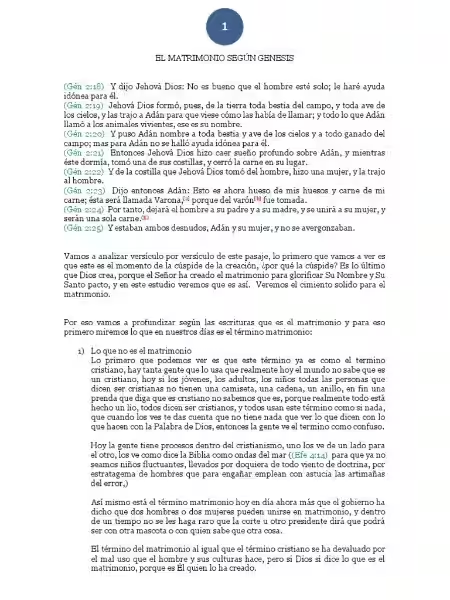
Genesis 2:18-25, often referred to as the “creation account,” lays the groundwork for understanding marriage as a divine institution. This narrative highlights the original intent of marriage, emphasizing companionship and mutual support. God’s command to Adam to “be fruitful and multiply” establishes marriage as critical for procreation and the propagation of humanity. The creation of Eve specifically underscores this point, demonstrating that marriage is about more than just physical companionship. This ideal includes crucial elements like mutual respect, shared purpose, and a lifelong commitment.
Imagine a world where every relationship mirrored God’s perfect design. Genesis depicts a profound connection between God and humankind, where marriage is part of this holistic picture. The narrative illustrates that marriage shouldn’t be viewed as a personal contract alone, but as an outward reflection of God’s love. This foundational concept, presented in the creation account, has a lasting impact on the entire biblical narrative, shaping the stories that follow. Think of it like a blueprint for a good building—the foundation is fundamental to constructing a solid structure.
Marriage and Covenant: A Relationship with God and Each Other
Beyond the creation story, Genesis reveals the concept of covenant as closely intertwined with marriage. Covenants, in biblical terms, are agreements of solemn commitment, often with promise and obligation. The covenants reflect God’s consistent relationship with humanity. The covenant between God and Abraham, for example, strongly underscores the idea of family lineage and blessing. This concept extends to marriage, highlighting that marital relationships are more than just a personal union; they are also part of a larger divine plan.
Consider how the covenants in Genesis highlight the importance of faithfulness and commitment. When couples honor their vows, they reflect the faithfulness of God. This emphasizes that marriage is not just about love but also involves steadfast responsibility. This concept of covenant in marriage, as seen in Genesis, speaks to the importance of enduring through challenges, demonstrating faithfulness, and maintaining a shared vision for the future. Think of a family tree; each branch is connected to the trunk, and each marriage is a branch in this larger family tree of faith.
Marriage as a Test Bed for Character Development
The stories in Genesis demonstrate how marriage can be a crucible for character development. The relationships between characters like Jacob and Leah, or Joseph and his brothers, showcase how struggles and trials can shape individuals. These experiences teach us about forgiveness, patience, and resilience. They demonstrate that marriage isn’t always easy; it requires growth and understanding. These narratives illustrate that navigating adversity is a fundamental aspect of marriage that strengthens the bond.
For example, the experiences of Jacob illustrate how struggles within a marriage can lead to profound personal growth. His journey of deception and subsequent repentance highlights the importance of honesty and humility in a marriage. These narratives show that even when facing betrayal or hardship, couples can either crumble or strengthen their relationship. Genesis showcases how these relationships develop into something extraordinary through perseverance. Think of a sculptor shaping clay; the process of hardship refines and shapes the final product.
Marriage and its Impact on Society: A Legacy of Faith
The concept of marriage in Genesis ultimately serves as a foundation for the entire biblical narrative. The relationships depicted in Genesis provide a framework for understanding family, community, and faith. The enduring impact of these stories can be seen in the various religious traditions that inherited these ideas. It’s clear that marriage in Genesis is not just a personal relationship, it’s a fundamental building block of faith, family, and society.
Looking at the lasting impact of these stories, we see how the moral and ethical principles rooted in the Genesis account continue to shape societies today. The emphasis on respect, commitment, and responsibility in marriage continues to serve as a standard for relationships. The principles found in God’s design for marriage in Genesis are meant to guide relationships and impact society in a positive way. These principles are not just for the past but are for all time. It’s like a timeless guidebook for navigating relationships.
Frequently Asked Questions about Marriage in Genesis and Religion
What does Genesis say about marriage?
Genesis describes marriage as a divinely ordained institution, a union between a man and a woman intended for procreation and companionship. Early accounts highlight the importance of covenant and partnership within marriage.
What is the role of religion in marriage, according to Genesis?
Genesis portrays God as the foundation of marriage, establishing the relationship and blessing it. Religious rituals and observances are implicit in the narrative, emphasizing the sacred nature of the union.
How does Genesis portray marriage in ancient times compared to modern views?
The perspectives on marriage in Genesis differ considerably from modern views in several aspects. The emphasis on procreation, for instance, differs from modern views that see marriage primarily as a means of companionship and emotional fulfillment. Societal roles within marriage are also portrayed differently.
What are the different interpretations of marriage in Genesis?
Different religious traditions and scholars offer varying interpretations of the Genesis accounts. Some emphasize the literal meaning of the text, while others focus on the symbolic or metaphorical aspects, drawing parallels to broader spiritual or theological concepts.
How does Genesis relate to different religious perspectives on marriage today?
Genesis has influenced the views on marriage across various religions, including Judaism, Christianity, and Islam. The specific applications and interpretations may differ, but the foundational concepts of covenant, commitment, and procreation often remain central.
What are the theological implications of marriage in Genesis?
Theological implications of Genesis’s portrayal of marriage encompass concepts such as God’s design, the nature of humanity, and the relationship between the sexes. These concepts have shaped religious understanding and practice regarding marriage throughout history and continue to be debated.