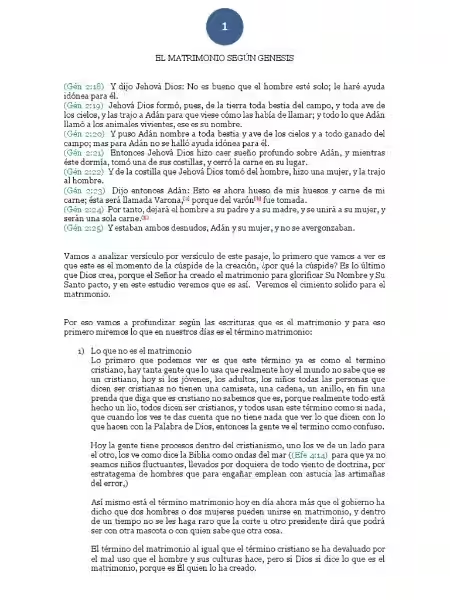
The concept of marriage, a fundamental cornerstone of human society, has been explored and debated for millennia. Different cultures and religions have their own unique interpretations and traditions surrounding this vital union. One of the most influential perspectives on marriage, and arguably one of the oldest, comes from religious texts like the Bible. In particular, the narrative in Genesis concerning the first couple provides a foundational framework for understanding the divine intention behind marital bonds. Genesis 2:24 clearly states, “Therefore a man shall leave his father and his mother and hold fast to his wife, and they shall become one flesh.” This verse, and others within the Genesis account, have been interpreted in countless ways, sparking debate about love, commitment, and the very essence of family.
This exploration dives into the significance of the Genesis marriage verse in a variety of religious contexts. Understanding the historical, cultural, and theological underpinnings is critical for appreciating the lasting impact of this verse on human relationships. For example, the idea of “leaving and cleaving” in Genesis 2:24 suggests a fundamental shift in a person’s allegiances. It emphasizes the importance of prioritizing the marital bond over familial ties, a concept that continues to resonate in many societies today. Analyzing this verse through the lens of faith allows us to see how it has influenced societal norms and continues to shape our understanding of family and community.
The Genesis Narrative and its Impact on Religious Thought
The Genesis story, particularly regarding the creation and subsequent relationship between Adam and Eve, serves as a foundational myth in many Abrahamic religions. Religious traditions often draw upon the narratives in Genesis to define the nature of marriage. These interpretations can vary considerably depending on the specific religious perspective, but often center on the concepts of unity, procreation, and the relationship between humanity and God. The verse Genesis 2:24 is often cited as a testament to the divine origin of marriage and its importance in fulfilling God’s plan for humanity. Furthermore, this verse is intricately linked to concepts of partnership, intimacy, and responsibility.
Examining how diverse religious groups interpret the Genesis marriage verse provides valuable insight into the multifaceted nature of faith. For instance, some interpretations emphasize the importance of obedience and submission within the marriage, while others focus more on equality and mutual respect. Different denominations may stress different aspects of the verse, highlighting the complexities inherent in applying ancient texts to modern-day relationships. The key takeaway is that the Genesis account offers a multitude of interpretations and continues to be a source of both agreement and contention in religious discourse. For example, many Protestant denominations interpret this verse through a lens of mutual love and respect.
Genesis Marriage Verse and Modern Interpretations
Moving from the historical context to the modern application, the Genesis marriage verse remains a significant point of discussion and reflection. The core ideas of the verse translate into modern challenges and opportunities in marriage. For example, many individuals struggle with the balance between independent identities and shared responsibilities within a marriage. Genesis 2:24 can be interpreted as advocating for a partnership where individual needs and desires are acknowledged while also recognizing the necessity for mutual support. This is a complex and multifaceted concept, demanding careful consideration of different perspectives.
The Genesis marriage verse often sparks debate about its relevance to modern relationships. Modern understandings of love, equality, and communication challenge traditional interpretations of the verse. For example, some contemporary scholars examine the verse through the lens of feminist theology, emphasizing the importance of gender equality and mutual respect within marriage. Others use a more literal translation of Genesis 2:24, highlighting the importance of commitment and lasting partnership. The interpretations of Genesis 2:24 are often based on the specific values and beliefs of the individual or community. This demonstrates the ever-evolving nature of religious interpretation and the ongoing dialogue surrounding the meaning of marriage.
Conclusion: The Enduring Legacy of Genesis Marriage Verse
The Genesis marriage verse, Genesis 2:24, continues to hold significant influence in religious thought and modern relationships. It speaks to the enduring human desire for connection, commitment, and meaningful partnerships. Analyzing the verse in historical and theological contexts underscores its depth and complexity. The verse provides a foundation for understanding the divine intention behind marital bonds. The lasting impact of Genesis 2:24 lies in its capacity to provoke reflection, inspire discussion, and offer a framework for understanding the complexities of human relationships.
Ultimately, the interpretation of the Genesis marriage verse is a deeply personal and evolving process. Understanding the verse’s historical context and considering its implications for modern relationships is key to appreciating its enduring legacy. It also prompts us to thoughtfully consider our own values and beliefs. The verse remains a powerful symbol of the importance of love, commitment, and unity in human relationships. It’s also a source of ongoing discussion and debate, demonstrating the continuous relevance of ancient texts in shaping our understanding of ourselves and our world today.
Frequently Asked Questions about Genesis Marriage Verse and Religion
What does Genesis say about marriage?
Genesis 2:24 describes marriage as a union between a man and a woman, where they become “one flesh.” This verse is foundational to many religious interpretations of marriage.
What is the religious significance of the Genesis marriage verse?
Different religions interpret Genesis 2:24 in various ways. Some see it as a literal account of God’s design for marriage, while others view it as a symbolic representation of spiritual unity. Many religions use it as a basis for their teachings on marriage, family, and relationships.
How is the Genesis marriage verse interpreted differently across different religions?
While some religions view Genesis 2:24 as a literal account, others see it as a symbolic narrative. Interpretations also vary within religions themselves, encompassing different theological perspectives and cultural contexts.
Does the Genesis marriage verse support same-sex marriage?
Interpretations of the Genesis marriage verse regarding same-sex marriage are diverse and often contested. Some religions adhere to a traditional understanding of marriage as exclusively between a man and a woman, while others have broadened their views to accommodate same-sex relationships.
What is the role of tradition in interpreting the Genesis marriage verse?
Religious traditions play a significant role in interpreting the Genesis marriage verse. Cultural norms and historical contexts often influence how a particular religion interprets and applies teachings derived from this verse.
How do modern interpretations of the Genesis marriage verse differ from traditional ones?
Modern interpretations of the Genesis marriage verse often focus on the underlying values and principles of the passage. They may emphasize concepts like companionship, love, and commitment, rather than adhering strictly to a literal understanding of the text. There has been an increase in the application of critical and historical-contextual approaches to the interpretation of Genesis 2:24.