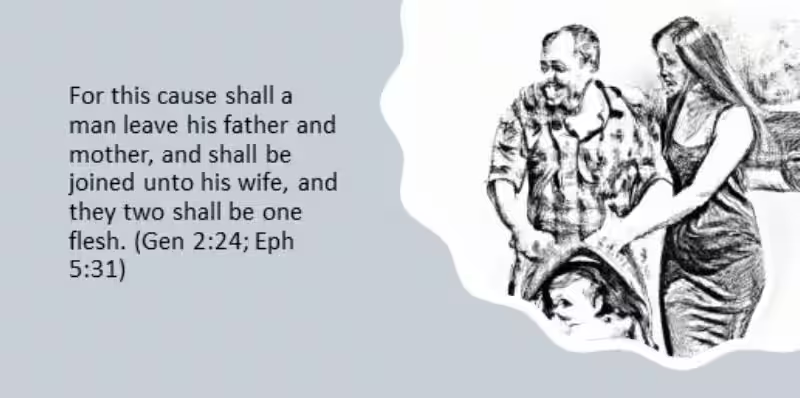
We often hear about the importance of relationships in faith, but how do we navigate the complex journeys of leaving and cleaving? This article explores this profound concept, looking at how it applies to various aspects of our lives, from personal growth to spiritual development. Understanding this principle can lead to a more fulfilling and authentic spiritual life.
The idea of leaving and cleaving isn’t just about physical separation; it’s a metaphorical journey of growth and transformation. It’s about recognizing the importance of different stages in life and the need to prioritize our relationship with God over other relationships, including family and friends. This often involves letting go of things that no longer serve us, whether those things are harmful, unproductive, or simply no longer in alignment with our spiritual goals.
The Spiritual Significance of Leaving and Cleaving
The concept of leaving and cleaving resonates deeply with many faiths, reflecting the core values of commitment and devotion. In many religious texts, the act of cleaving represents the act of focusing on a higher power, a devotion that transcends earthly relationships and worldly pursuits. Consider, for example, the biblical emphasis on following God’s will above all else. This highlights the priority that a higher power often occupies in one’s life. This leaving and cleaving can manifest in different ways, like rejecting harmful influences and actively seeking a life in harmony with divine principles.
The leaving aspect frequently involves recognizing and parting ways with patterns, behaviors, or relationships that hinder spiritual growth. This might entail letting go of past hurts, toxic friendships, or even ingrained habits that prevent us from living our lives in alignment with our values. This can also include challenging deeply held beliefs or traditions if they are incongruent with God’s teachings. It’s a process of letting go of what no longer serves us and embracing a life that is more aligned with our true selves.
The leaving and cleaving principle isn’t confined to the spiritual realm; it plays a vital role in daily life. Think about choosing a job that aligns with your values, leaving a toxic relationship, or pursuing a passion that might challenge your comfort zone. These actions often require us to leave behind familiar and comfortable situations and cleave to a new path. For example, someone attending college might need to leave behind the familiar comforts of home and cleave to a new community of like-minded individuals.
Consider personal growth. Often, personal growth requires leaving behind old behaviors and cleaving to new habits. This could be quitting a bad habit like smoking or embracing a new hobby. These are all examples of leaving and cleaving in action. We constantly face choices that require us to make such decisions in our daily lives, balancing our earthly relationships and obligations with our spiritual principles.
Leaving and Cleaving in Relationships
Relationships are a crucial part of the human experience. The concept of leaving and cleaving emphasizes the importance of prioritizing our relationships with God. This doesn’t mean neglecting earthly bonds; rather, it means finding a healthy balance. This could involve prioritizing our time and energy on the people who truly enrich our lives and leaving behind those who drain our emotional resources. It’s about choosing who we want to invest in, and choosing to prioritize relationships in alignment with God’s teachings.
For example, a family member might require a lot of attention and energy. By cleaving to a deeper relationship with God, we can gain the strength to leave behind unnecessary emotional burdens, creating space for healthy boundaries and fostering richer relationships within the family.
The leaving and cleaving verse, in its essence, is a call to personal responsibility and spiritual growth. It encourages us to prioritize our relationship with the divine while maintaining healthy relationships in the world. By leaving behind what no longer serves us and cleaving to what aligns with our values, we can live more fulfilling and authentic lives.
Ultimately, the journey of leaving and cleaving is a continuous process of growth and transformation. It requires self-awareness, courage, and a strong belief in our ability to adapt and evolve. It’s a journey that reflects a deeper understanding of our purpose and our place in the universe.
Frequently Asked Questions
What is the Leaving and Cleaving Verse?
The “leaving and cleaving” verse, often referenced in discussions about marriage, refers to Genesis 2:24, which states, “Therefore shall a man leave his father and his mother, and shall cleave to his wife: and they shall be one flesh.”
What does the Leaving and Cleaving Verse mean?
This verse, often interpreted within a religious context, emphasizes the profound commitment and unity expected in marriage. It signifies a shift in primary relationships from family to spouse and the creation of a new, shared unit. The interpretation of “leaving” and “cleaving” varies across different religious and cultural contexts.
How is the Leaving and Cleaving Verse applied in different religions?
While the verse is frequently cited in Christian traditions, interpretations can vary. Some perspectives emphasize the importance of prioritizing the marital relationship, while others focus on the responsibilities towards family members. Other religions may have their own unique perspectives and applications of the concept of leaving and cleaving.
What are some criticisms of the Leaving and Cleaving verse?
Some critics argue that the verse’s focus on leaving family can be detrimental to familial bonds, especially in modern contexts. Other interpretations suggest that the verse is contextually bound to the time in which it was written and doesn’t apply universally to all situations.
What is the significance of the Leaving and Cleaving Verse in modern society?
The Leaving and Cleaving verse remains relevant in modern society by highlighting the importance of commitment and partnership. However, interpretations often need to be adjusted to accommodate changing cultural norms and values, and the need for individual support systems both within and outside of the marital relationship.