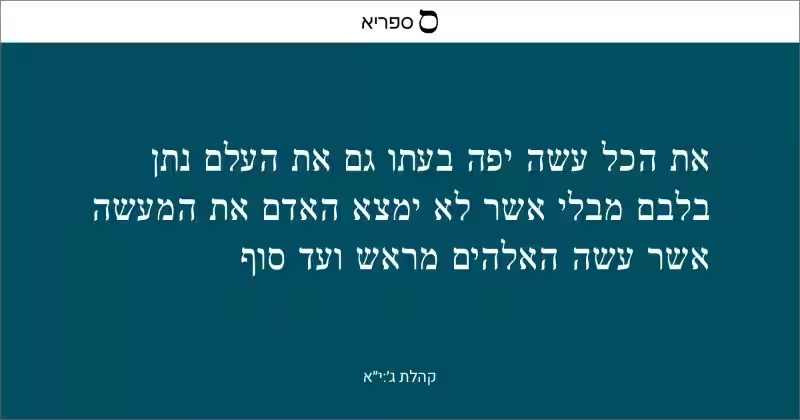
The concept of a deity controlling every aspect of existence is a cornerstone of many religions. This belief, often summarized in a particular “God controls everything” verse, can be deeply comforting, providing a sense of order and security in a world that can feel chaotic and unpredictable. However, grappling with this idea can also be challenging, especially when faced with suffering or injustice. This article aims to explore this perspective, examining its nuances and implications within various religious frameworks.
Many interpret “God controls everything” to mean that every event, from the smallest detail to the grandest historical narrative, is predetermined and orchestrated by a divine power. This perspective can lead to feelings of helplessness or fatalism. However, it also allows for a powerful sense of faith, trust, and reliance on a higher power. Consider the daily decisions made by an individual: the food chosen, the route taken, and the words spoken. From a perspective of divine control, all of these might be seen as part of a larger, predetermined plan. This perspective can evoke a sense of profound interconnectedness.
The concept of divine control varies substantially across religious traditions. For example, in Abrahamic religions, ideas about predestination and divine providence are frequently discussed in relation to the “God controls everything” verse. This can lead to a perspective where individuals are expected to accept whatever comes their way, understanding their lives as part of a larger divine plan. This concept can be seen as a source of hope, a reassurance that the world is not beyond divine control, even if the details remain unseen.
However, other religions might offer alternative interpretations. Some Eastern philosophies emphasize the interconnectedness of all things and the idea that humans play a role in shaping their destinies, within a broader framework of divine influence. The concept of karma in Hinduism, for example, suggests that actions and consequences are intertwined, with a higher power influencing events, but not dictating them in a rigid, predetermined way. This notion shifts the focus from passive acceptance to active participation in a divinely orchestrated design.
The Implications of This Belief for Personal Life
The notion that “God controls everything” can significantly impact an individual’s personal life. Faith and trust become paramount. Those who embrace this belief often find solace in the idea that even difficult or challenging circumstances are part of a greater design, serving a purpose that may not be immediately apparent. This perspective can foster resilience in the face of adversity. Furthermore, a profound sense of interconnectedness and interdependence is promoted, which can motivate individuals to act with compassion and understanding towards others.
Conversely, this belief can sometimes lead to a lack of personal responsibility. If everything is predetermined, why strive for personal growth or change? This perspective is not universally accepted, and the emphasis on individual agency and free will varies greatly across religious traditions. Examining the role of human choice becomes crucial; even when accepting divine control, actions are still taken and consequences are still felt, potentially impacting the unfolding of the divine plan.
Reconciling Faith with Free Will
A common challenge for believers in a God who controls everything is reconciling this with the concept of free will. How can an individual be responsible for their actions if those actions are already predetermined? This question has been debated for centuries. Philosophical discussions often revolve around the nature of God’s knowledge and how it relates to human choices. Some theologians propose that God’s knowledge encompasses all possible futures, including those born from free choices, yet human agency remains intact in the present.
Another way to reconcile this is to understand that God’s control is not necessarily a limit on choices, but rather a framework within which choices are made. Consider a potter shaping clay. The clay has a form, but the potter has the freedom to determine the final shape. Similarly, humanity, though subject to a divine plan, may have the autonomy to make specific choices within that plan. This approach emphasizes that acceptance of divine control doesn’t necessarily equate to a lack of personal responsibility.
Conclusion: A Personal Journey of Faith
Ultimately, the interpretation of “God controls everything” is deeply personal. It’s not a simple yes or no answer. Exploring the nuances of this verse in different religious contexts and engaging with personal experiences are crucial for developing a meaningful understanding. The verse, whatever its specific theological framework, guides individuals towards a deeper connection with faith and life’s purpose. The journey of exploring these ideas can be a profound one, fostering a relationship with a higher power infused with understanding, compassion, and grace.
The key takeaway lies in choosing an interpretation of this verse that resonates with your own personal journey of faith. Engage with the scripture, contemplate the different angles of the philosophical and theological discourse and use these interpretations to build a personalized connection with your faith and the world around you. This process creates a unique and meaningful connection to the divine.
Frequently Asked Questions
Does God control everything?
Different religious traditions have varying interpretations of God’s role in the universe. Some believe God has complete control over every event, while others believe God allows free will and human agency to play a significant role. There’s no single answer that satisfies all perspectives.
Religion serves many purposes in society, including providing moral guidance, a sense of community, and a framework for understanding the world. It can also inspire acts of charity and social justice, but it can also be a source of conflict and division.