Colors in the Bible: meanings, symbols, and context
Colors in the Bible: meanings, symbols, and context
Colors in the Bible do not have one fixed meaning; their significance comes from the passage, its cultural setting, and how the color appears.
Color language helps biblical writers describe people, clothing, materials, landscapes, visions, and religious objects. Sometimes a color is simply a physical detail, such as the red appearance of a stew or the white hair associated with age. In other passages, color contributes to a larger symbol involving purity, royalty, sacrifice, judgment, wealth, or mourning.
That distinction matters because readers can easily turn a recurring association into a universal rule. Red does not always mean sin, and blue does not automatically mean heaven. The safest interpretation begins with the text itself, then considers the historical setting and the way the color is used nearby.
Best interpretive rule: Treat biblical color symbolism as contextual rather than mechanical. Ask what the color describes, who is connected with it, and what the surrounding passage is communicating.
The Bible was written over many centuries and in different cultural settings. Its main languages, Hebrew, Aramaic, and Greek, used color terms differently from modern English. Some ancient words referred not only to a hue but also to a material, dye, appearance, or condition.
Translation adds another layer of complexity. A single Hebrew or Greek term may be rendered as scarlet, crimson, red, purple, or bright red, depending on the translation and context. In other cases, a word may describe something that looks pale, shining, or white without matching the precise color categories used today.
Ancient people also encountered color through natural dyes, metals, stones, plants, animals, and textiles. A person hearing about purple cloth would likely think of an expensive dyed fabric rather than a standardized shade on a color chart. The material’s cost, rarity, and social associations could be just as significant as its appearance.
Color can function in several ways within one passage:
Literal description: It identifies an object, garment, animal, plant, or landscape.
Ritual instruction: It distinguishes materials used in worship or purification.
Social symbolism: It suggests wealth, rank, mourning, or humiliation.
Visionary symbolism: It contributes to an image about judgment, glory, death, or divine presence.
Literary contrast: It places purity beside impurity, life beside death, or honor beside disgrace.
For that reason, a color study should begin with a question such as, “What does this color do in this passage?” rather than “What does this color always mean?”
White as a picture of purity, victory, and heavenly glory
White is one of the clearest positive color associations in Scripture. It can represent cleanliness, purity, innocence, restored righteousness, and celebration. In passages about garments, white clothing often suggests a person who has been cleansed or accepted rather than someone merely wearing a particular fashion.
In Isaiah 1:18, the image of sins becoming white like snow or wool communicates forgiveness and cleansing. The point is not a scientific claim about color; it is a vivid contrast between a deep stain and a condition made clean. The image presents moral restoration as something visible and unmistakable.
White clothing also appears in visions of heavenly beings and the redeemed. Daniel 7 describes the Ancient of Days with clothing white like snow, connecting whiteness with age, majesty, purity, and divine authority. In the New Testament, the Transfiguration accounts describe Jesus’ clothing as dazzling or intensely white, emphasizing supernatural glory.
Revelation repeatedly uses white robes, white garments, and a white horse. These images can suggest victory, holiness, vindication, and participation in God’s kingdom. The exact meaning still depends on the scene: a white robe may focus on cleansing, while a white horse may emphasize conquest or triumph.
White is not restricted to spiritual goodness. In Leviticus, certain white or pale appearances on skin, fabric, or buildings help priests examine possible disease or contamination. This use is diagnostic rather than automatically symbolic. The passage concerns identifying a condition, not assigning moral value to every white object.
Red and scarlet in sacrifice, blood, sin, and authority
Red is connected with blood, life, violence, warfare, passion, and earthly richness. Since blood was central to sacrifice and represented life in ancient Israelite thought, red can carry strong associations with both life offered and death inflicted.
Scarlet and crimson appear in passages about ritual materials and sin. Isaiah 1:18 compares sinful guilt with scarlet and crimson, using intense color to portray a stain that seems deeply fixed. The promise of cleansing becomes more striking because the original condition is described as strongly marked and difficult to remove.
Red materials also appear in the tabernacle and purification rituals. Scarlet thread or yarn is listed among the materials used in sacred practices, along with blue, purple, fine linen, wood, hyssop, or other items. In those contexts, scarlet should not be reduced to one isolated definition. Its meaning emerges from the ritual action and the complete set of materials.
Red horses appear in Zechariah 1 and Revelation 6. These passages use horses in prophetic or apocalyptic visions, where color helps distinguish forces and events. A red horse may be associated with war, conflict, or bloodshed, but the surrounding vision supplies the interpretation. The same color need not carry precisely the same emphasis in every prophetic book.
Red can also indicate ordinary physical appearance. Esau is described as reddish in Genesis 25:25, and David is described with a reddish or healthy appearance in 1 Samuel 16:12, depending on translation. These examples show why readers should not assume that every occurrence of red has a hidden spiritual meaning.
Purple as a sign of wealth, royalty, and mockery
Purple often suggests wealth, status, royalty, and honor because purple dyes were expensive and labor-intensive. In the ancient world, richly colored textiles could communicate that the wearer had access to resources or belonged to an elevated social class.
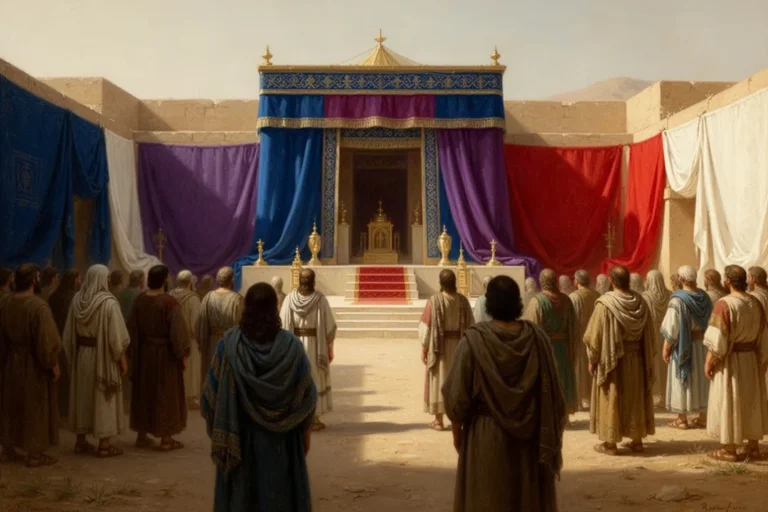
The tabernacle instructions in Exodus include purple among the colors used for curtains, coverings, and priestly garments. In this setting, purple participates in an atmosphere of beauty, sacred dignity, and distinction. It is part of a carefully designed visual environment associated with worship.
Proverbs 31 describes a capable woman whose household is clothed in scarlet and whose clothing is fine linen and purple. The passage connects these fabrics with preparedness, prosperity, competence, and household care. Purple is not functioning as a private code; it helps portray an ordered and well-provided household.
In the New Testament, Lydia is identified as a seller of purple goods in Acts 16. Her occupation indicates that purple textiles were valuable products. Luke 16 describes a rich man dressed in purple and fine linen, using clothing to emphasize his luxury and social privilege.
Purple also appears in the mockery of Jesus. Roman soldiers put a purple garment on him and ridicule him as a king. The color retains its association with royalty, but the scene turns that association into sarcasm and humiliation. This is a useful example of context changing the emotional direction of a symbol.
Blue and the visual language of sacred space
Blue appears prominently in descriptions of the tabernacle, priestly garments, and other sacred furnishings. It is often associated by readers with the sky or heaven, but the Bible does not consistently state that blue means heaven. Much of the color’s significance comes from its use in carefully ordered worship materials.
Exodus names blue, purple, and scarlet among the textiles used in the sanctuary. Blue appears in curtains, coverings, and the high priest’s garments. The combination of colors creates a visual distinction between ordinary and sacred use, while also reflecting the value and craftsmanship of the materials.
Numbers 15 instructs the Israelites to place a blue cord on the tassels of their garments. The stated purpose is to help them remember God’s commands and practice obedience. Here, blue is connected most directly with remembrance, covenant identity, and faithful conduct, not simply with a general idea of spirituality.
Some passages describe a blue or sapphire-like surface beneath the feet of God’s presence. Exodus 24 uses a description resembling sapphire under the feet of the God of Israel. The image communicates splendor and otherworldly majesty, though the passage should not be treated as a complete color dictionary.
Readers sometimes claim that blue always symbolizes revelation or heaven. That interpretation may fit certain devotional applications, but it goes beyond what every passage explicitly supports. A careful reading distinguishes biblical imagery from later symbolic systems.
Black and darkness as images of grief, famine, and judgment
Black and darkness are frequently linked with grief, death, famine, mourning, and divine judgment. The connection is understandable in a world where darkness limited visibility and mourning could involve changes in clothing, appearance, or daily activity.
Lamentations describes people whose appearance has become dark because of hunger and suffering. The image is physical and social at the same time: famine has changed their bodies and stripped away normal dignity. Blackness here conveys extreme deprivation and sorrow.
Job uses imagery of darkened skin and mourning to express anguish. In these passages, black is not a label for moral evil. It describes the outward effects of grief, illness, exposure, or despair. That distinction prevents the misuse of biblical language to attach spiritual judgments to people’s appearance.
Black horses occur in Zechariah 6 and Revelation 6. In Revelation, the rider of the black horse is connected with scarcity and the high cost of food. The color works with the surrounding imagery of scales and prices to portray economic hardship and famine.
Darkness can also describe judgment or the withdrawal of ordinary light. Prophetic books may use darkened sun, moon, or stars as cosmic images of upheaval. Darkness in these scenes is broader than a color; it symbolizes disorientation, catastrophe, and the collapse of expected order.
Green and the Bible’s imagery of life and growth
Green usually appears in connection with vegetation, grass, trees, pasture, and living things. Its biblical significance is often grounded in the natural world rather than in an abstract color code.
Psalm 23 describes green pastures as places where sheep can rest and receive nourishment. The image communicates provision, safety, rest, and God’s care. The green pasture matters because it is fertile and suitable for life, not merely because of its shade.
Psalm 52 compares a person who trusts in God to a green olive tree. The image suggests stability, vitality, fruitfulness, and continued flourishing. Jeremiah 17 uses a similar contrast between a tree planted by water and vegetation suffering in drought.
Mark 6:39 refers to green grass when describing the crowd seated before the feeding of the five thousand. The detail helps establish the physical setting and the season or condition of the landscape. It may contribute to the scene’s atmosphere, but it does not require an additional hidden interpretation.
Green can therefore support spiritual reflection about growth and renewal, but readers should first recognize its ordinary meaning. Biblical writers often use the world’s actual plants and landscapes to express theological ideas without turning every botanical detail into a secret symbol.
Gold and precious colors as signs of glory and value
Gold is technically a metal rather than a color, yet biblical descriptions often group it with visual splendor. Gold appears in the tabernacle, temple furnishings, priestly objects, royal possessions, and heavenly visions. Its value makes it a natural symbol of wealth, honor, permanence, and magnificence.
The ark, lampstand, altar, and other tabernacle objects were associated with gold or gold overlay. These instructions distinguish sacred items and create an environment of beauty and reverence. Gold does not mean that God needs luxury; rather, it communicates the extraordinary importance of the worship setting within the narrative.
Solomon’s temple also contains extensive references to gold. The material highlights royal resources and the splendor of the house built for worship. At the same time, biblical wisdom literature warns that wealth can become an object of misplaced trust. Gold may represent honor and abundance, but it can also expose greed or idolatry.
Revelation uses gold in descriptions of crowns, lampstands, bowls, streets, and the holy city. In these visions, gold contributes to a sense of glory, preciousness, and perfected beauty. The imagery is symbolic and highly visual, so it should be interpreted alongside the book’s larger themes of worship, judgment, and restoration.
How clothing colors communicate identity and social position
Biblical color references often become clearer when you examine the clothing being described. Garments can reveal rank, occupation, wealth, ritual status, mourning, or public humiliation. The color works as part of a social language that ancient readers would recognize.
Priestly clothing combines specific fabrics, colors, stones, and craftsmanship. The high priest’s garments in Exodus 28 are designed to communicate dignity and sacred service. Their meaning comes from the entire garment system, not from one color viewed in isolation.
Royal or wealthy clothing can signal privilege. Purple, fine linen, and richly prepared textiles appear in descriptions of kings, prosperous households, and affluent individuals. Conversely, torn clothing, sackcloth, or darkened appearance may communicate grief, repentance, or public distress.
Mockery can deliberately imitate honorable clothing. The soldiers’ purple garment placed on Jesus resembles royal dress but functions as an insult. This reversal shows that biblical color imagery can be ironic and dramatic, not merely positive or negative.
When studying a color in clothing, ask who is wearing it, who supplied it, and how other characters react. Those details often reveal more than a general list of symbolic meanings.
Practical tips and common mistakes when studying biblical colors
A responsible color study combines close reading with historical awareness. These steps can help you avoid interpretations that sound spiritual but are not grounded in the passage.
Read the whole paragraph or chapter. Identify what happens before and after the color reference.
Determine whether the color is literal. Is the writer describing cloth, skin, grass, a horse, or a vision?
Check the translation. Compare a few reliable translations when a color seems especially important, since terms may vary.
Notice repeated images. A color appearing several times in one vision may carry more weight than a single descriptive detail.
Study the object as well as the color. Purple clothing, purple dye, and a purple robe used for mockery may serve different purposes.
Consider ancient materials and customs. Dyes, metals, plants, and textiles had practical and economic associations.
Separate biblical meaning from later tradition. A popular Christian color chart may contain useful devotional ideas without representing every passage.
Test the interpretation against the passage’s main message. A proposed meaning should clarify the text rather than distract from it.
Several common mistakes deserve special attention:
Assigning one meaning to every occurrence. Red may relate to blood in one passage and physical appearance in another.
Ignoring translation differences. A modern color word may not represent the full range of the original term.
Reading later symbolism backward. Medieval, liturgical, or modern color systems are not automatically the symbolism of the biblical authors.
Over-spiritualizing ordinary details. Green grass may set a scene without presenting a hidden doctrine.
Confusing color with moral worth. Biblical descriptions of dark skin, pale skin, or stained clothing should not be used to judge people.
Using a concordance without context. Finding every occurrence of “white” or “red” is only the beginning of interpretation.
Helpful question: If you removed the color from the sentence, what would the passage lose—physical clarity, social information, ritual significance, emotional force, or visionary symbolism? The answer often reveals its function.
How color symbolism points to larger biblical themes
Color imagery often supports major biblical themes rather than operating as an independent system. White may participate in the theme of cleansing, while red may connect sacrifice with life and death. Purple may reveal the contrast between true kingship and human mockery.
The Bible also uses visual contrasts to help readers understand moral and spiritual change. Stained clothing becoming clean portrays forgiveness. A barren land becoming fruitful suggests restoration. Darkness giving way to light expresses hope, revelation, or deliverance.
These contrasts should be interpreted with care. They are literary and theological images, not instructions for judging the outward appearance of individuals or communities. Scripture can describe whiteness as cleansing and darkness as distress in a particular image without establishing a universal ranking of human bodies or ethnicities.
Color also connects worship with the physical world. Dyes, wool, linen, metals, stones, water, fire, plants, and light all appear in biblical imagery. These elements make invisible realities easier to imagine, allowing readers to see holiness, judgment, beauty, danger, and restoration through concrete scenes.
Using biblical colors in personal study and teaching
Color symbolism can enrich Bible study when it leads back to the passage’s central message. Try marking color references in a chapter, then group them by function: literal description, ritual use, social status, emotional condition, or prophetic vision.
You can also compare related images. For example, study white clothing in Isaiah, the Gospels, and Revelation, while asking how each context develops the ideas of cleansing, glory, or victory. This approach is more reliable than copying a single definition from a color chart.
When teaching others, explain the level of certainty. You might say that purple is commonly associated with wealth and royalty because of its historical value, while also showing that the same color can be used for mockery. That wording preserves the insight without presenting a flexible symbol as an absolute rule.
A useful study outline includes:
The reference: Book, chapter, and verse.
The object: Garment, animal, landscape, ritual item, or visionary feature.
The immediate setting: Worship, grief, judgment, celebration, or ordinary life.
The likely association: Purity, wealth, sacrifice, famine, life, or another theme.
The limits of the interpretation: What the passage does not actually claim.
Approached this way, colors in the Bible become more than a list of symbolic definitions. They reveal how biblical writers used visual detail to communicate spiritual truth while remaining rooted in real materials, customs, bodies, landscapes, and human experiences.
Frequently asked questions
Does every color in the Bible have a symbolic meaning?
No. Many color references are ordinary descriptions of clothing, plants, skin, animals, materials, or scenery. A color becomes symbolically significant when the passage gives it literary, ritual, social, or visionary importance. Context determines whether the color is central to the message or simply helps readers picture the scene.
What is the most common meaning of white in the Bible?
White commonly represents purity, cleansing, victory, or heavenly glory, especially in passages about garments and visions. However, white can also describe hair, snow, fabric, or a physical condition without symbolic meaning. The surrounding action and subject should determine which emphasis fits.
Why does purple appear in biblical passages about both honor and humiliation?
Purple was associated with expensive textiles, wealth, and royalty. That association could be used sincerely, as in descriptions of prosperity or sacred garments, or ironically, as when soldiers dressed Jesus in a royal-looking garment to mock him. The same social meaning makes the reversal understandable.
How can I find the original meaning of a biblical color?
Start by comparing several reputable Bible translations and reading the full passage. A Bible dictionary, commentary, or Hebrew and Greek lexicon can explain the ancient term, material, or custom. Avoid relying on a color chart alone, because translation choices and context strongly affect interpretation.










Leave a Reply