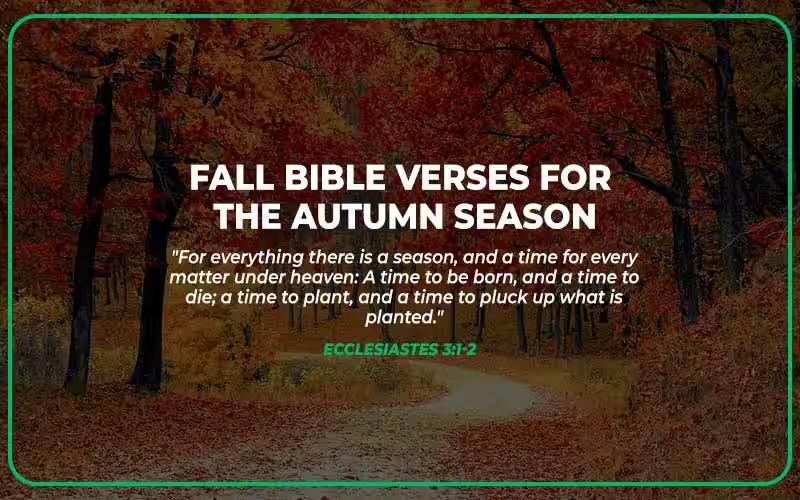
The concept of the “Fall” is a cornerstone of many religions, particularly Christianity. It’s a narrative of choice, consequence, and the enduring struggle between good and evil. It’s more than just a story; it’s a framework for understanding the human condition and our relationship with the divine. Understanding this concept allows for a deeper connection to religious texts and a more profound comprehension of spiritual journeys. This narrative often involves a pivotal moment of disobedience, with far-reaching effects, as seen in Genesis 3: “And the serpent said unto the woman, Yea, hath God said, Ye shall not eat of every tree of the garden?” The fall, though different in specific details across various faiths, frequently involves a disruption of harmony, often triggered by a choice that alters the natural order.
The Fall isn’t simply a historical event; it’s a recurring theme. We see echoes of this struggle in our own lives. Consider the temptation to prioritize immediate gratification over long-term well-being. This mirrors the temptation faced in the biblical story. We constantly make choices that have consequences, both positive and negative. The Fall compels us to examine our motivations and the impact our choices have on ourselves and those around us. These choices, like the “Fall,” often shape our understanding of the world, our relationships, and our spirituality. For example, choosing to prioritize work over family can lead to relational strain, just as choosing to ignore ethical considerations can lead to financial or reputational losses.
The story of the Fall, as told in various religious traditions, often depicts a loss of innocence and a subsequent awareness of mortality. This loss wasn’t necessarily a negative event in a vacuum, but rather a transition. It’s about learning from mistakes and recognizing the consequences of our actions. Imagine a child who, for the first time, experiences the pain of a scraped knee. That pain, though unpleasant, is a learning experience, preparing them for safer future choices. In similar ways, this Fall allows for the growth of humility, compassion and a profound understanding of our limitations.
The Fall often highlights the importance of responsibility and accountability. In religious narratives, the characters involved are held accountable for their actions. This accountability is a central message, highlighting the inherent responsibilities we hold as individuals. Think about the profound impact of our words and deeds on others. A thoughtless comment can leave lasting pain; a generous act can bring solace. This applies equally to the stories of religious texts, and to life’s everyday occurrences. Examples of this include the parable of the good Samaritan and the importance of compassion detailed in Matthew 25:31-46.
Exploring the Fall Across Different Religions
While the specific details vary, the concept of the Fall is found in a variety of religious traditions. Buddhism, for example, portrays the Fall as a turning point in the development of suffering and the cycle of rebirth. Hinduism, with its concept of karma, emphasizes the inherent consequences of actions. The Fall, in these contexts, is a reminder of the impermanence of things and the importance of embracing ethical choices. Think about how our choices can create positive or negative karma in our lives, leading to different outcomes in future lives (according to the Buddhist perspective). This concept, though phrased differently, mirrors the idea of accountability found in various religious traditions.
Many traditions, also including Judaism, see the Fall as a metaphor for humanity’s struggle with temptation and the constant choice between good and evil. This mirrors the concept in Christianity as described in Romans 7:19-25, where Paul describes the struggle within. This struggle isn’t just an abstract concept; it’s deeply intertwined with human experience. We face these same internal conflicts, daily, in our choices of how we respond to challenges, big and small. Think of choosing between honesty and dishonesty, or kindness and indifference. The Fall acts as a poignant reminder of the eternal tension between the ideal and the reality of human existence.
The themes of the Fall, irrespective of the specific religious tradition, remain profoundly relevant to our modern lives. We constantly choose between good and bad, selflessness and selfishness, compassion and indifference. The message from the Fall encourages us to live with greater awareness of our choices and their consequences. The fall emphasizes the importance of personal responsibility and ethical conduct. We are constantly making choices that shape our lives and the lives of those around us. Think about how our decisions regarding consumption, environmental responsibility, or social justice impact others. This is a direct reflection of the Fall’s impact on our world.
In essence, the Fall, across various faith systems, provides a framework for self-reflection. It prompts us to acknowledge our imperfections, and to strive for greater understanding and compassion. The “Fall” is not a condemnation, but a call for growth, responsibility, and a deeper connection with ourselves and the world around us. The concept highlights the importance of learning from our mistakes and embracing the constant journey of self-improvement. This resonates through various religious narratives, emphasizing the continual process of spiritual development. This concept, though ancient, has profound relevance in the modern world.
Frequently Asked Questions
What is the Bible verse fall?
The “fall” in the Bible typically refers to the story of Adam and Eve in the Book of Genesis, where they disobey God’s command and eat from the Tree of Knowledge of Good and Evil. This act is considered the origin of sin and suffering in the world.
Religion is a collection of beliefs, cultural systems, and worldviews that relate humanity to spirituality and, more broadly, to moral values, ethics, and the purpose of life. Different religions have different sets of beliefs and practices.