We often hear about the importance of studying the Bible, but what does that truly mean? It’s more than just passively reading; it’s a journey of deeper understanding and application. Bible passage study is a powerful tool for connecting with God’s message, not just intellectually, but emotionally and practically. It involves active engagement, reflection, and a willingness to let God’s truth reshape our lives. Understanding the context, the historical setting, and the intended audience is key to extracting the true meaning.
Imagine trying to understand a conversation without knowing the background or the people involved. That’s similar to reading a Bible passage without context. Contextualizing a passage helps us grasp the nuances of the message. For example, understanding the cultural norms of the time can shed light on seemingly paradoxical statements. Consider the parable of the talents in Matthew 25; without understanding the economic context of ancient Israel, the meaning may seem less clear.
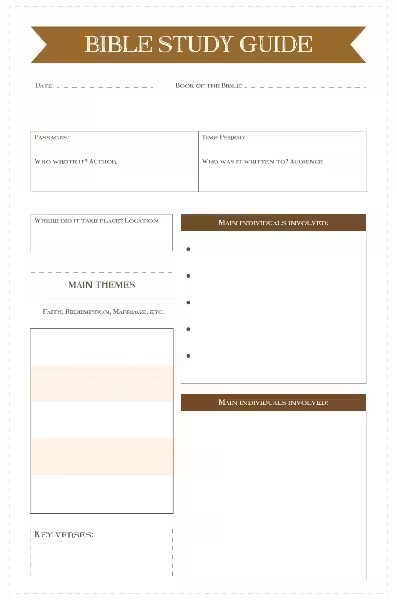
Breaking down a passage isn’t about finding hidden codes or secret meanings. Rather, it focuses on understanding the author’s intent and how the message applies to our lives today. Key elements to consider include: who wrote it, when and where it was written, and to whom it was addressed. Asking questions like “What is the main point?”, “What are the key themes?”, and “What are the practical applications?” can greatly enhance our understanding. For instance, when studying the Sermon on the Mount, we need to consider Jesus’ audience and the historical context to truly grasp the meaning behind teachings like the Beatitudes.
The process often involves identifying key words, phrases, and figures of speech. For example, in James 1:2-4, identifying the importance of trials and tests helps in understanding the passage’s message. Understanding these elements leads to a richer and more profound understanding of God’s word. Analyzing the structure of the passage can also reveal its underlying message. Look for recurring themes or stylistic choices. This approach helps you unravel the author’s intention and understand the passage better.
Applying the Word to Today’s World: Practical Application
The ultimate goal of Bible passage study is not just to understand the text; it’s to apply it to our lives. Reflection is crucial; how does this apply to my beliefs and actions? What struggles does this passage address? Does it offer wisdom for navigating modern challenges? Consider a passage like Romans 12:2, which encourages us to transform our minds. How can we apply this principle to our daily decisions?
Applying this to our lives is not about changing to fit a rigid standard but about allowing God’s word to transform us. For instance studying the parable of the Good Samaritan (Luke 10:25-37) can encourage us to see our neighbor in a new light, prompting us to extend compassion to those in need. Reflection and discussion with others can bring a broader understanding. Bible study groups provide a valuable platform for sharing insights and perspectives, fostering a deeper understanding of the text and its implications. This is not about simply interpreting, but transforming. The list of practical applications is extensive; it encompasses every aspect of our lives from challenging our prejudices, to strengthening our relationships.
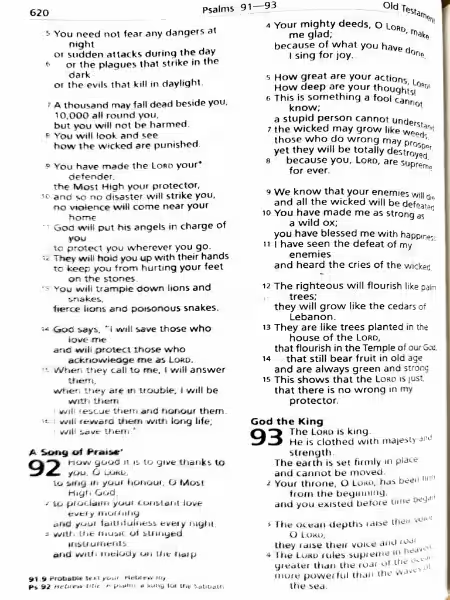
Numerous resources are available to enhance your Bible passage study. Commentaries offer valuable insights from experienced theologians. Study Bibles often provide additional information, historical context, and explanations to enhance comprehension. Online resources and apps provide further assistance and diverse perspectives. Consider searching for Bible study guides related to the specific books or passages you’re exploring. For example, a study guide on the book of Psalms can offer a framework for understanding the different emotions and experiences expressed in these poetic writings.
Utilizing different versions of the Bible can also be helpful. Comparing translations can sometimes reveal nuances that a single version may miss. Using a concordance can assist in finding related verses and building a deeper understanding of specific concepts. Furthermore, journaling your reflections after each study session can enhance your personal connection with God’s word. This structured approach to Bible study makes it a powerful tool for spiritual growth and transformation.
Frequently Asked Questions
What is the best way to study a Bible passage?
Read the passage slowly and carefully, paying attention to the context. Look up any unfamiliar words or phrases. Consider the historical and cultural background of the passage. Ask questions about the passage and its meaning. Discuss the passage with others. Use different study tools like commentaries, Bible dictionaries, and concordances.
What is the difference between faith and religion?
Faith is a personal belief or trust in something unseen, often a divine being or set of principles. Religion is a system of beliefs, practices, and values that often centers on a faith. Religion provides a framework for expressing and living out that faith.
What are some common misconceptions about the Bible?
The Bible is often seen as a single, monolithic text. But it’s a collection of books written over centuries by various authors, with different genres and purposes. It’s important to understand the historical context and literary forms of the various books.
How can I understand different interpretations of a Bible passage?
Different interpretations arise from differing perspectives on the passage’s context, authorship, and intended audience. Understanding the various historical and cultural contexts of the passage can provide valuable insight into diverse interpretations.
How do I apply Bible verses to my life?
Identify the core message or principle in the verse. Consider how it applies to your current situation and challenges. Pray about how to put the principle into practice. Reflect on how the verse can guide your decisions and actions. Seek guidance from spiritual mentors or leaders.