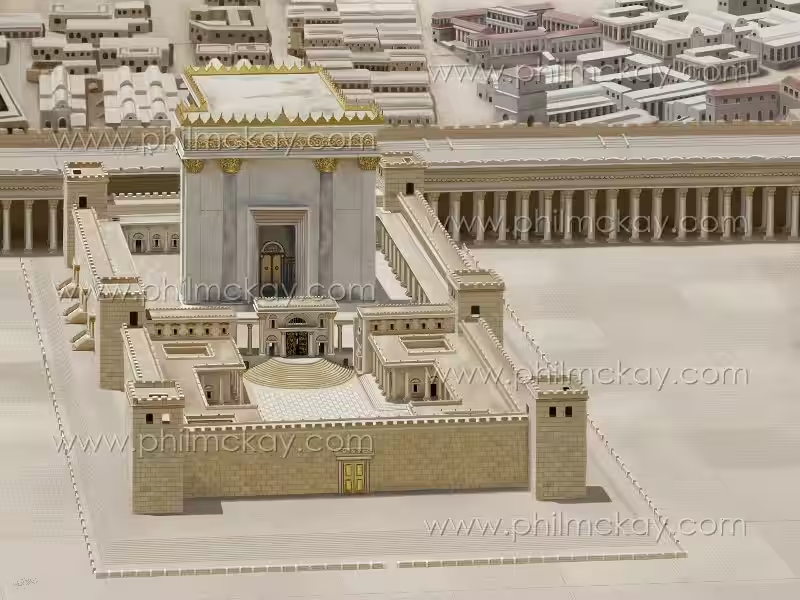
The dream of rebuilding the Jerusalem Temple, a cornerstone of Jewish faith, fuels passionate debate and historical contemplation. This ancient aspiration, intertwined with the city’s very soul, has captivated minds and hearts for millennia. Understanding the diverse perspectives surrounding this project requires a careful examination of religious texts, historical events, and contemporary political realities.
The potential implications of rebuilding the Temple are profound, impacting not only the Jewish community but also the broader global landscape. Reconciling the competing claims of different faiths and nations poses a significant challenge. This project, if undertaken, would undoubtedly alter the religious and political landscape of the region, triggering a cascade of unforeseen consequences.
The historical significance of the Temple is deeply rooted in Jewish tradition. It served not only as a place of worship but also as a symbol of national identity and spiritual connection to God. The first Temple, constructed by King Solomon, represented the pinnacle of Jewish civilization at that time. For centuries, generations of Jews have prayed for its restoration, and this yearning remains a powerful force in their faith.
The destruction of the Second Temple by the Romans in 70 CE continues to be a deeply painful memory for Jews. The event marked a turning point in Jewish history, leading to the diaspora and altering the very nature of Jewish practice. This historical trauma continues to influence the modern discussions surrounding the Temple’s rebuilding. The significance of this historical context cannot be overstated.
The concept of rebuilding the Temple is not universally supported. Different religious perspectives exist within Judaism itself, with some sects holding differing opinions on the timing and manner of such a project. Additionally, considerations of political viability and cultural sensitivities amongst neighboring communities need to be taken into account. For instance, some might argue that focusing on contemporary needs, like poverty alleviation or education, is more crucial than pursuing the Temple’s reconstruction.
Muslim perspectives on the Temple Mount, the site of the former temples, are equally significant. The Temple Mount, a holy site for both Islam and Judaism, holds immense value. The possibility of conflict, given the sensitive nature of the region, is a deeply concerning factor for many. This leads to important considerations about the potential for peaceful coexistence and mutual respect.
The Role of Politics and International Relations
The political landscape surrounding Jerusalem and the Temple Mount is extremely complex. Geopolitical realities play a crucial role in shaping the possibility of rebuilding the Temple. Israel views the Temple Mount as a significant historical and religious site, closely linked to their national identity. Conversely, other nations and communities hold differing views, potentially leading to international tensions.
The potential impact on international relations is substantial. Rebuilding the Temple could escalate existing conflicts and exacerbate tensions in the region. It is crucial to understand that this project would have far-reaching effects, potentially affecting regional stability and global peace efforts. A comprehensive and nuanced understanding of the international ramifications is essential.
The Future of the Temple Mount and Rebuilding
The future of the Temple Mount is a topic of profound debate and uncertainty. The issue is not just about rebuilding the physical structure—it’s about the potential for harmony, understanding, and cooperation among all faiths. Consideration of the needs and desires of all stakeholders is crucial for a peaceful resolution.
Ultimately, the decision to rebuild the Jerusalem Temple rests on a complex interplay of religious beliefs, historical narratives, political realities, and societal needs. The future will likely depend on the willingness of various parties to engage in dialogue, understanding, and mutual respect. Achieving consensus in a multi-faceted and controversial project like this will require profound efforts.
Frequently Asked Questions about Rebuilding the Jerusalem Temple
What is the Jewish perspective on rebuilding the Temple?
Different Jewish groups hold varying views on the rebuilding of the Temple. Some believe it is a divinely ordained task, while others are hesitant, citing concerns about timing and the potential ramifications. Rabbinic Judaism emphasizes the importance of the Temple’s spiritual significance but stresses that its reconstruction must be done according to divine will and not through human ambition.
What is the Christian perspective on rebuilding the Temple?
Christian perspectives on rebuilding the Temple are diverse. Some believe it is a necessary step in end-times prophecies, while others view it as a distraction from the spiritual realities of Jesus’ sacrifice.
What is the Muslim perspective on rebuilding the Temple?
Islam considers the Temple Mount a sacred site, but its role in Islamic theology is different from Judaism and Christianity. Muslims do not believe in rebuilding the Temple as a necessary step in their faith.
What are the historical and political factors involved in rebuilding the Temple?
The Temple Mount is a highly sensitive site, with Israeli and Palestinian claims intertwined with religious and national aspirations. Any attempt to rebuild the Temple would have significant political and diplomatic implications.
What are the practical challenges of rebuilding the Temple?
Rebuilding a structure of such historical and religious significance would face monumental practical challenges, including the need for archaeological research, legal considerations, and potential conflicts among various religious and political factions.