Athens, a cradle of Western civilization, echoed with the vibrant tapestry of ideas and beliefs. It was in this bustling intellectual hub that the apostle Paul, a prominent figure in early Christianity, embarked on a transformative journey. His impact on the religious landscape of Athens reverberates through history, shaping the evolution of faith in the region and beyond. This article delves into the complexities of Paul’s presence in Athens, exploring the religious landscape of the time, and contemplating the lasting legacy of his interactions.
The city of Athens, renowned for its philosophical discussions and diverse religious practices, presented a unique challenge to Paul. Paganism was deeply ingrained in Athenian society, with numerous temples and cults dedicated to various gods and goddesses. Philosophical schools like the Stoics and Epicureans boasted large followings, offering alternative worldviews to the prevalent religious norms. Paul’s message of a single, all-powerful God, and the concept of a resurrected Christ, undoubtedly stood in stark contrast to these established beliefs. This clash of ideologies formed the backdrop for Paul’s ministry in Athens.
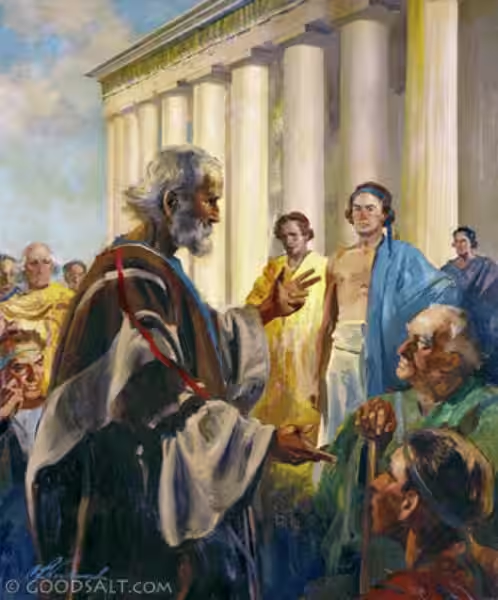
Imagine Paul, a missionary with a fervent belief in the Christian faith, stepping into the heart of Athens. The bustling Agora, the central marketplace, would have been a focal point for his interactions. It was a place where ideas collided, and where people from all walks of life gathered. Paul’s strategy, likely informed by his knowledge of Athenian culture, was to engage with the locals through dialogue and discourse, drawing on the city’s philosophical heritage. This approach was crucial in navigating a culture so steeped in critical thought. Paul used the Areopagus, a prominent council, and other public forums to present his message, aiming for a connection rather than a forceful conversion.
Key encounters likely included discussions with prominent Athenians. Imagine the intense debates with Stoic philosophers in the shadow of the Parthenon. Paul, undoubtedly, found himself challenged by reasoned arguments for polytheism, and the intricate philosophical systems built around it. Trying to bridge these differences, he would have employed persuasive arguments based on reason and revelation, using the shared human experience to find common ground. Understanding the Athenian context was crucial in making his message resonate. For instance, referencing the existing belief in a divine creator was a tactful way to introduce the concept of the one God.
Echoes of Dialogue: A Lasting Legacy
While the exact outcome of Paul’s Athenian ministry is a subject of scholarly debate, his presence left a profound and enduring impact. The spread of Christianity throughout the Roman Empire was certainly influenced by such missionary endeavors. Paul’s dialogue, even if not resulting in mass conversions, fostered a crucial exchange of ideas that shaped the religious landscape of the ancient world. His approach to religious discourse would inspire future missionaries and theologians, highlighting the importance of understanding and engaging with diverse belief systems. It created fertile ground for the seeds of faith to take root.
Paul’s contributions to the development of Christian theology were crucial. His letters, preserved in the New Testament, reveal his theological insights and offer valuable insights into the complexities of early Christian beliefs. Think of the concept of grace; this idea, so central to Christian doctrine, was likely developed and refined through Paul’s interactions and reflections, particularly in places like Athens. These interactions shaped his understanding of the faith and the manner in which he communicated it. The very fact that Paul chose to engage with the Athenians shows that he valued understanding and respect, regardless of differing belief systems, a lesson still relevant today.
Athens’s unique intellectual climate profoundly influenced Paul’s missionary approach. He cleverly adapted his methods to resonate with the Athenians. Paul’s interactions weren’t merely about conversion; they were about creating a space for dialogue and demonstrating the universality of faith. The complexities of the Athenian philosophical landscape forced him to refine his arguments and present them with a level of intellectual rigor. This experience likely played a crucial role in the development of his theological thought. Consider the historical context: Athens was a major center of learning, and this likely influenced Paul’s approach to his message, potentially making it more intellectually engaging.
One can imagine that the city’s diverse religious landscape, with its diverse gods and philosophies, greatly influenced Paul’s understanding of the nature of faith. Many scholars believe that Paul’s experiences in Athens led him to refine and deepen his theological understanding. Perhaps the Athenian experience prompted him to place a greater emphasis on the importance of reason and revelation in understanding divine truth. His journeys and encounters, in places like Athens, laid the foundations for the spread of Christianity across the Mediterranean world, and his teachings shaped the future of the faith.
Frequently Asked Questions: Athens Paul and Religion
What was Athens Paul’s religious background?
Athens Paul’s religious background is not publicly documented.
What role did religion play in Athens Paul’s life?
Information about Athens Paul’s personal religious beliefs and practices is not available.
Did Athens Paul have any religious affiliations?
No specific religious affiliations for Athens Paul are known.