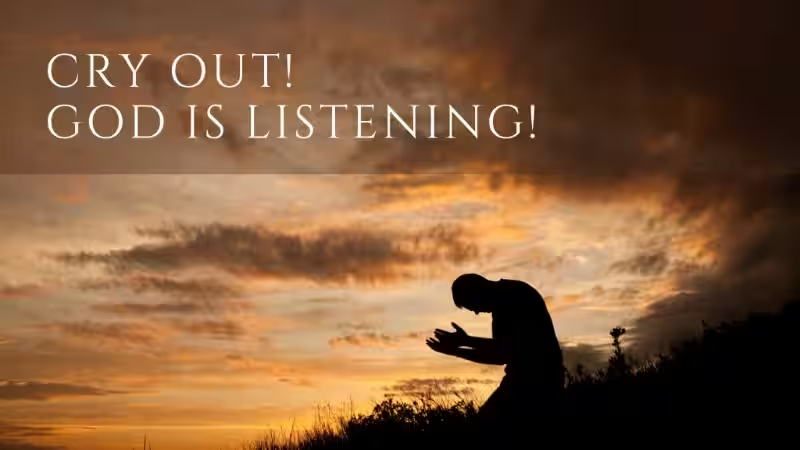
Throughout history, humanity has sought connection beyond the tangible world. We’ve grappled with questions about our purpose, our origins, and our ultimate destiny. This innate yearning, this profound need to understand something larger than ourselves, often manifests as a desire to worship God. More importantly, whether codified in a specific religion or expressed through personal spirituality, this deep-seated urge to connect with something sacred is fundamentally human.
This drive to worship is not just about following rules or rituals. It’s about finding a source of meaning and hope. It’s about seeking comfort in times of suffering, strength in times of adversity, and a sense of belonging in a world that can often feel fragmented and impersonal. This yearning cannot be extinguished by material wealth or fleeting pleasures, but rather by a profound connection that transcends the everyday. This connection, in its various forms and expressions, is what we often call worship.
The Role of Religion in Satisfying the Need to Worship
Organized religions provide frameworks for understanding this need to worship. They offer shared stories of creation, purpose, and redemption, allowing us to connect with something bigger than ourselves. These stories often serve as moral compasses, guiding our actions and shaping our understanding of the world. Think of religious texts like the Bible, the Quran, or the Torah—these often provide a framework for navigating life’s complexities, answering important questions, and offering a sense of community. A crucial aspect of religious practice is community. Shared experiences and rituals create strong bonds between believers, fostering a sense of belonging and support.
Different religions offer various ways to approach and express worship. Some religions emphasize prayer and devotion, others focus on rituals and acts of service. Regardless of the specific practice, there’s a common thread of seeking a deeper connection with something greater than themselves. For example, in many religions, communal prayer provides a sense of unity and purpose, reinforcing the shared belief system. Furthermore, acts of charity and compassion are often central to religious practices, providing a tangible way to express devotion and contribute to the well-being of others.
Finding Meaning and Purpose Through Worship
One of the most compelling reasons to worship God, or a higher power, stems from the inherent human need for meaning and purpose. Many find that religious beliefs provide a clear framework for understanding their place in the universe. Consider the question: “Why are we here?” Religious doctrines often provide answers, helping individuals to make sense of their lives in the face of difficulties. This framework can be vital in times of uncertainty, offering a sense of direction and belonging.
Furthermore, faith often provides a sense of hope and resilience. In times of suffering or loss, religious beliefs can offer comfort and solace. The belief in a higher power can provide a source of strength and encouragement. This is particularly evident in the face of major life transitions or personal struggles. The encouragement found in religious communities, based on shared values, is a significant point to appreciate. The narrative of faith, with its examples of overcoming adversity, can serve as an inspiration.
Connecting with Something Larger Than Ourselves
The desire to worship often arises from a yearning to connect with something larger than ourselves. This innate human trait, often referred to as transcendence, drives us to seek meaning and purpose beyond the limitations of our everyday lives. This search for something greater can manifest in our relationships, our contributions to society, or our artistic expression. But the ultimate expression of this longing is often in the pursuit of a relationship with a divine being, prompting acts of worship.
This connection creates a sense of awe and wonder. The vastness of the universe, the complexity of human life, and the mystery of existence are often experienced as a source of inspiration. This sense of wonder often empowers us to appreciate the beauty and wonder of the world and the human experience, drawing us closer to a greater purpose. Furthermore, this sense of connection often fuels a desire to live a more meaningful and fulfilling life. Examples of this connection are found in many forms of artistic expression, from poetry to music, that explore the profound questions of existence. It is arguably universal.
In Conclusion: The Enduring Power of Worship
The question of “why worship God?” is multifaceted and deeply personal. For many, worship is a vital part of their lives, offering a sense of purpose, community, and hope. It’s a way to connect with something larger than themselves, to find meaning in a sometimes chaotic world. Whether through formal religious practice or personal reflection, the human need to connect with something sacred is a powerful force that has shaped human cultures and continues to inspire us.
Ultimately, the decision to worship is a deeply personal one. There is no single answer. However, the human drive to connect, to find meaning, to feel a part of something larger than ourselves, is a testament to the enduring power of worship and its vital role in our lives. This journey of searching and connection, in its various forms, is a powerful expression of our humanity.
Frequently Asked Questions
Why Worship God?
Different people worship for different reasons. Some find comfort and meaning in a relationship with a higher power, others find guidance and moral direction in religious teachings, while still others experience a sense of community and belonging within their faith. Ultimately, the reasons for worship are deeply personal and varied.
Religion is a collection of beliefs, cultural systems, and worldviews that relate humanity to spirituality and moral values. It often involves rituals, practices, and moral codes that shape a community’s understanding of the world and their place within it. There are many different types of religions, each with its own unique history and traditions.