Religious texts, from the Bible to the Quran to the Bhagavad Gita, have shaped civilizations and continue to inspire countless individuals. But understanding these texts isn’t simply about memorizing verses; it’s about grasping their historical, cultural, and literary context. This deeper understanding unlocks profound insights and avoids misinterpretations that can lead to harmful conclusions. It’s about seeing the text through the eyes of those who wrote it, recognizing the beliefs and circumstances that shaped their words.
Many people approach scripture with a sense of awe and reverence, but often without considering the intricate tapestry of historical and cultural factors that influenced its creation. This can lead to a disconnect between the text and the lives of those who are reading it. For example, a modern reader might struggle to comprehend the significance of a particular ritual described in the Old Testament without understanding the social and political context of the time. Recognizing this context is crucial for understanding the text’s meaning and its relevance today.
Historical context provides the backdrop against which a scripture was written. This includes the social, political, and economic conditions of the time. For example, understanding the Roman Empire’s influence on the New Testament helps us comprehend the anxieties and hopes expressed in the Gospels. The author’s intent, purpose, and audience play a crucial role in this context. This historical context helps us understand not just what is written, but why. Furthermore, understanding the historical timeline and other surrounding writings can shed light on the nuances of the text.
Consider the book of Exodus in the Hebrew Bible. Reading it without understanding the enslavement and oppression of the Israelites in ancient Egypt severely limits our grasp of the story’s meaning. The historical context illuminates the desire for freedom and God’s role in delivering justice. By understanding the why, we gain a deeper appreciation of the what. Likewise, understanding the specific time periods when different books were written helps us to better interpret them, particularly when later books refer to earlier ones.
Cultural Context: Unpacking the Values and Beliefs
Cultural context illuminates the values, beliefs, and customs that shaped the scripture. For instance, a story about a king might be interpreted differently in a society that values democracy than in a society that values monarchy. By understanding the cultural norms of the time, we can appreciate the subtleties and nuances of the text. This includes understanding the role of family, social hierarchy, and religious practices that were prevalent during the writing of the text.
Consider the concept of honor and shame in ancient cultures. Interpreting scriptures through this cultural lens can provide a more accurate representation of the intended message. Many stories and rituals in the scriptures, like the concept of sacrifice or the different roles of men and women, are better understood when we consider the societal norms and rules of the time. It helps us move beyond simply interpreting individual verses and gain insights into the entire cultural tapestry of the time.
Literary Context: Understanding the Form
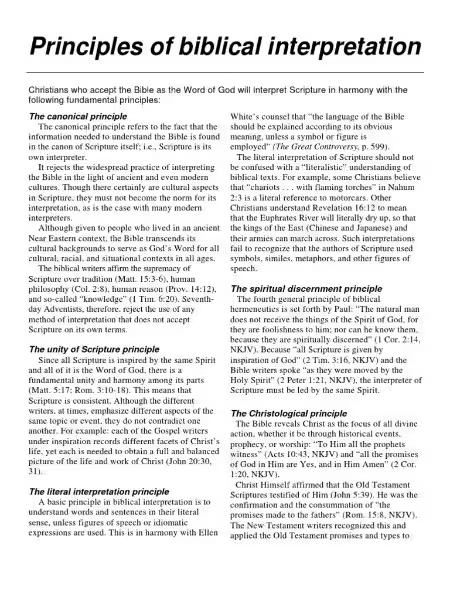
Literary context considers the genre, style, and structure of the scripture. Is it poetry, prose, law, or a parable? Understanding the literary form is essential to interpreting the meaning correctly. For example, interpreting a parable requires understanding its symbolic language. Acknowledging the purpose of different genres – be it to teach, persuade, or entertain – also greatly improves our comprehension. Knowing how these stories are meant to be understood is vital for accurate interpretation.
Understanding the different literary devices used in scripture, such as metaphors, similes, and allegories, is essential for interpreting its meaning accurately. Different literary styles have different purposes and meanings within the text. For instance, legal codes were meant to outline rules and regulations, while narrative accounts often conveyed history or moral lessons. Analyzing the structure and literary form helps us to uncover the underlying message and avoid misinterpreting the intended meaning.
Applying the Context
Learning about the context of scripture isn’t just an academic exercise; it’s a vital tool for living a more meaningful life. By understanding the historical, cultural, and literary context, we can avoid misinterpretations and develop a more nuanced understanding of religious texts. This knowledge allows us to apply the principles and wisdom within these texts in a way that is relevant and meaningful to our modern lives. It helps us to understand the historical, cultural and theological progression of these texts. By delving deeper into context, we can appreciate the universal truths and eternal principles these texts convey without limiting their application to particular time periods or cultures.
Ultimately, understanding the context of scripture empowers us to engage with these texts with greater wisdom and empathy. By considering the multiple layers of meaning within the text, we can not only gain a deeper understanding of the past, but also use it to navigate our present circumstances and shape our future. This is crucial for understanding texts like the Bible, the Quran, and the Vedas. This understanding can lead to more meaningful conversations and relationships with others who hold different religious beliefs, while deepening our own faith or personal philosophical exploration.
The context of scripture refers to the historical, cultural, and literary circumstances surrounding the creation and transmission of a text. Understanding this context is crucial for interpreting the scripture accurately and avoiding misinterpretations. Factors include the author’s intent, the audience for whom it was written, the social and political climate of the time, and the literary genres employed.
What is religion?
Religion is a complex and multifaceted concept. Broadly speaking, it encompasses beliefs, practices, and values related to the sacred or the supernatural. This can include rituals, moral codes, social structures, and philosophical frameworks that give meaning and purpose to life.