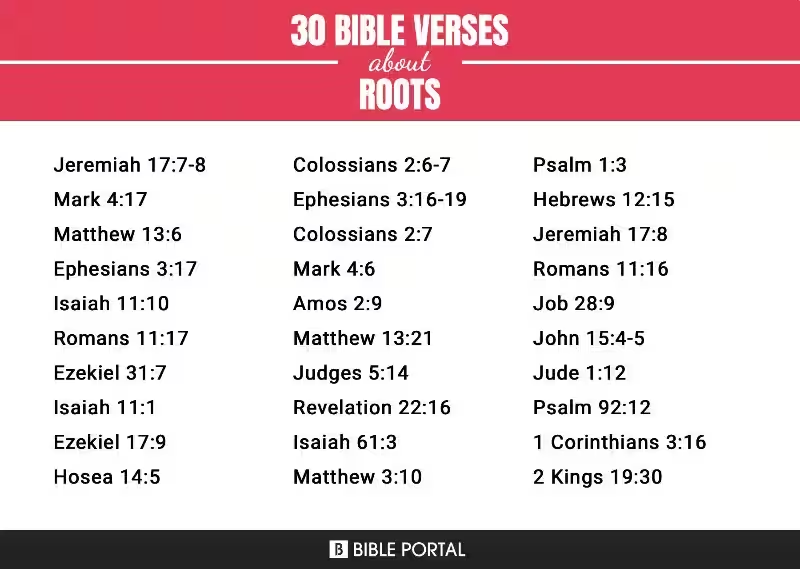
We often hear about the profound impact of religious texts, but what if I told you that the very roots of scripture hold the key to understanding our beliefs? Examining the historical and cultural context of these texts provides a deeper appreciation for their message. Just like a tree draws strength from its roots, our understanding of religion is strengthened by examining its origins. This journey through the roots of scripture will explore how these ancient stories shaped cultures and continue to inspire us today.
Consider the ancient civilizations that birthed these sacred texts. Their social structures, political landscapes, and daily lives were intricately woven into the fabric of the stories. For example, the Hebrew Bible reflects the struggles and triumphs of the Israelites, their relationship with God, and their journey through the promised land. By understanding the context of these stories, we gain a more profound appreciation for the human experience they represent. This exploration illuminates how roots scripture shapes ethical frameworks, moral codes, and spiritual practices.
Exploring the Diverse Landscapes of Religious Texts
Different religions have unique sets of sacred texts, each with their own historical and cultural contexts. These texts, like the Quran, the Bhagavad Gita, and the Book of Mormon, provide a window into the beliefs and practices of diverse communities. Understanding these texts within their historical context helps us avoid misinterpretations. We can appreciate the unique challenges and opportunities faced by the people who first codified these roots scripture.
Consider, for example, the numerous ethical codes found throughout religious texts. These codes often reflected society’s values and needs, such as the importance of social harmony, compassion, and justice. By understanding the origins of these ethical frameworks, we can better analyze their relevance in modern society. This exploration helps us see how the roots of scripture continue to inspire ethical reflections and actions. They act as a constant reminder that principles, though rooted in antiquity, remain relevant to our lives today.
Unraveling the Mysteries of Oral Traditions
Many sacred texts initially existed as oral traditions, passed down through generations before being written down. This process of oral transmission often involved significant changes and interpretations, further enriching the roots of scripture. Consider how stories were adapted to reflect the changing circumstances of the community. These stories, often featuring mythological figures and profound lessons, provided a framework for understanding the world. These oral traditions were often intertwined with the daily lives of the communities, woven into rituals and ceremonies.
Understanding the role of oral tradition in shaping religious texts is crucial for a comprehensive understanding of the roots of scripture. Analyzing the evolution of these stories provides insights into the dynamics of community, cultural memory, and the human desire to connect with the divine. This exploration unveils how these oral traditions transformed over time, creating the diverse tapestry of stories we find in religious texts today. It’s a powerful reminder that roots scripture are not static artifacts but dynamic narratives that reflect and shape human experience.
Connecting the Dots: Relevance in Our Modern World
The roots of scripture continue to resonate with people across cultures and time zones. They offer guidance for ethical dilemmas, meaning in life, and a path toward understanding ourselves and the world around us. These texts, even separated by centuries, often contain profound insights into the human condition. For example, the concept of love, forgiveness, and compassion found in many religious texts remains relevant today. By examining the roots of scripture, we can discover how these enduring principles can illuminate our lives.
These ancient stories aren’t just relics of the past; they are vital resources for understanding the human spirit. By engaging with these stories, exploring cultural contexts, and appreciating the role of oral tradition, we can deepen our appreciation for the roots scripture. We can also better understand the ethical and spiritual frameworks that continue to shape our world. For example, comparing the ethical codes in various roots scripture can reveal the universality and diversity of moral values. This deeper understanding can lead to bridging divides and fostering a more empathetic global community.
Frequently Asked Questions about Roots Scripture and Religion
What are the Roots Scriptures?
The Roots Scriptures are a collection of texts believed by some to contain ancient wisdom and spiritual guidance. Their origins and specific content can vary depending on the individual or group.
What is the significance of the Roots Scriptures in religion?
The significance of the Roots Scriptures depends on the specific religious or spiritual tradition. Some see them as foundational texts, others as supplementary materials, and still others as completely unrelated to their established belief systems.
What are the different interpretations of the Roots Scriptures?
Various interpretations exist, ranging from literal readings to metaphorical or symbolic interpretations. The specific approach often depends on the individual’s religious or philosophical framework.
How can I find more information about the Roots Scriptures?
Researching the Roots Scriptures will require exploring online resources and potentially connecting with communities or groups who study or practice the associated traditions.
Are the Roots Scriptures relevant to modern-day life?
The relevance of the Roots Scriptures to modern-day life is subjective and depends on individual interpretation and beliefs. Some find wisdom and guidance in them, while others may not.