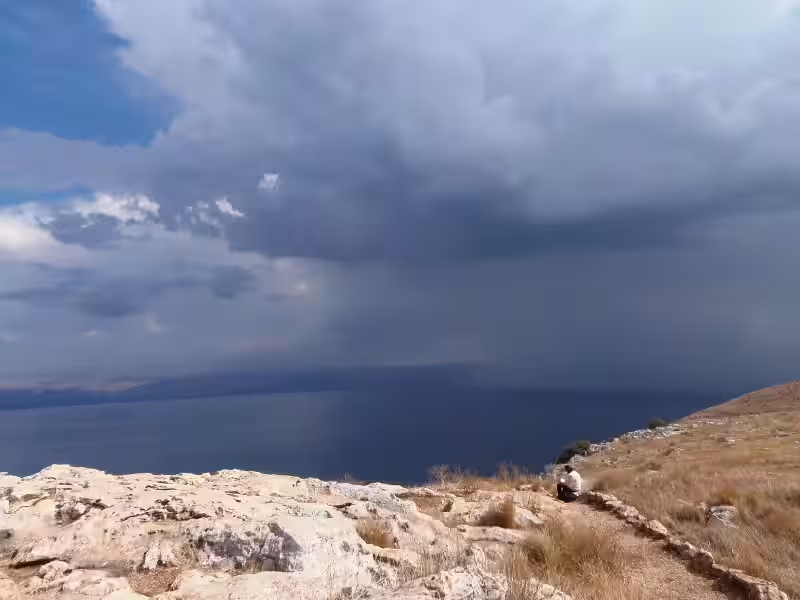
Storms on the Sea of Galilee: A Religious and Natural Phenomenon
Storms on the Sea of Galilee: A Religious and Natural Phenomenon
The Sea of Galilee, a body of water nestled within the rolling hills of northern Israel, has long held a special place in religious history. Beyond its serene beauty, this lake is intimately linked with numerous biblical accounts, often featuring dramatic storms. These storms, while natural occurrences, took on a profound spiritual significance, shaping how people understood faith, miracles, and the power of the divine. Understanding these storms requires delving not only into religious interpretations but also into the natural forces that often rage across the water's surface.
The Sea of Galilee, also known as the Sea of Tiberias, is a significant freshwater lake. Its geography, nestled between mountains, makes it susceptible to sudden weather changes. These changes often lead to violent storms, featuring strong winds, torrential rain, and towering waves. These natural phenomena, so common in the region, have profoundly affected the lives and beliefs of those who lived near it. Storms on the Sea of Galilee are often depicted in religious texts as powerful symbols of human fragility and the divine intervention needed to overcome adversity.
The Bible, particularly the Gospels, recounts several episodes where Jesus and his disciples faced storms on the Sea of Galilee. These accounts illustrate the powerful connection between the natural world and the spiritual realm. For example, the account in Matthew of Jesus calming the storm is a classic example of this connection. These stories often highlight the power of faith and the vulnerability of humanity in the face of nature's forces. Imagine yourself in a small boat, tossed about by a tempestuous sea. The experience could be extremely daunting and fearful.
These stories are not just historical accounts; they are potent metaphors. The storms symbolize life's challenges and trials. The turbulent waters represent the difficulties we encounter in our daily lives – loss, hardship, uncertainty. The calm after the storm, in the biblical narratives, signifies the possibility of divine intervention and the strength of faith in overcoming adversity. These stories encourage a profound connection between human vulnerability and the divine power to comfort and strengthen.
The Natural Science Behind the Storms
Understanding the natural causes of storms on the Sea of Galilee is crucial to appreciating the stories' context. The lake's geography, as mentioned, plays a significant role. It's a shallow depression surrounded by hills and exposed directly to the winds. This combination creates a unique and volatile environment. Strong winds can quickly whip up waves. Furthermore, the lake's size and shallow depth, compared to the vast expanse of the ocean, exacerbates the impact of sudden weather changes. The unpredictable nature of weather patterns in the region, known for its frequent and sudden shifts, adds another layer to the significance of the storms in the accounts.
Several factors contribute to the intensity of these storms, including the prevailing winds, seasonal variations, and proximity to mountain ranges. Local weather patterns, coupled with the lake's geography, can lead to rapid shifts in conditions, generating powerful storms. A small change in wind direction or an unexpected burst of rain can transform a calm surface into a churning sea. Think of the dramatic shifts in weather that occur quickly in a mountainous area or near a large body of water. Understanding this natural aspect provides a more complete picture of the context in which the biblical accounts were set.
The storms on the Sea of Galilee transcend the purely natural. They hold deep cultural and religious interpretations. For many, the storms symbolize the trials and tribulations of life. The vulnerability of the disciples in the boat reflects the human condition's susceptibility to suffering. Yet, the stories also teach about faith. The calm that follows the storm points to the power of divine intervention and the strength that comes from trusting in a higher power. This faith is often seen as the anchor that helps us navigate life's storms.
These stories have resonated with people for centuries, inspiring reflection and offering comfort. The storms, therefore, are not just about the natural world but about the spiritual one. The religious significance of these storms lies in their symbolic representation of life's challenges and the potential for hope, strength, and resilience. The narratives of the storms in the Sea of Galilee continue to inspire awe, wonder, and a deeper understanding of the human experience, connecting both the natural and religious realms in a rich and beautiful tapestry.
Frequently Asked Questions about Storms on the Sea of Galilee
What are the religious interpretations of the storms on the Sea of Galilee?
Various religious interpretations exist. Some view the storms as symbolic representations of life's challenges and the power of faith. Others see them as demonstrations of Jesus's authority over nature, illustrating his control and compassion. Different denominations may have slightly varying perspectives.
Why did Jesus calm the storm?
The calming of the storm is often seen as a demonstration of Jesus's power and authority over the natural world. It's also frequently interpreted as a symbol of his ability to provide comfort and reassurance in times of difficulty.
Were the storms on the Sea of Galilee literal or symbolic?
This is a complex question with varying interpretations. Some view the storms as literal events, while others see them as symbolic representations of the challenges faced by believers. There is no single definitive answer.
How do these storms relate to the teachings of Jesus?
The storms are often linked to Jesus's teachings on faith, trust, and reliance on God. The disciples' fear during the storm can be seen as a relatable human experience, contrasting with Jesus's calm demeanor and power.
Are there any specific details about the types of storms that occur on the Sea of Galilee?
Historical accounts and modern observations suggest that the Sea of Galilee is prone to strong winds and storms, consistent with its location and geographical features.