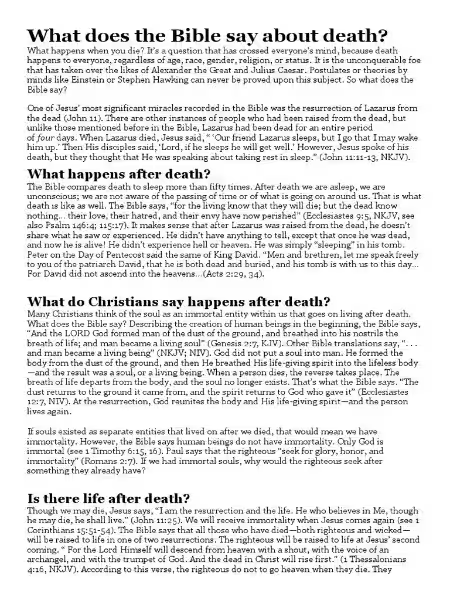
Death, burial, and resurrection are fundamental aspects of the human experience, pondered and explored by countless individuals and religious traditions across millennia. These concepts are often intertwined, touching upon our deepest fears and hopes regarding life’s inevitable end. Understanding these themes within a religious framework can offer comfort, meaning, and a framework for navigating grief, loss, and the mysteries of the afterlife.
Different religions offer various perspectives on the afterlife, with distinct interpretations of death, the rituals of burial, and the notion of resurrection. These perspectives range from the belief in an eternal soul to the concept of reincarnation, each providing unique insights into humanity’s enduring quest to comprehend life’s ultimate questions. Furthermore, the importance of burial rituals often reflects the cultural and spiritual values of a community, serving as a way to honor the deceased and offer solace to the living. For example, many Jewish burial traditions emphasize swift burial to return the body to the earth, reflecting a belief in the cyclical nature of life and death.
The experience of loss is universal. Grief is a natural response to the death of a loved one, varying in intensity and duration. It is a complex emotional process, often marked by sadness, anger, and confusion. Scriptures provide guidance and comfort during times of hardship. For instance, in the Book of Job, a profound exploration of suffering, we see the protagonist grappling with the loss of his possessions, family, and health and reflecting on hardship and the unknowable will of God. The pain of loss, as depicted in these scriptures, is not minimized, but acknowledged and understood.
Acknowledging and processing grief is vital. Support systems, whether personal or spiritual, play a crucial role in navigating the challenges of loss. Grief counseling can also be instrumental in providing a safe space to process emotions and develop coping mechanisms. Family and friends are often the first line of support. This is the cornerstone of community and the comfort of shared experience. For example, funerals often serve as a space for community support, allowing individuals to express their grief and find solace in shared memories.
Scriptures on the Nature of Death
Many scriptures offer different perspectives on the essence of death. Some believe in a soul’s transition to another realm, while others view death as the end of consciousness and existence. The Bible, for instance, speaks of death as a separation from God (Genesis 2:17), emphasizing a spiritual connection between the living and the deceased. Different religious contexts often reflect different views of death as a temporary separation, a transformation, or an ultimate end. Consider ancient Greek mythology, where the Underworld (Hades) housed the souls of the departed. This emphasizes the diverse and often conflicting ideas that societies hold about what happens after death.
Exploring these diverse perspectives fosters a greater understanding of the intricate relationship between religious belief and the human experience of mortality. These beliefs and the rituals surrounding death and burial are deeply rooted in the culture and values of individual communities. For example, the concept of reincarnation in Hinduism emphasizes the cycle of birth, death, and rebirth, suggesting an ongoing connection between the living and the deceased. This is in contrast to the concept of returning to the dust of the Earth in many religious traditions that emphasizes the ultimate return to nature.
Burial rituals hold profound cultural and spiritual significance. These rituals often act as a way to honor the deceased and offer comfort to the grieving. In many cultures, burial practices include ceremonies, prayers, and the placement of objects with the deceased. For example, ancient Egyptians meticulously embalmed their dead, believing in the preservation of the body for the afterlife. These practices were deeply rooted in their belief system, demonstrating the essential importance of honoring the dead.
Burial rituals vary widely across cultures and religions. Some traditions involve elaborate ceremonies, while others are more simple and direct. The selection of a burial site, the use of specific materials, and the rituals performed all contribute to the meaning and significance of the burial process for those involved. The treatment of the body and the importance of mourning reflect the overall cultural and spiritual context of the society. For example, Jewish burial customs often emphasize swift burial to return the body to the earth, reflecting a belief in the cyclical nature of life and death.
Resurrection: Hope and the Afterlife
The concept of resurrection, or the belief in the return to life after death, is a powerful and enduring theme in many religions. This belief offers hope and solace during times of grief, suggesting an enduring connection between the living and the deceased. For example, the Christian belief in the resurrection of Jesus Christ is central to the faith, symbolizing hope and the promise of eternal life. In many religions, resurrection stories often highlight the triumph of life over death and a reminder of the enduring power of the human spirit.
Scriptures often describe the resurrection as a transformative event, a journey to a new realm of existence. It often symbolizes the possibility of renewal, healing, and spiritual rebirth. These stories serve as a source of comfort and inspiration for those facing loss and hardship. The imagery of resurrection often conveys a hope for a new beginning, a renewed sense of purpose, and a connection to the divine.
Frequently Asked Questions about Scriptures on Death, Burial, and Resurrection
What does the Bible say about death?
The Bible describes death as a separation from God and a consequence of sin. Different perspectives exist, emphasizing the temporary nature of separation in some passages and the eternal nature of separation in others.
What is the biblical view on burial?
Burial is often portrayed as a natural and appropriate response to death, a sign of respect for the deceased. It is also viewed as a temporary resting place until resurrection in some religious traditions, and in some cases, a symbolic representation of the decay and renewal of life.
What are the different perspectives on resurrection in various religions?
Resurrection, or the belief in the return to life, varies significantly across religions. Some faiths, like Christianity, Islam, and others, believe in a bodily resurrection, while others, like some schools of Buddhism, focus on the rebirth of the soul in a different form.
What scriptures discuss death and burial?
Various scriptures across religions contain discussions of death and burial. Examples include the Book of Genesis in the Bible, the Quran in Islam, and the Sutras in Buddhism.
What role does faith play in understanding death and resurrection?
Faith plays a crucial role in understanding and accepting the concepts of death and resurrection, as it often provides comfort, hope, and meaning in the face of loss and the unknown.