The human experience is profoundly marked by the cycle of life, death, and often, the hope for something beyond. Religious texts throughout history have grappled with these profound questions, offering comfort, guidance, and a framework for understanding our place in the universe. The concepts of death, burial, and resurrection, while seemingly simple, hold intricate layers of meaning, shaping beliefs and practices across countless cultures and faiths. This exploration delves into these themes, drawing on scripture and examining their enduring relevance to our lives today.
The universality of death is undeniable, a fact we all face. Yet, across religions, the understanding of what follows death, and the possibility of resurrection, varies greatly. Biblical accounts, for example, often portray death as a transition, a separation of the physical body from the soul or spirit. Some religions emphasize the importance of proper burial rituals, viewing them as essential for the soul’s journey or for honoring the deceased. Furthermore, the concept of immortality is often tied to these practices, or a belief in eternal life. For instance, the Jewish tradition focuses on honoring and remembering the departed through rituals and prayers, reflecting a belief in an afterlife.
The Significance of Burial in Religious Traditions
Beyond the practical act of burying the dead, the ritual of burial often carries profound spiritual meaning. In many cultures, the burial process is designed to prepare the deceased for whatever comes next. Specific locations, like sacred ground or family tombs, may be chosen for their symbolic significance. Practices such as embalming, shrouding, and the inclusion of personal belongings in the grave are often seen as providing comfort or sustenance in the afterlife. For example, the ancient Egyptians’ elaborate mummification practices demonstrate a deep belief in the afterlife and the importance of preserving the body for the soul’s journey.
Burial rituals reflect the beliefs and values of a society. The way a person is buried can speak volumes about their perceived importance in life and their place within the community. Symbolic objects, such as offerings, prayers, or written statements, can be placed with the body, representing the continuation of connection to the living world. Ancient burial traditions, often elaborate and meticulous, demonstrate the depth of faith in the afterlife. Consider the elaborate tombs of pharaohs, designed to protect their bodies and ensure their continued power in the afterlife. These serve as powerful examples of the link between burial rituals and religious belief systems.
Resurrection: Hope in the Face of Death
The idea of resurrection – the rising from the dead – is a cornerstone of several major religions. Christian scripture speaks to this concept powerfully, depicting Jesus’ resurrection as a symbol of hope and victory over death. This concept is central to the faith, and believers see it as proof of God’s power and promise of eternal life. Resurrection is not simply a biological return, but a spiritual rebirth, and a guarantee of a future life free of suffering. In a similar vein, some Buddhist traditions envision a cycle of birth, death, and rebirth, with the potential for enlightenment leading to liberation from this cycle.
The concept of resurrection offers an alternative perspective on mortality, emphasizing the enduring power of the human spirit. It represents a belief that life persists beyond the physical limitations of the body, suggesting a higher purpose or divine connection. This idea of resurrection offers comfort and hope to those facing loss and suffering. For example, the belief in reincarnation in Hinduism provides a framework for understanding the continuity of life, offering a comforting perspective on the cycle of existence. The belief in resurrection may offer a solace to those who have lost loved ones.
The Relevance of Death, Burial, and Resurrection Today
Even in a secular world, the themes of death, burial, and resurrection resonate with us. Our understanding of mortality, loss, and the meaning of life is often informed by these ancient concepts. Modern society grapples with similar questions about the value of life, the nature of the soul, and the possibility of a life beyond the physical realm. Acknowledging our mortality can inspire us to live more intentionally and appreciate the preciousness of each moment. These reflections on death and its implications can be powerful motivators for compassion, empathy, and connection.
Rituals surrounding death and burial, though often less overtly religious in modern contexts, still fulfill important social functions. They provide a way to grieve, to remember, and to offer support to those who mourn. The concept of resurrection, even in a secularized form, can inspire hope, resilience, and a belief in the enduring power of the human spirit. Even the act of creating lasting memorials or preserving one’s legacy can be seen as a form of personal resurrection in a modern context.
Frequently Asked Questions about Death, Burial, and Resurrection
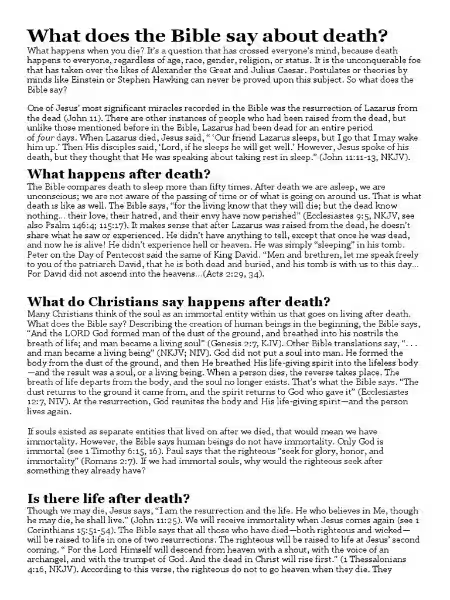
What does the Bible say about death?
The Bible describes death as a separation from God and a transition to an afterlife, either to heaven or hell, depending on one’s relationship with God. Different interpretations exist regarding the nature of this state.
What is the purpose of burial in the Bible?
While burial is often mentioned, it’s not always presented as a necessity for salvation. It’s sometimes seen as a respectful act for the deceased, a way to honor and remember them, and a physical expression of the hope for resurrection.
The resurrection is a central tenet in many religions, including Christianity. It refers to the belief that after death, the body and spirit are reunited and the individual experiences a new, eternal existence. The nature of this new existence varies across interpretations.
What are the different views on the resurrection in different religions?
Different religions hold varying beliefs about resurrection and the afterlife, reflecting diverse cultural and philosophical perspectives. Some religions emphasize reincarnation, while others believe in a single judgment and eternal life.
How does the Bible describe the resurrection of Jesus?
The Bible describes the resurrection of Jesus Christ as a pivotal event, signifying victory over death and offering hope of eternal life to believers. Various accounts detail the physical evidence and the impact of this event.
What does the Bible say about the resurrection of the dead?
The Bible speaks of a future resurrection of all people, where believers will be raised to eternal life with God, while those who rejected God’s grace may face judgment and separation from Him.
What is the role of faith in the resurrection?
Faith in Jesus Christ, and in the resurrection, is often emphasized as essential for experiencing the benefits of the resurrection. It is viewed as an act of trust and acceptance of God’s plan for salvation.