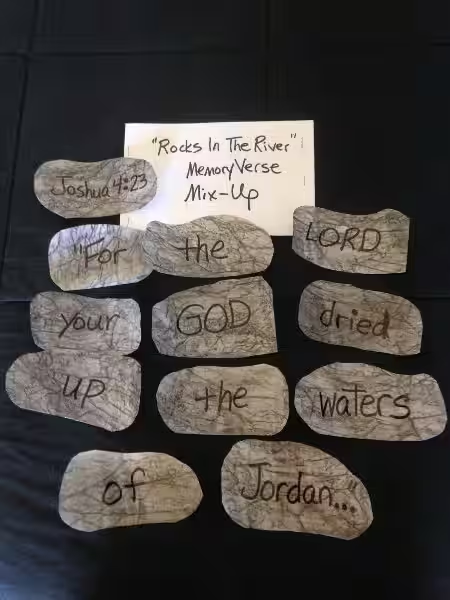
The world around us, from towering mountains to whispering sands, holds stories. Sometimes, those stories are inscribed not in ink or papyrus, but in the very fabric of the earth. This exploration delves into the fascinating interplay between religious beliefs and the physical world, specifically focusing on the concept of “scripture on rocks.” We’ll discover how different cultures have interpreted natural formations, stone inscriptions, and geological events through a spiritual lens.
Imagine ancient civilizations gazing at a jagged peak, a cave adorned with stalactites, or a river carving a path through the land. These weren’t just physical phenomena; they were imbued with divine meaning. The natural world became a canvas for their beliefs, their philosophies, and their relationship with the divine. This concept of finding religious significance in the natural world isn’t confined to the past. People continue to find inspiration in the beauty and power of nature, interpreting it through a spiritual lens. From the “rock-carved” stories of indigenous peoples to the modern-day appreciation of the grandeur of nature, we can see a recurring theme.
Rock art, a form of visual communication etched into stone, provides a powerful window into the beliefs and practices of past cultures. These “stories in stone” often depict religious figures, rituals, or cosmological elements. For example, the intricate petroglyphs found in the American Southwest depict a deep connection to the land and its spiritual essence. These carvings are often more than just pictures; they’re sacred texts etched into rock, reflecting the beliefs of the people who created them. These narratives often center on creation myths, animal deities, and ancestral spirits.
These ancient examples demonstrate how natural formations often became powerful symbols of religious significance. The shapes of mountains, caves, and rivers were believed to hold special meaning, connected to their spiritual world. This is not just limited to one geographic area or time period. Various communities interpreted natural occurrences through spiritual lenses, resulting in a rich tapestry of religious and cultural traditions. Such markings were often viewed as sacred scriptures, offering important spiritual teachings, and guiding spiritual practices.
Geological Events and Divine Intervention
The powerful forces of nature – earthquakes, floods, volcanic eruptions – have consistently been interpreted through a religious lens. For many cultures, these events were not simply natural occurrences but divine actions. The shifting landscapes were seen as evidence of the power of the deities, and their actions on the land were recorded in religious texts and oral traditions. This is a recurring theme across different faiths and cultures. From the biblical accounts of the flood to the volcanic eruptions revered by certain indigenous groups, the landscape itself became a record of divine intervention.
Such events were often interpreted as punishments, blessings, or warnings. Looking at the world through this lens, these events were linked to moral or spiritual lessons. These interpretations helped to shape the understanding of the world and the relationship individuals had with the divine. The very landscape itself became a testament to the power and nature of the divine. For example, the Grand Canyon, with its layers of rock, might represent the passage of time and the history of the world, illustrating the religious interpretations of the Earth’s history.
Modern Interpretations: Finding Spirituality in the Natural World
Even today, many people find spiritual meaning in the natural world. Hiking in the mountains, standing on a beach, or observing a sunrise can evoke a profound sense of awe and wonder. This feeling of connection to the natural world is not unique to any one religion; it’s a universal human experience. This connection can be seen as a form of “scripture on rocks” in the modern sense, an individual’s personal interpretation of the divine in nature.
Nature’s grandeur, from a mountain’s peak to a quiet forest, can act as a powerful catalyst for spiritual reflection. A person might feel a profound sense of peace, gratitude, or connection to something larger than themselves. This isn’t about codified scripture but about a personal, intuitive understanding of the sacred. These experiences, in a way, are a contemporary form of finding scripture in the rocks. This interpretation is relevant to many people, regardless of their belief system. It’s about finding a deeper meaning in the natural world, something inherent in each individual’s personal spirituality.
Frequently Asked Questions
What is the religious significance of scripture on rocks?
In various religions, inscriptions on rocks, such as tablets, pillars, or cave walls, can hold significant religious meaning. These inscriptions might contain sacred texts, historical accounts, or prophecies, depending on the specific religious tradition.
Are there examples of rocks with scripture in different religions?
Rocks with inscriptions are found across various cultures and religions. Examples include the Ten Commandments, or ancient inscriptions in Mesoamerican or Near Eastern cultures.
What is the theological interpretation of scripture on rocks?
The theological interpretation depends on the specific religious tradition and the content of the scripture. It often relates to the importance of the written word, historical events, or divine revelation.
How do rocks with scripture relate to the concept of divine revelation?
In some religious traditions, scripture on rocks is seen as a form of divine revelation, a direct communication from a deity. The permanence of the rock is linked to the permanence of the message.
How are rocks with scripture used in religious practices?
The use of rocks with scripture varies. They might be venerated, studied, or used as objects of prayer or meditation. The practices depend on the specific religious tradition.