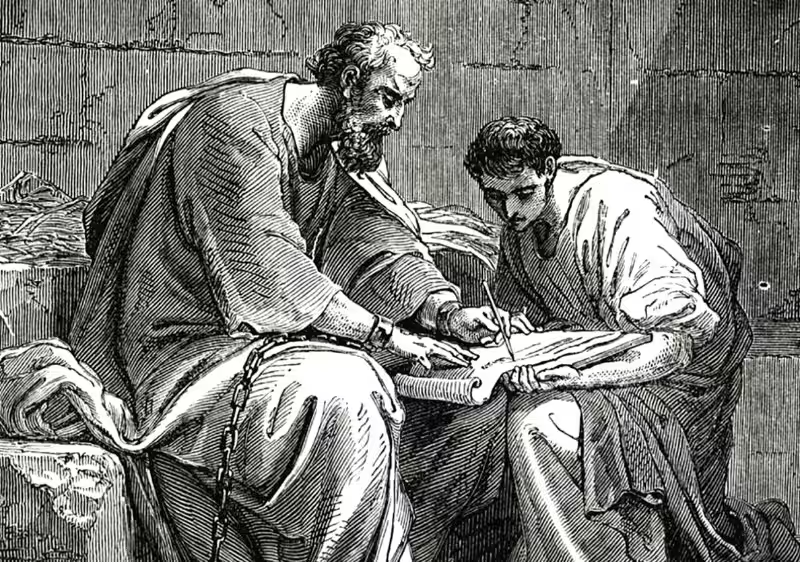
Throughout history, different religious traditions have nurtured and shaped the spiritual journeys of countless individuals. At the heart of these traditions lie schools of prophets, influential groups that fostered deep understanding and practical application of religious principles. These schools weren’t simply places of learning; they were vital communities where individuals could refine their faith, cultivate wisdom, and embark on a profound connection with the divine. The concepts and practices taught within these schools varied widely, reflecting the diverse contexts and beliefs of different cultures and time periods.
Think of these schools as spiritual apprenticeships, where aspiring individuals studied under experienced masters. These masters often possessed unique insights and interpretations of sacred texts, and their teachings became the bedrock of the school’s philosophy. Imagine a group of dedicated students, eager to absorb the knowledge and cultivate their spiritual gifts, mirroring the relationships found within such schools across different religious landscapes. This structured learning environment, fostered by the school’s rigorous curriculum and supportive community, was crucial in shaping the individual’s spiritual identity.
The concept of schools of prophets is not confined to a single religion or geographical area. Across various faiths, from ancient Israelite traditions to Islamic Sufi orders, we see similar structures emerging. For example, in ancient Israel, the schools of the prophets served as centers for the transmission of divine messages and ethical guidance. These communities were often characterized by communal prayer, rigorous study, and ascetic practices, setting the stage for spiritual development and leadership. Imagine a vibrant hub of learning, with dedicated students and teachers exchanging ideas and experiences.
The specific characteristics of these schools varied depending on the religious tradition. Some emphasized devotional practices, while others focused on ethical behavior and the interpretation of scriptures. Many of these schools also played an important role in social justice, advocating for the marginalized and oppressed. The schools of prophets, therefore, were not isolated enclaves; they often interacted with the wider society, influencing its moral and ethical compass. For instance, the Sufi orders in Islam are a prime example of such communities, renowned for their emphasis on mystical experience and social service.
Navigating the Pathways of Spiritual Development
Many schools of prophets embraced a multi-faceted approach to spiritual development. They weren’t just about memorizing scriptures; they encouraged practical applications of religious principles in daily life. Meditation, prayer, and ethical conduct were often integral components of the curriculum. Think of it as a holistic approach to spiritual growth, not just rote memorization, but also a deep understanding and application of the principles in everyday life, drawing closer to the divine. For example, many schools included rigorous training in listening to one’s inner voice and cultivating self-awareness.
Furthermore, the schools often emphasized community and shared experiences. The collective energy and support within these communities fostered a supportive atmosphere, vital for spiritual growth. Imagine the fellowship and encouragement among students as they embarked on their spiritual journeys together. Shared meals, communal prayers, and collective study sessions strengthened the bonds not just as students but as members of a spiritual family. These communal elements provided a framework for personal transformation and societal enrichment. This fostered a sense of belonging, allowing for mutual support and learning from others on similar paths.
The schools of prophets have left an indelible mark on the history of religion. Their contributions extend far beyond the immediate communities they served. They shaped religious thought, inspired ethical conduct, and fostered a deeper understanding of faith. These schools weren’t just historical echoes but vibrant centers of learning and spiritual development that have endured across centuries, inspiring countless individuals to embark on their own spiritual quests. For example, the impact of the school of prophets on the development of later religious movements is undeniable. The ideas and methods of spiritual growth and development that originated within those schools continue to influence contemporary religious practices.
The legacy of these schools continues to resonate today. Their emphasis on self-reflection, ethical living, and community remains highly relevant in a complex and rapidly changing world. Many modern spiritual communities and movements, while not formally structured as schools, draw inspiration from these earlier models. By studying these historical examples, we can gain valuable insights into the enduring human quest for meaning and connection to something larger than ourselves. This also helps us to appreciate the interconnectedness of diverse spiritual traditions and their shared goals of nurturing human potential and fulfilling individual spiritual journeys.
Frequently Asked Questions about Schools of Prophets
What are Schools of Prophets?
Schools of prophets were religious communities in ancient Israel, dedicated to the study and practice of prophecy. They were not necessarily formal institutions in the modern sense, but rather groups of individuals who gathered to learn from and with one another.
These schools served multiple purposes, including: fostering spiritual development, transmitting prophetic traditions, and providing a support system for prophets and those seeking a deeper understanding of God’s will.
What were the characteristics of these schools?
Schools of prophets often featured shared meals, communal living, and a strong emphasis on obedience to God’s commands. They were places of intensive study and practical application of religious teachings.
What role did prophecy play in these schools?
Prophecy was central to the schools. Students would learn about various forms of prophecy, its interpretation, and its significance for their lives and the community.
Were there different types of Schools of Prophets?
While the general characteristics remained similar, there may have been variations in specific focus or emphasis across different locations and time periods.
How did the schools relate to the established religious structure?
Schools of prophets often existed alongside the established priesthood and temple. They provided an alternative and sometimes supplementary path for religious learning and service.
What is the significance of Schools of Prophets today?
While the formal structure is absent, the principles of community, study, and seeking God’s will, exemplified in these schools, continue to resonate within various religious traditions.