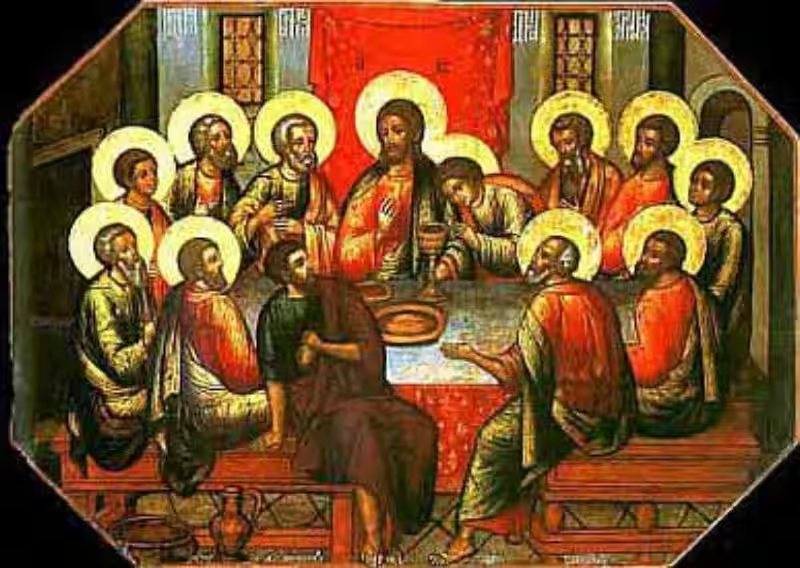
The word “saint” often conjures images of venerated figures, radiating holiness and distant from everyday life. But in scripture, the concept of sainthood is far more nuanced and deeply intertwined with our human experience. It’s not about unattainable perfection, but about a journey of faith and responding to God’s grace, and it reflects a profound understanding of the divine relationship with humanity. These figures, often ordinary people like you and me, illustrate the potential for growth and transformation within us all, demonstrating that sainthood is a process, not a destination.
The concept of a “saint” in scripture isn’t about bestowing a title. Instead, it’s about recognizing individuals whose lives were profoundly shaped by their connection with God and who, through their actions, embody virtues like faith, hope, and love. The Bible doesn’t label people as “saints” in a formal way; instead, it shows us the characteristics of those who were considered holy. Think of figures like Abraham, Sarah, Moses, and David – their stories highlight the human struggles and triumphs in their unwavering pursuit of God, making them relatable role models. They make the divine tangible, demonstrating how we can all live lives that reflect God’s love and grace.
Different books of scripture offer varying perspectives on sainthood. The Old Testament emphasizes obedience to God’s law as a pathway to holiness. For example, the lives of the prophets like Isaiah and Jeremiah showcase a profound connection to God, demonstrating unwavering commitment despite facing hardship and opposition. Their lives highlight an important aspect of sainthood – enduring faith in the face of adversity. This often involved speaking truth to power, challenging the status quo within their communities. Examples abound, including figures who stood up to injustice and oppression, demonstrating that holiness is not always comfortable.
The New Testament, on the other hand, emphasizes following Jesus’ teachings, which emphasized love, forgiveness, and service to others. The Gospels present Jesus as the ultimate model of holiness. The apostles, initially ordinary fishermen, became beacons of faith and discipleship. Their struggles and triumphs reveal the process of sanctification, the continual journey of becoming more like Christ. Crucially, Jesus’ message transcends the need for rigid adherence to rules. It highlights the essence of compassion and grace, emphasizing our inherent worth and the possibility of transformation. People like Mary, the mother of Jesus, and the various disciples exemplify this approach.
Recognizing Holiness in Everyday Life
The concept of saints in scripture isn’t limited to grand figures. It extends to the ordinary people who are mentioned in passing but embody these virtues. Consider the individuals in the parables, who through their actions or responses, exemplify generosity, forgiveness, or kindness. Even those who made mistakes and repented, like Peter, are presented as figures who demonstrate the potential for growth and change. Their stories remind us that sainthood resides not in perfection but in striving for holiness. The Bible showcases individuals who faced challenges, made mistakes, and yet, through their faith, found their way back to God, highlighting a critical truth: the journey of faith involves imperfection and forgiveness.
The lives of these individuals, often marginalized or misunderstood, offer valuable messages for our own lives. Their stories showcase the importance of courage, resilience, and perseverance. They teach us to forgive, to love, to find hope in the face of adversity. This isn’t about becoming perfect; it’s about growing closer to God. Think about the people you know – the seemingly ordinary folks who demonstrate these virtues. They’re living examples of the saints in scripture, a testament to the power of faith in the everyday.
Frequently Asked Questions about Saints in Scripture and Religion
What are saints?
Saints are individuals recognized for their exceptional holiness and devotion to God, often venerated as examples of faith and spiritual living. Their recognition varies across different religious traditions.
What are the different types of saints?
The concept of “saint” varies. In Christianity, saints are typically individuals canonized by the Church. In other religions, revered figures may be recognized for different reasons, like exemplary behavior or mystical experiences.
How are saints recognized in different religions?
Recognition of saints differs significantly. In Christianity, the Catholic and Orthodox Churches have formal processes for canonization. Other religions may recognize individuals who demonstrated exceptional piety, wisdom, or spiritual attainment.
Are all holy people saints?
No. While many individuals throughout history have lived holy lives, the designation of “saint” is often a formal recognition within a particular religious tradition.
What is the role of saints in religious practice?
The role of saints varies. In some traditions, they are prayed to for intercession or regarded as examples to emulate. In other traditions, focus is on their teachings or the divine power associated with them.
How do saints relate to God?
Saints are seen as individuals who have developed a particularly close relationship with God through faith, piety, and devotion. They are seen as models of this relationship.
What scriptures mention saints?
Specific scriptures referencing “saints” vary according to the religious tradition. Their existence and significance are often interpreted through the lens of specific texts.