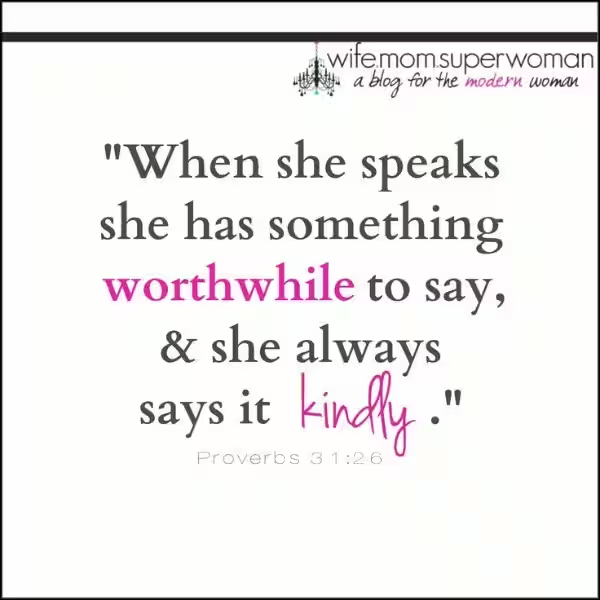
Throughout history, religious texts have offered insights into the roles and responsibilities of women. These texts, often interpreted differently across time and cultures, provide a rich tapestry of perspectives on womanhood. Understanding these interpretations, and the evolution of those understandings, is crucial for a nuanced conversation about gender in religion today. This exploration seeks to delve into the complexities, highlighting both traditional and emerging viewpoints. A key consideration is how these historical perspectives shape our current understanding and, crucially, how they impact the practical realities of women’s lives within faith communities.
Exploring proverbs about women reveals a range of societal expectations and values. For example, many proverbs emphasize a woman’s role within the domestic sphere. However, it’s essential to acknowledge that these proverbs, while often appearing to limit women, can also be viewed through the lens of cultural context and historical necessity. Sometimes, these seemingly restrictive proverbs can be interpreted as reflections of the support systems and responsibilities within particular communities. Understanding the motivations behind these proverbs is vital for interpreting their messages appropriately. It’s vital to consider the historical context in which these proverbs were created as well as how their meaning has been adapted or reimagined in contemporary interpretations.
Religious texts are not monolithic; different interpretations and translations often lead to varied understandings. This variation in interpretation is critical for recognizing the diverse perspectives within faith communities and avoiding generalizations. We must acknowledge the diverse range of interpretations and understandings of these texts. For instance, a proverb about a woman’s role in the home might be understood differently by a modern-day woman than by a woman in the past, highlighting the dynamic nature of religious understanding throughout history. We must also consider the cultural context surrounding the text and how values have evolved over time. For instance, the proverb “A woman’s place is in the home” may have carried different weight in a time when women had fewer opportunities outside the household compared to today’s world.
Furthermore, carefully analyzing the context surrounding these passages is essential. For example, a proverb about obedience might be understood differently within a patriarchal structure compared to a more egalitarian one. Considering the social structures of the time in which the text was created is crucial for informed interpretation. Another example is that proverbs often reflect the values of the time in which they were created. A proverb about a woman’s virtue might be seen in a different light today, compared to the context in which it originally emerged. It requires critical examination of the text and its historical context.
Modern Interpretations and Applications
The application of proverbs regarding women in modern religious contexts requires careful consideration. Modern interpretations grapple with the balancing act of honoring tradition while embracing contemporary values and equality. The challenges faced by women in many faith communities underscore the need for ongoing dialogue and understanding. A common example is the debate surrounding women’s roles in leadership positions within religious organizations. Traditional proverbs might be used to justify restrictions, while modern interpretations aim to reconcile these with concepts of equality and justice. The challenge lies in how to honour the past while embracing a more inclusive and equitable future for all.
It’s crucial to acknowledge the diverse interpretations within contemporary faith communities. Many individuals and groups are actively seeking to re-evaluate existing interpretations of religious texts, aiming to create more inclusive and equitable spaces. For instance, some faith communities are actively working to create leadership opportunities for women, demonstrating a commitment to evolving interpretations. They are reimagining the roles of women and fostering a more just and equitable society. These actions demonstrate a shift in perspectives, demonstrating that understanding and acceptance within religious communities is becoming increasingly common.
In conclusion, understanding proverbs about women in the context of religion requires a multifaceted approach. Examining these proverbs within their historical context, acknowledging the varying interpretations, and connecting them to current social and religious dialogues allows for a more nuanced and informative understanding. By recognizing the rich tapestry of these interpretations, we move towards a more inclusive and just future for all genders within faith communities.
Ultimately, ongoing dialogue and a willingness to re-evaluate traditional interpretations are essential. This process can lead to a richer understanding of women’s roles and contributions within faith, in line with modern values of justice, equality, and inclusivity. It’s a journey of learning, adapting, and evolving together. This ongoing exploration ensures that religious texts continue to serve as a source of wisdom and guidance for generations to come.
Frequently Asked Questions
What are some proverbs or verses about women in religious texts?
Proverbs and verses about women vary greatly across different religions and cultures. Some texts emphasize the importance of women in their roles as mothers, wives, and community members, while others may present more limited or stereotypical views. It’s important to consider the historical context and interpretations of these passages within their specific traditions.
What does [religion name] say about women?
Different interpretations exist regarding the role of women within [religion name]. Consult religious scholars and texts for accurate and nuanced understanding.
How should I interpret verses about women in religious texts?
Interpreting verses about women requires careful consideration of the historical context, cultural norms, and intended audience of the text. It’s important to consult with knowledgeable scholars and avoid generalizations.