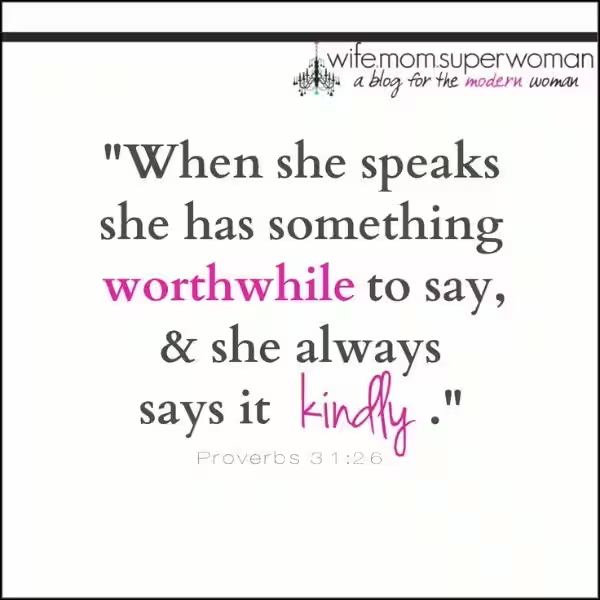
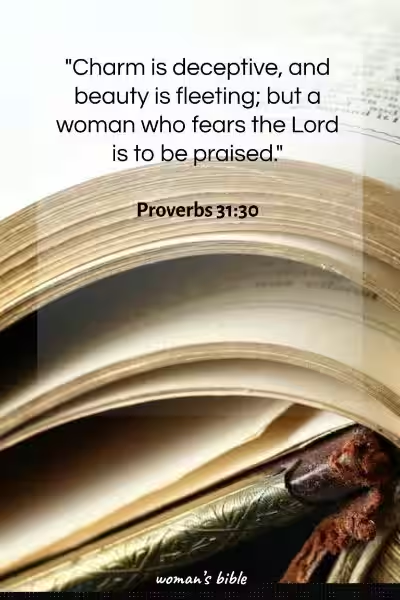
Throughout history, cultures have used proverbs to encapsulate wisdom gained from generations. These concise sayings offer guidance, often rooted in religious traditions, providing insights into navigating life’s complexities. For women, these proverbs hold particular resonance, reflecting societal expectations and personal experiences. Understanding these cultural lenses can offer a unique perspective on how to approach life’s challenges. Proverbs offer a concise framework for understanding societal expectations and personal experiences. They act as a compass, guiding us through life’s journey.
Many proverbs, especially those tied to religion, often address universal themes like responsibility, strength, and resilience. They encourage women to embrace their roles within their communities and families while also emphasizing personal growth. These insights can be incredibly valuable for women today as they navigate modern complexities, both personally and professionally. “A woman’s worth is measured by her deeds, not by her beauty” is a powerful example of a proverb encouraging self-reliance and integrity.
Religious texts and doctrines profoundly shape the proverbs associated with women. These proverbs frequently emphasize virtue, humility, and obedience, encouraging women to prioritize spiritual growth and moral excellence. Christianity, for example, often highlights the importance of women’s roles within the family and community, often emphasizing devotion and sacrifice. “A quiet and gentle heart is a woman’s greatest treasure” reflects this emphasis on inner qualities. The emphasis on these traits often encourages women to focus on personal fulfillment and spiritual growth.
Different religions offer diverse perspectives. Islam, for instance, emphasizes women’s agency and participation in societal life. Proverbs in this context might highlight the importance of justice, knowledge, and self-reliance. “A woman who is educated is a blessing to herself and to others” represents the importance of education. These varied interpretations demonstrate the diverse influences impacting the proverbs associated with women across different faiths.
Understanding the Message Behind the Proverbs
The insights offered by woman proverbs often go beyond the simple literal meaning. They can act as metaphors for navigating life’s challenges. For example, “A woman’s tears can soften even the hardest heart” doesn’t just refer to emotional vulnerability; it can also suggest the power of empathy and compassion. Understanding this deeper meaning is crucial to applying the proverb effectively in modern life. These proverbs often reflect a culture’s values and beliefs, making them a rich source of cultural understanding.
Often, these proverbs are not meant to be prescriptive, but rather to suggest a path. “A woman’s strength lies in her ability to adapt” highlights the importance of flexibility and resilience. Developing a nuanced understanding of the context and intent behind the proverb helps to extract its true meaning and apply it to contemporary situations. Understanding the context is key to applying these insights meaningfully.
Applying Proverbs to Modern Life
While rooted in history, woman proverbs can offer valuable guidance for navigating modern life. They can help us re-evaluate our priorities and approach challenges with new perspectives. For example, “A woman’s touch can heal a broken world” suggests that empathy and compassion can address social issues. Lists of applicable proverbs can be found online allowing us to learn how to apply them in our daily lives. These proverbs can be applied to a multitude of modern situations, offering fresh perspectives on old problems.
By examining the principles embedded within these proverbs, we can gain valuable insights into navigating complex relationships, managing stress, and achieving personal fulfillment. “A woman’s wisdom comes from experience, not from age” encourages women to prioritize valuable life lessons and self-reflection. Modern women can use these proverbs to evaluate values and approach issues with both empathy and determination.
Woman proverbs, often deeply intertwined with religious beliefs, provide a rich tapestry of wisdom. They offer insights into societal expectations placed on women while also highlighting the importance of personal strength, resilience, and virtue. Applying these proverbs in modern contexts allows for a deeper understanding of human experience. It’s crucial to consider the historical and cultural context when examining these sayings. By embracing the wisdom within these proverbs, we can navigate life’s complexities with greater empathy, strength, and determination. The wisdom of past generations can be a valuable compass for navigating the present.
Ultimately, these proverbs serve as a reminder that we are all part of a larger narrative. By understanding the rich history behind these sayings, we can gain valuable insights into navigating life’s challenges, understanding ourselves better, and becoming more empathetic and compassionate individuals. The proverbs offer practical wisdom and a reminder of the importance of cultural context.
Frequently Asked Questions
What are some common woman proverbs?
Proverbs about women vary significantly across cultures. Some highlight strength, resilience, and wisdom, while others may present more stereotypical or limited views. There is no single definitive answer.
What is the role of women in different religions?
The role of women in different religions is complex and varies greatly. Some religions give women significant leadership roles, while others place them in more subordinate positions. There is no universal answer and individual interpretations within each faith are diverse.