In the Bible, being humble means placing yourself under God’s authority and treating other people with honest, unselfish care. It does not mean denying your abilities, accepting abuse, or pretending you have no value. Biblical humility is a truthful view of yourself: dependent on God, accountable to him, and no more important than the people around you.
The Bible uses humility to describe a person’s posture before God and their conduct toward others. A humble person recognizes that life, abilities, opportunities, and salvation are not achievements to use for personal superiority. This person receives good gifts with gratitude rather than treating them as proof of being better than someone else.
Humility also involves submission to what is right. In Micah 6:8, walking humbly with God is presented alongside practicing justice and loving mercy. The idea is not passive weakness. It is a steady willingness to let God shape your priorities, decisions, and treatment of people who have less power or recognition.
Several biblical passages connect humility with teachability. Proverbs repeatedly contrasts a person who accepts correction with one who is proud and resistant. James 4:6-10 likewise calls people to submit themselves to God, resist evil, and approach God with repentance. Humility, then, includes the ability to admit that your understanding or behavior needs to change.
At its center: Biblical humility is not thinking that you are worthless. It is refusing to make yourself the center of everything while honestly recognizing your dependence on God and your responsibility toward others.
How humility differs from low self-esteem and self-contempt
Humility and low self-esteem may look similar from the outside, but the Bible does not treat them as the same. Low self-esteem says, “I have no worth.” Biblical humility says, “My worth does not come from being superior, impressive, or in control.” It allows you to acknowledge both your strengths and your limitations without turning either into an identity of pride or shame.
Scripture gives people meaningful responsibilities and gifts. Romans 12:3 tells believers to think about themselves with sober judgment, in proportion to the faith God has given. That instruction avoids two extremes: exaggerated self-importance and exaggerated self-rejection. A humble person can recognize skill, accept a compliment, lead faithfully, or speak with confidence when the situation requires it.
Jesus also taught his followers to love their neighbors as themselves, as recorded in Matthew 22:39. That command assumes that care for your own life is not automatically sinful. Humility does not require neglecting your health, allowing mistreatment, or refusing every opportunity. It changes the reason behind your actions: you seek what is good rather than constantly protecting your image or demanding special treatment.
Self-contempt turns inward and can keep a person focused on personal failure, fear, or unworthiness. Humility turns outward and upward: toward God’s truth and toward the needs of other people. It makes repentance possible without despair and service possible without needing applause.
What the Old Testament teaches about humble living
The Old Testament frequently links humility with reverence for God. Proverbs 9:10 presents the fear of the Lord as the beginning of wisdom, meaning that genuine understanding starts when a person recognizes God’s authority. A humble person does not assume that personal instinct, social status, or accumulated knowledge is the final measure of what is true.
Proverbs 11:2 contrasts pride with wisdom, while Proverbs 16:18 warns that pride can precede a person’s downfall. These sayings describe pride as more than confident behavior. Pride is a distorted inner judgment that makes someone overestimate their importance, reject warnings, and underestimate the consequences of their choices.
One of the clearest examples is King Nebuchadnezzar in Daniel 4. He boasts about the greatness of Babylon as though its power exists entirely because of him. The chapter describes his humbling and eventual acknowledgment that God rules over human kingdoms. The point is not that accomplishment itself is wrong. The warning is against claiming ultimate credit and forgetting that human authority remains limited.
Moses is described in Numbers 12:3 as very humble, yet his life was not timid or inactive. He confronted Pharaoh, led Israel, spoke with courage, and interceded for the nation. His humility appears in his dependence on God and willingness to carry out a difficult calling, not in a refusal to act.
David’s story also shows that humility can include restraint. In 1 Samuel 24 and 26, David refuses to kill Saul when he has an opportunity, because he recognizes limits on his authority and leaves judgment to God. His conduct does not mean that every dangerous situation should be handled passively. It shows a refusal to seize power through revenge simply because revenge seems available.
How Jesus defines humility through his life and teaching
Jesus gives the fullest picture of biblical humility. Philippians 2:5-8 describes Christ as choosing the path of self-emptying, taking the position of a servant, and accepting suffering and death. This passage does not portray humility as a denial of Christ’s identity. It portrays voluntary service and obedience rather than self-protection or status-seeking.
Jesus’ teaching in Mark 10:35-45 addresses the disciples’ desire for positions of honor. He contrasts the usual pattern of rulers who use authority to dominate with the pattern expected among his followers: greatness is expressed through serving. He then points to his own mission as the model. Christian humility therefore concerns how power is used, especially when a person has the ability to command, benefit, or exclude others.
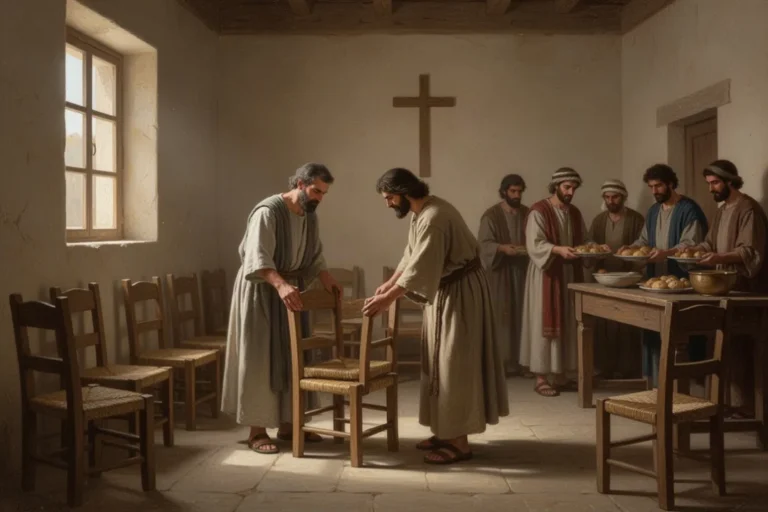
In John 13, Jesus washes his disciples’ feet before his death. The scene is significant because the teacher takes the role of a household servant. Jesus does not become less worthy by serving. Instead, he shows that dignity and service are compatible. A person does not need to protect a superior image by refusing ordinary acts of care.
Jesus’ teaching about the wedding feast in Luke 14:7-11 also addresses status. He warns against taking the most prominent seat and then being publicly displaced. His point reaches beyond social etiquette: do not build your life around being noticed, honored, or placed above others. God sees a person’s true character, and self-promotion cannot create lasting worth.
The Beatitudes in Matthew 5 include people who know their spiritual need, mourn, show mercy, and hunger for righteousness. These qualities reflect humility because they reject self-sufficiency. They describe people who are open to God’s help, sensitive to suffering, and eager for what is right rather than satisfied with their own moral image.
What humility means in relation to God
Humility before God begins with recognizing who God is and who you are. Psalm 8 reflects on humanity’s significant place in creation while still marveling that God cares for human beings. That combination matters. Biblical humility does not say humans are meaningless; it says human significance is received rather than self-created.
Job’s story illustrates the limits of human perspective. After Job questions God amid intense suffering, God responds by reminding him of realities beyond his knowledge, as described in Job 38–42. Job’s humility is not a claim that his pain was imaginary. It is a renewed recognition that he cannot see the whole of reality or place God on trial as though he were the final judge.
Humility also appears as repentance. In 2 Chronicles 7:14, God’s people are told to humble themselves, pray, seek him, and turn from harmful ways. Humbling yourself is therefore not merely adopting a quiet manner. It involves a concrete change of direction when your choices have been wrong.
First Peter 5:5-7 connects humility with casting anxieties on God because he cares for his people. This does not mean pretending anxiety is easy or refusing practical help. It means releasing the demand to control everything and trusting God with concerns that exceed your power. Prayer becomes an act of humility because it admits both need and dependence.
Humility before God guards against two opposite mistakes. Pride says, “I need no authority beyond myself.” Despair says, “My failure places me beyond mercy.” The biblical response is neither self-reliance nor hopelessness. It is honest confession, trust in God’s character, and willingness to live according to his guidance.
What humility means in relationships with other people
Philippians 2:3-4 tells believers to reject selfish ambition and empty conceit, to value others, and to pay attention to their interests as well as their own. This does not require you to treat every opinion as equally wise or to erase legitimate boundaries. It asks you to stop assuming that your convenience, recognition, or preference should automatically come first.
Romans 12:10 encourages believers to show genuine affection and give honor to one another. A humble person can celebrate another person’s success without treating it as a threat. They can listen without preparing a speech about themselves, share credit, and notice work that receives little public attention.
Humility also affects conflict. James 1:19-20 tells readers to be quick to hear, slow to speak, and slow to anger, while warning that human anger does not produce God’s righteousness. A humble response does not guarantee agreement. It does create room to ask whether your interpretation is complete, whether your words were harmful, and whether winning the argument is more important than pursuing truth and peace.
Galatians 6:1 instructs spiritually mature believers to restore someone caught in wrongdoing with gentleness while watching themselves. The warning against pride is built into the process. Correction must not become an opportunity to feel superior, since the person giving correction is also vulnerable to temptation and failure.
Humility in relationships can involve speaking firmly. Nathan confronted David in 2 Samuel 12; John the Baptist confronted hypocrisy; and Jesus challenged religious leaders when their actions harmed others. Humility is not silence in the presence of injustice. It is the absence of self-glorifying motives and the willingness to speak for what is right rather than for personal revenge.
What the Bible says about humility and leadership
Biblical leadership is repeatedly measured by stewardship rather than status. Leaders are entrusted with people, resources, and decisions; they do not own the lives or dignity of those they lead. Jesus’ teaching in Mark 10 makes this distinction especially clear by rejecting domination as the model for greatness among his followers.
First Peter 5:1-4 urges elders to care for God’s people willingly, not from greed or a desire to control, and to lead by example. The passage does not eliminate authority. It places authority under accountability and service. Leaders remain responsible for decisions, but they must not use their position to exploit, intimidate, or demand constant praise.
Humility in leadership includes receiving counsel. Moses’ father-in-law Jethro advises him in Exodus 18 to share the work of judging the people rather than carrying every responsibility alone. Moses listens and adopts a more sustainable structure. The story illustrates that accepting wise help is not a sign of incompetence; refusing all help can be a form of pride.
Paul’s letters also show a balance between humility and responsibility. Paul sometimes defends his authority because the health of the churches is at stake, yet he describes himself as a servant and steward. The lesson is practical: a humble leader can make difficult decisions, correct serious problems, and protect others without turning leadership into a performance of personal greatness.
Common mistakes about biblical humility
Many misunderstandings arise when humility is separated from truth, wisdom, and justice. The following corrections help distinguish biblical humility from behaviors that merely look modest.
Humility is not self-hatred. Scripture calls people to truthful self-assessment, not constant insults against themselves. You can acknowledge weakness while still believing that your life matters to God.
Humility is not pretending to be less capable. Moses, Bezalel, Deborah, Esther, Paul, and many others are portrayed as people who used real abilities. Concealing a gift to appear modest can prevent you from serving well.
Humility is not allowing abuse. Jesus taught forgiveness and service, but the Bible also contains protection for the vulnerable, confrontation of wrongdoing, and consequences for destructive behavior. Forgiveness does not require continued access to harm you.
Humility is not refusing leadership. Some people avoid responsibility because they fear criticism or want to appear harmless. Biblical humility accepts responsibility when you are called and equipped to serve.
Humility is not never speaking about your work. Honest reporting, a résumé, a testimony, or a request for fair pay is not automatically pride. The issue is whether you are communicating truth or trying to establish superiority.
Humility is not people-pleasing. A humble person may disappoint others by obeying God, telling the truth, or maintaining a necessary boundary. Seeking universal approval can become another form of self-centeredness.
Important distinction: If someone uses religious language to demand your silence, submission, money, or continued exposure to harm, that demand should not automatically be accepted as biblical humility. Seek wise counsel and appropriate protection.
Practical ways to practice biblical humility
Humility grows through repeated choices, not through a single declaration about your character. The goal is not to create an appearance of modesty. It is to become more truthful, teachable, and ready to serve when no one is rewarding you for it.
Begin with honest prayer. Ask God to show you where pride, fear, envy, or the need for recognition is shaping your decisions. Use specific situations rather than a vague request to “make me humble.”
Receive correction before defending yourself. Listen to the concern, ask clarifying questions, and consider what may be true. You do not have to accept every accusation, but you should not dismiss feedback merely because it is uncomfortable.
Admit wrong without adding excuses. A clear apology names the action, recognizes its effect, and avoids shifting blame. Confession becomes less meaningful when it is followed by a long explanation of why the other person caused it.
Give credit accurately. Mention the people who helped, acknowledge shared work, and resist presenting a group accomplishment as a personal achievement. Accurate credit strengthens trust.
Serve in unglamorous ways. Do necessary work that may not bring attention, such as preparing, cleaning, following up, or helping someone who cannot advance your reputation. Hidden service can expose how much recognition influences you.
Practice listening. Let another person finish, summarize what you heard, and ask what you may be missing. Listening is especially important when the speaker has less authority or a different life experience.
Share power responsibly. Delegate, invite disagreement, and make room for other people’s gifts. If every decision must pass through you, examine whether control has become part of your identity.
Remember your dependence. Give thanks for God’s provision, other people’s labor, and opportunities you did not create by yourself. Gratitude weakens the illusion that success is entirely self-made.
How to tell whether an action is truly humble
Outward behavior alone cannot establish humility. A person may speak softly while privately expecting admiration, or perform generous acts mainly to secure influence. Jesus addresses this problem in Matthew 6 by warning against practicing religious deeds to be seen by others. The same action can be humble or proud depending on its purpose and the person’s willingness to surrender recognition.
Ask what happens when you are not thanked. If you become resentful, repeatedly remind people what you did, or withdraw care because no one noticed, your service may be tied closely to recognition. A humble person may still feel disappointment, but they do not make praise the condition for doing what is right.
Ask how you respond when someone else succeeds. Humility does not require you to feel no sadness or ambition. It does mean you can resist envy, honor another person’s achievement, and continue doing faithful work without treating their success as evidence that you have failed.
Ask what you do with authority. Do you use influence to protect people and accomplish a good purpose, or mainly to secure obedience and admiration? Biblical humility is visible in how a person treats those who cannot improve their status, provide a favor, or offer public approval.
Ask whether you can change your mind. A person who is humble before God remains open to correction from Scripture, wise counsel, and truthful circumstances. Changing your position is not always required, but an inability to reconsider is often a sign that pride has attached itself to being right.
How humility connects with grace, wisdom, and honor
The Bible presents humility as a path toward several good things, not as a way to earn God’s love through self-denial. James 4:6 says God gives grace to the humble, and First Peter 5:5 repeats the same principle. In context, grace is God’s generous help for people who acknowledge their need rather than insisting on independence.
Proverbs associates humility with wisdom because a teachable person can learn from correction and experience. Pride narrows perception: it filters information through the desire to be admired or proven right. Humility widens perception by making room for counsel, evidence, repentance, and the possibility that another person has something valuable to say.
Proverbs 15:33 and 18:12 connect humility with honor in the sense that character precedes lasting respect. This does not promise that every humble person will receive public recognition. Many faithful people remain unnoticed. The principle is that durable honor is not safely built through self-promotion; it grows from integrity, service, and a life that can bear responsibility.
Jesus’ teaching in Matthew 23:12 states that those who exalt themselves will be humbled, while those who humble themselves will be exalted. This is not a strategy for appearing humble so that you can eventually receive status. It is a warning against making status your goal and a promise that God sees faithful character even when human recognition is absent.
The biblical definition of humble is therefore both inward and practical. It is honest dependence on God, freedom from self-importance, openness to correction, respect for others, responsible use of power, and readiness to serve. It does not erase personality, ability, dignity, or legitimate boundaries. It places all of them under truth, love, and God’s authority.
Frequently asked questions
Is humility always described as a virtue in the Bible?
Biblical humility is consistently treated as good when it means submitting to God, accepting correction, and serving others. However, the Bible does not praise humiliation, cowardice, self-loathing, or surrender to injustice. A person can appear outwardly submissive while acting from fear or manipulation. The virtue is a truthful, willing orientation toward God and neighbor.
Can a Christian be confident and still be humble?
Yes. Biblical humility and healthy confidence are compatible. Humility keeps confidence from becoming superiority, while confidence allows you to use your gifts responsibly. Moses led courageously, Paul spoke firmly when necessary, and Jesus acted with authority. The question is not whether you recognize your abilities, but whether you treat them as gifts to steward rather than reasons to dominate others.
How can I become more humble without constantly criticizing myself?
Focus on truth rather than self-attack. Thank God for your abilities, admit your limitations, listen carefully to correction, apologize specifically, and serve without demanding recognition. Ask trusted people where you need growth. Humility becomes healthier when you stop comparing your worth with other people and begin measuring your choices by faithfulness, love, and honesty.
What should I do if someone tells me to be humble to excuse their harmful behavior?
Examine the request against biblical principles of truth, justice, and protection. Humility may involve hearing a difficult concern or admitting a real mistake, but it does not require accepting abuse, hiding wrongdoing, or abandoning wise boundaries. Ask a trustworthy pastor, counselor, or qualified support professional for perspective, especially if the person making the demand has authority over you.







Leave a Reply