You have opened the Bible study guide, prepared a few questions, and then realized that six people are arriving with different expectations. One wants deeper theology, another needs help with a personal problem, and someone else is nervous about speaking. A cell group Bible study can serve all of them when it combines thoughtful preparation, genuine conversation, and a clear focus on Scripture.
The goal is not to cover the most material or create the most impressive discussion. A healthy group helps people understand the biblical passage, listen to one another, and respond to God in practical ways. The leader creates a welcoming structure, but every member has a part in the learning.
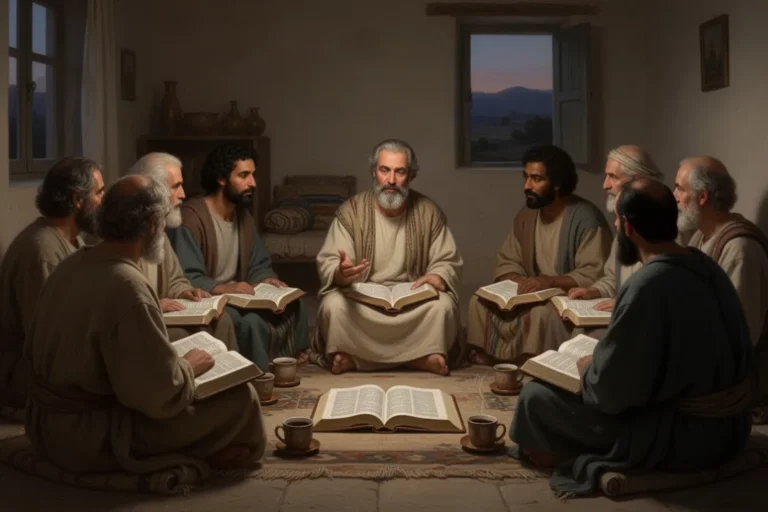
A cell group is a small gathering that meets regularly for Christian fellowship, prayer, and discipleship. Some groups meet in homes, while others gather in a church room or online. The setting matters less than the group’s purpose: building meaningful relationships around the study and practice of Scripture.
The word “cell” often describes a small, relational unit within a larger church community. The group may have a leader and an assistant leader, but it should not function like a weekly lecture. Members need room to ask honest questions, describe how a passage affects their lives, and encourage one another.
A Bible study meeting usually includes four movements:
Connection: Members welcome one another and share briefly about the week.
Scripture: The group reads and examines a selected passage.
Response: Members consider what the passage means for beliefs, choices, relationships, and habits.
Prayer and care: The group prays for specific needs and follows up with one another.
These movements do not have to take equal amounts of time. A group may spend more time on the text one week and more time supporting a member through a difficult situation the next. Still, keeping all four in view prevents the meeting from becoming either a social hour with a devotional thought or a classroom with little personal connection.
Core principle: The Bible is the center of the gathering, but people are not interruptions to the study. Good leadership brings Scripture and real life into the same conversation.
How to prepare a cell group Bible study step by step
Good preparation gives a meeting direction without making it rigid. You do not need a long academic lesson plan, but you should know the passage, the main idea, and the kind of response you hope the group will consider.
1. Choose a manageable biblical passage
Select a passage that can be read carefully and discussed within the available time. A short section with a clear setting is often more useful than several chapters covered quickly. Consider the group’s familiarity with the Bible, the current church teaching plan, and the needs members have expressed.
Read the passage several times in different ways. Read it silently, read it aloud, and observe what changes when you hear the words. Pay attention to repeated ideas, contrasts, commands, promises, questions, characters, and changes in tone.
Before writing discussion questions, identify the passage’s main point in one sentence. If you cannot explain the central idea simply, the group may become distracted by minor details. A clear main point does not answer every question, but it gives the discussion a useful center.
2. Study the passage in context
Ask what comes before and after the selected verses. Identify who is speaking, whom they are addressing, what problem or event is involved, and what the original audience may have understood. Context protects the group from treating an isolated sentence as if it were a complete message.
You can use a study Bible, trusted commentary, Bible dictionary, or church resource to clarify background information. Use these tools to support the conversation, not to replace the biblical text. The group should encounter the passage directly rather than receiving a report about what someone else thinks it means.
Separate clear observations from personal applications. For example, the passage may clearly describe a person’s fear, while the application—such as asking how members respond to fear—requires thoughtful discussion. Keeping that difference visible helps prevent personal opinions from being presented as the only biblical interpretation.
3. Write questions that move from observation to action
The strongest questions usually follow the natural process of reading: first notice what the text says, then explore what it means, and finally consider how to respond. Avoid writing ten questions when four or five strong ones would create a better conversation.
A useful sequence looks like this:
Observation: What details, words, actions, or repeated themes do you notice?
Interpretation: What does this reveal about God, people, faith, sin, wisdom, or discipleship?
Connection: Where do you see a similar issue in ordinary life?
Application: What could faithful obedience look like this week?
Prayer: What should we ask God to help us understand, change, or practice?
Questions beginning with “what” and “how” often invite more discussion than questions that can be answered with yes or no. Instead of asking, “Do you think this is important?” ask, “What makes this difficult to practice?” Instead of asking, “Did the character trust God?” ask, “Which actions in the passage show trust, hesitation, or resistance?”
A group can become rushed when the leader plans more content than the schedule allows. A meeting of about an hour might include a brief welcome, a check-in, Scripture reading, discussion, prayer, and a clear closing. The exact timing should fit your group, but protect enough space for people to speak.
Prepare a shortened version of the study in case the opening conversation runs long or a pastoral need requires attention. Mark the questions that are essential and those that are optional. This allows you to guide the group without signaling that every planned question must be answered.
Decide in advance how practical matters will be handled. Know who will welcome newcomers, lead the opening prayer, read the passage, record prayer requests, and follow up with absent members. Shared responsibility helps the group develop new leaders and prevents one person from carrying every task.
5. Prepare the environment
Arrange chairs so members can see one another rather than facing only the leader. Make sure the lighting, sound, and seating allow people to participate comfortably. If children, pets, food, or a small room may create distractions, plan with kindness rather than expecting perfect conditions.
Provide Bibles or make sure everyone knows which passage will be used. If members have different translations, that is usually manageable, but invite someone to read the passage slowly and clearly. Online groups may need extra care with microphones, screen sharing, and pauses so that remote participants do not disappear from the conversation.
How to lead the discussion without dominating it
Leading a small-group Bible study is less about delivering information and more about guiding attention toward the text. You set the pace, protect the tone, clarify confusion, and help quieter members find an opening to contribute.
Begin with a low-pressure question
The first question should be easy enough for everyone to answer. Ask about a simple observation, a word that stood out, or a broad connection to the passage. A low-pressure beginning gives newcomers a way into the conversation and helps the group settle into attentive listening.
Avoid opening with a question that demands a deeply personal disclosure. Trust develops over time, and people should be free to participate at an appropriate level. A member who speaks briefly at first may become more open after seeing that the group responds with respect.
Read the text before explaining it
Invite the group to read the selected passage before offering your interpretation. You might ask different people to read sections, or have everyone read silently and then compare observations. This practice keeps the discussion anchored in what the passage actually says.
When a member makes an interesting claim, ask, “Where do you see that in the text?” The question should sound curious rather than corrective. It encourages careful reading and gives the group a shared reference point when interpretations differ.
Use silence as part of the method
Some leaders answer their own questions too quickly. After asking something meaningful, wait long enough for people to think. A few seconds of silence can feel uncomfortable, but it often allows a reflective member to speak who would otherwise be interrupted by the fastest responder.
If no one answers, restate the question in simpler language or point to a specific verse. You can also answer briefly yourself and then ask how others see it. Do not turn every quiet moment into a sign that the question failed.
Balance participation across the group
One person may regularly speak first and answer at length, while another may rarely speak without an invitation. You can manage this without embarrassing anyone by using phrases such as, “Let’s hear from someone who has not shared yet,” or “I would like to pause and see how others understand this.”
Do not force a personal answer. A gentle invitation is different from public pressure. Some members process internally, speak more slowly, or come from cultures where interrupting a leader is discouraged. Create several kinds of participation, including reading, prayer, listening, and brief written reflection.
Redirect side conversations with respect
People often raise valuable issues that are not central to the selected passage. Acknowledge the contribution, connect it to the main topic if possible, and decide whether it should be discussed later. You might say, “That is a helpful question. Let’s write it down and return to it after we finish this section.”
If a disagreement becomes tense, slow the conversation down. Ask each person to explain what they understand from the text, distinguish biblical interpretation from personal experience, and remind the group that disagreement does not require disrespect. A leader should protect both truthful discussion and relational safety.
How to ask better questions about Scripture
Questions shape the kind of group you create. Questions that seek the leader’s preferred answer produce dependence and caution. Questions that invite careful observation and honest response produce participation.
Text questions: What happens in the passage? What words or ideas are repeated? What changes from beginning to end?
Character questions: What motivates the people in the passage? What do their actions reveal about their beliefs or fears?
God-centered questions: What does this passage show about God’s character, purposes, authority, mercy, or faithfulness?
Discipleship questions: What attitude, habit, relationship, or decision does this challenge?
Community questions: How should this teaching affect the way Christians treat one another?
Practice questions: What is one specific response you can take before the next meeting?
Be cautious with questions that are too broad, such as “What does this mean to you?” They may invite useful reflection, but they can also move the group away from the passage. Narrow the question when needed: “Which part of the passage challenges your current response to conflict?”
Also avoid using questions as hidden tests. If you already have one answer and will reject every other thoughtful response, explain the passage instead of pretending to ask. A good leader can say, “Here is how I understand that verse, and I would like to hear whether the surrounding context supports it.”
How to connect biblical truth with everyday life
Application is more than asking members to “try harder.” It should help people identify a specific response shaped by the passage. A useful application may involve prayer, repentance, forgiveness, courage, generosity, honesty, patience, service, or a change in how someone treats another person.
Move from a general principle to a concrete situation. “Be more loving” is difficult to evaluate. “Listen without interrupting during one difficult conversation this week” gives a member something observable to practice. The action should remain realistic and should arise naturally from the text rather than from the leader’s personal interests.
Ask questions such as:
What situation this week may put this teaching to the test?
What attitude would need to change for you to respond faithfully?
What small action would express obedience in a practical way?
Who could encourage you or hold you accountable?
What obstacle might prevent you from following through?
Application should not become a demand for public confession. Members can share a general area of growth without describing private details. When sensitive matters arise, the leader should offer a separate conversation and protect confidentiality, especially when safety, abuse, addiction, or serious mental health concerns are involved.
Practical tip: End the application portion by asking each person to name one prayer request or one next step. A specific response is easier to remember and revisit than a broad intention to “do better.”
How prayer fits into a cell group Bible study
Prayer should not feel like a formal item added only because the schedule requires it. It is the group’s response to God and a way to carry the passage into the needs of real people. Let the Scripture shape what the group prays about.
For example, a passage about wisdom may lead to prayer for a difficult decision. A passage about reconciliation may lead to prayer for courage, humility, and restored relationships. A passage about suffering may create space for lament and patient support rather than quick explanations.
Give members different ways to participate. Someone may pray aloud, another may pray silently, and another may write a request for follow-up. If the group is not accustomed to public prayer, begin with short prayers focused on one theme instead of asking one person to pray for every need.
Handle prayer requests with care. Ask permission before sharing a sensitive detail outside the group, and avoid treating private information as conversation material. A cell group becomes trustworthy when members know that care continues after the meeting without turning their struggles into gossip.
How to include people with different levels of Bible knowledge
A cell group may include a longtime Christian, a new believer, someone exploring Christianity, and a member who knows the Bible well but has little confidence speaking. The leader should explain unfamiliar terms without making anyone feel behind.
Use the passage itself as the starting point. Invite everyone to observe before introducing theological vocabulary. When a specialized term is necessary, define it in ordinary language and show how it relates to the text. Encourage experienced members to contribute insight without taking over the teaching role.
Do not assume that a simple question is a shallow question. Asking what a word means, why a character acted a certain way, or how a passage connects to the rest of Scripture may reveal an issue everyone needs to examine. Clarity helps mature members as well as newcomers.
When the group reaches a difficult passage, acknowledge the difficulty instead of offering false certainty. Explain what the text clearly communicates, identify reasonable areas of interpretation, and suggest further study when needed. A humble leader can say, “I need to research that before giving a careful answer.”
How to build relationships beyond the weekly meeting
Bible study becomes more fruitful when members know and care about one another outside the discussion. Relationships should not replace Scripture, but they create the trust that allows people to discuss Scripture honestly.
Follow up with members who miss a meeting, particularly when absence is unusual. Send a brief message, offer practical help when appropriate, and avoid making people feel guilty. A group that notices people without policing attendance communicates genuine care.
Make room for shared service, meals, informal conversation, or prayer during the week. These activities can strengthen the group, but maintain healthy boundaries. Leaders should avoid creating an inner circle that excludes quieter members or making attendance at every social activity seem mandatory.
New members need a clear path into the group. Introduce them, explain the basic rhythm of the meeting, and pair them with someone who can answer practical questions. If the group is growing, consider multiplying into two groups so that participation and personal care remain possible.
Common problems that weaken a cell group Bible study
Many group problems are leadership habits rather than failures of commitment. Recognizing them early gives you a chance to adjust before members disengage.
The leader talks most of the time: Shorten explanations, ask text-based questions, and let the group wrestle with the passage.
The conversation stays superficial: Ask how the passage challenges real attitudes, choices, or relationships, while respecting personal boundaries.
One issue takes over every meeting: Acknowledge its importance, set a time limit, and arrange separate pastoral care when needed.
The group argues over minor details: Return to the passage’s central message and distinguish essential beliefs from secondary interpretations.
Members arrive unprepared: Send the reading ahead of time, but design the meeting so people can participate even if they did not study beforehand.
Prayer requests become gossip: Ask for discretion and share only what is necessary for prayer and care.
Attendance keeps changing: Improve personal follow-up, clarify the meeting rhythm, and make newcomers feel welcomed without neglecting regular members.
Do not measure the group only by how much content it covers or how lively the discussion sounds. Look for quieter signs of health: members reading Scripture between meetings, praying for one another, making wiser decisions, reconciling relationships, and taking responsibility for serving the group.
How to evaluate and improve each meeting
Take a few minutes after the meeting to review what happened. Ask yourself whether the group understood the passage, whether participation was balanced, whether the application was specific, and whether anyone needed follow-up.
Invite occasional feedback from members. Ask what helps them engage, what makes participation difficult, and whether the pace feels manageable. Receive criticism without becoming defensive. A leader who adjusts thoughtfully models the humility the group is studying in Scripture.
Keep a simple record of the passages covered, prayer requests that require follow-up, developing leaders, and pastoral concerns. Do not record private details unnecessarily. The purpose is continuity and care, not surveillance.
Each meeting can improve when you make one practical adjustment. You might shorten your teaching, prepare a better opening question, invite another member to lead prayer, or leave more time for application. Consistent small improvements create a group that is both biblically grounded and relationally attentive.
What a healthy cell group Bible study looks like over time
A healthy group does not mean every meeting is equally deep or every member speaks at the same length. Some weeks are quiet because people are tired; other weeks require more pastoral care than discussion. Health is seen in the group’s overall direction.
Members gradually become more comfortable opening the Bible for themselves. They learn to support interpretations with the text, listen when others disagree, and apply biblical truth without using it to control one another. The leader becomes less dependent on prepared explanations as members learn to contribute.
Healthy groups also develop new servants and leaders. Someone begins welcoming guests, another facilitates discussion, and another follows up with members who need care. This shared ownership allows the group to remain relational rather than revolving around one personality.
The most useful question after a meeting is not, “Was that impressive?” Ask instead, “Did we listen to Scripture, care for people, and take a faithful next step?” That standard keeps the cell group focused on the purpose for which it gathers.
Frequently asked questions
How long should a cell group Bible study last?
Many groups meet for about 60 to 90 minutes, depending on their setting and members’ schedules. Allow enough time for welcome, Scripture discussion, prayer, and personal care without making the meeting feel hurried. If the group regularly runs over, reduce the number of questions rather than rushing the most important conversation.
What should I do if nobody answers a discussion question?
Wait briefly, repeat the question in simpler language, or point members to a specific detail in the passage. You can invite pairs to discuss for a minute before sharing with everyone. If the question still does not connect, move on and return to it later rather than criticizing the group for being quiet.
Should a cell group follow a churchwide Bible study curriculum?
A churchwide curriculum can provide consistency, theological guidance, and helpful preparation. It should remain a resource rather than a substitute for knowing your group. Adapt the pacing, examples, and application questions when necessary, while staying faithful to the curriculum’s biblical purpose and your church’s teaching.
How can a cell group welcome someone who is not a Christian?
Explain the meeting rhythm, avoid assuming Bible knowledge, and invite questions without embarrassment. Let the person participate at a comfortable level rather than pressuring them to pray aloud or share personal beliefs. Keep the discussion centered on the passage, use clear language, and show hospitality through attentive listening.











Leave a Reply