Helping the Less Fortunate: A Biblical Perspective
Helping the Less Fortunate: A Biblical Perspective
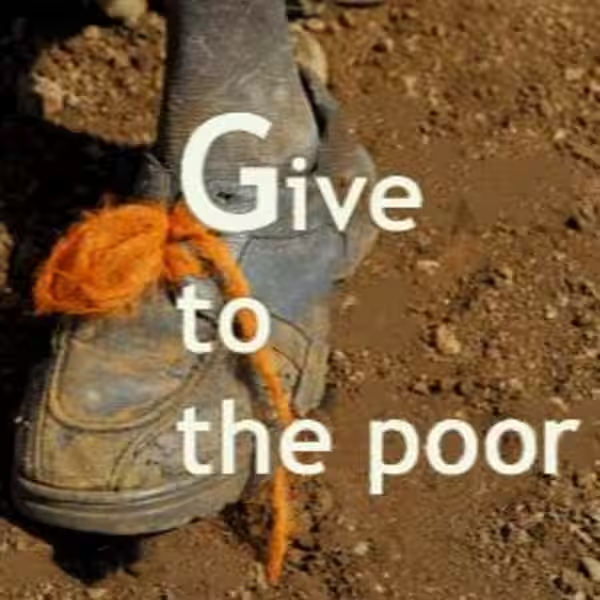
In a world often defined by disparities and struggles, the concept of helping those less fortunate resonates deeply with many. The Bible, a rich tapestry of wisdom and guidance, offers profound insights into this essential aspect of faith and humanity. This article delves into a range of biblical principles, exploring how faith translates into tangible acts of compassion and generosity. Understanding the biblical imperative to care for the vulnerable empowers us to live more meaningful lives, both as individuals and as a community.
One of the core tenets of faith is love for one's neighbor. This is not a passive sentiment; it's a powerful call to action. The message emphasizes caring for those in need, regardless of their background or circumstances. Consider the parable of the Good Samaritan, a powerful story illustrating the importance of extending compassion to all, even those outside our immediate circles. Acts of kindness and generosity are essential components of a virtuous life, as seen repeatedly in biblical narratives. Ultimately, our actions are judged by our treatment of the most vulnerable among us. We are called to be instruments of God's love and justice in the world.
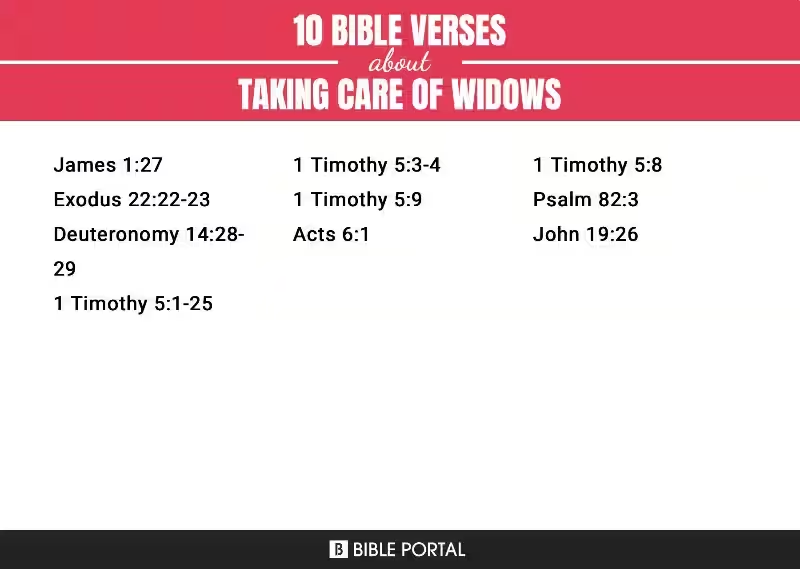
Numerous biblical passages reinforce the idea of helping those less fortunate. Proverbs 19:17 reminds us that those who are compassionate towards the poor are lending to the Lord. This illustrates the profound connection between generosity and righteousness. 1 John 3:17 highlights the direct link between empathy and God's love, urging us to help those in need with our material resources. Furthermore, Matthew 25:31-46, the parable of the judgment, underscores that helping those who are hungry, thirsty, imprisoned, naked, sick, and in need, is equivalent to helping Jesus Christ himself.
The Bible offers a multitude of examples of individuals who embodied compassion and generosity. Abraham's willingness to sacrifice his son, while a challenging example, demonstrates the depth of faith and selflessness that can arise when faced with the needs of others. Moses' struggles with the Israelites, which were resolved by a willingness to listen and help the needy, are further examples of how the most powerful leaders understand their role in helping others. These examples, along with countless stories of kindness and charity throughout the Old and New Testaments, are powerful reminders that helping the unfortunate is a fundamental aspect of a faithful life.
Practical Ways to Help
Practical applications of biblical principles regarding helping the less fortunate are numerous and diverse. Volunteering time at a local soup kitchen, homeless shelter, or food bank can make a tangible difference in the lives of those in need. Donating financial resources to organizations working to alleviate poverty is another vital way to assist. Sharing your skills or knowledge with someone less fortunate, such as mentoring a young person or helping them find employment, can also make a significant impact. Simple acts of kindness, like offering a listening ear or helping someone carry groceries, can also be very meaningful.
Consider these practical steps:
Identify local needs: Research organizations addressing poverty in your community.
Assess your resources: Determine how you can contribute—time, money, or skills.
Take action: Choose an activity that aligns with your resources and passions.
Seek community support: Working with others enhances impact and builds a supportive network.
These actions are deeply rooted in the principles of compassion and love as described in numerous biblical passages. Supporting organizations that work for social justice and economic empowerment can often have a profound and lasting effect on those who need it most. This is more than just charity; it's an investment in the wellbeing of our communities and in the fulfillment of our biblical calling.
Challenges in helping those less fortunate can stem from various factors, including the sheer scale of the problem, feelings of helplessness, or a lack of resources. Learning to manage expectations is crucial. It's important to remember that even small acts of kindness can make a significant difference. Don't be discouraged if you feel your efforts are not immediately impactful. Focus on the process, the opportunity to express compassion, and the satisfaction of knowing you are contributing to a greater good. The Bible emphasizes the importance of consistent effort and perseverance, even when faced with setbacks.
Don't be afraid to:
Seek guidance and support: Connect with religious communities or organizations for advice.
Set realistic goals: Recognize that even small contributions can have a positive effect.
Embrace the journey: Helping the less fortunate is an ongoing process.
Celebrate your successes: Acknowledge and appreciate your efforts, both large and small.
The Bible teaches us that love and compassion are not just ideals, but are central to a fulfilling life. Our efforts to uplift those in need are a testament to our faith and a tangible demonstration of God's love. Remember that God is always with us, and that the journey of helping the less fortunate is a shared one, made possible through faith, compassion, and hope.
Frequently Asked Questions
What are some Bible verses about helping those less fortunate?
Many verses throughout the Bible address caring for the poor and vulnerable. Examples include Deuteronomy 15:4, Matthew 25:31-46, and James 2:15-17.
What does my religion say about helping those less fortunate?
Different religions have varying perspectives on charitable works and social justice. Many religions emphasize compassion, empathy, and acts of service to those in need. Religious teachings often encourage individuals to use their resources and talents to benefit others.