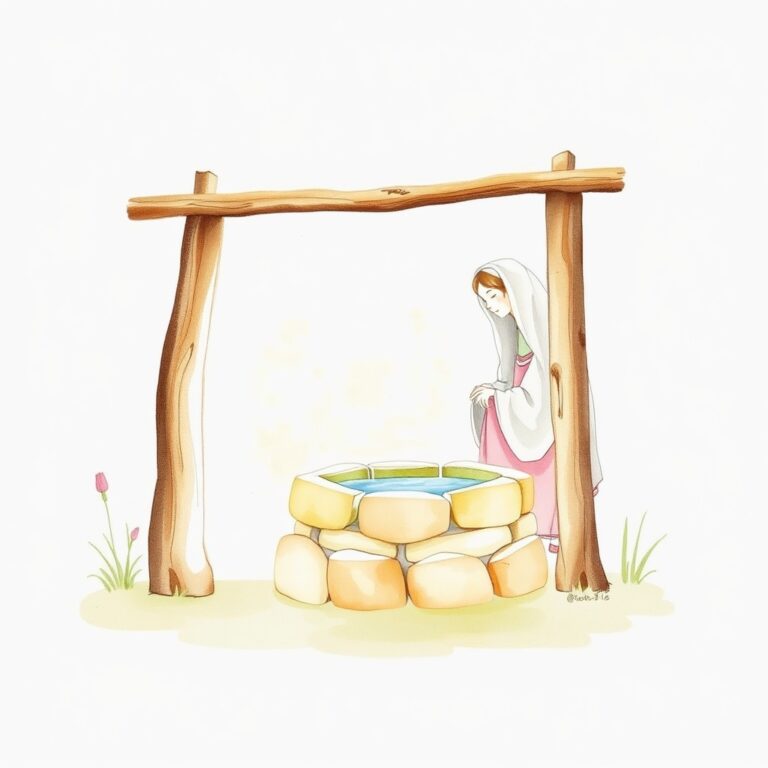
Commentary on the Woman at the Well: Living Water, Honest Worship, Grace
Quick Answer: This commentary on woman at the well invites you to see Jesus meeting ordinary people with astonishing grace. In John 4, the Samaritan woman’s conversation moves from thirst and water to deeper truth, then to worship in spirit and truth. Jesus does not avoid her past; He offers new life—so you can come honestly, drink deeply, and share what you receive.
Historical and cultural setting: why this meeting was remarkable
John 4 records Jesus traveling through Samaria, a journey that crossed social and religious boundaries. Jews often avoided Samaria due to long-standing tensions, yet Jesus deliberately goes there. At the well, He encounters a Samaritan woman—someone many would have dismissed because of gender, cultural prejudice, and her reputation. The timing matters too: it is midday, when few come to draw water, hinting at her loneliness and the weight of her public story.
Against that backdrop, Jesus’ approach is striking. He does not begin with a lecture; He begins with need—“give me to drink.” The conversation reveals layered thirst: physical thirst, moral thirst, and spiritual thirst. As the woman brings up water and then religion, Jesus steers the discussion toward God’s offer of “living water.”
This passage also highlights the difference between religious location and real worship. The woman wonders about “where” to worship, but Jesus answers with “how” and “why”: worship that is guided by God’s Spirit and grounded in truth. In other words, the Gospel is not merely a change of geography or rituals; it is a transformation of the heart that produces testimony.
Original-language note: “living water” and truthful worship
In John 4, Jesus’ phrase about “living water” uses language that can carry the idea of water that gives life, not merely water that is stored or drawn from a source. The Greek expression points beyond ordinary hydration to a gift from God that sustains spiritually—water that keeps flowing. When Jesus later speaks about worship “in spirit and in truth,” “spirit” emphasizes God’s life and enabling presence rather than mere external performance, while “truth” points to reality that corresponds to God Himself.
Because Bible readers often ask whether these words refer to a specific ritual or a general spiritual principle, it’s helpful to remember John’s overall emphasis: Jesus is the Word who reveals God, and He offers genuine access to the Father through Him. Therefore, “living water” is not a metaphor detached from Christ—it’s tied to receiving Jesus and believing God’s truth.
1) Jesus meets need with grace—conversation as the doorway to the Gospel
In the opening moments of this story, Jesus asks the woman for a drink. That small request breaks conventional barriers and reframes the whole encounter. The woman expects to be judged or managed; instead, she finds a Person who understands thirst better than she does. This is often how grace works: it begins near your real needs before it confronts your deeper ones.
As the dialogue unfolds (John 4), the woman responds with curiosity and questions. She talks about wells, distances, and water access—natural topics that reveal her daily life. But Jesus gradually redirects the conversation toward the spiritual: He is offering a kind of water that satisfies in a lasting way. Notice the progression: from “give me to drink” to “living water” to “a springing well” in the believer. Jesus does not rush her; He draws her step-by-step.
When she is prompted to be honest about her situation, it’s not merely for punishment. It’s for healing. Christ exposes what the woman hides so He can offer what she cannot manufacture. Sometimes people want God’s comfort without God’s truth. Jesus brings both—truth that restores and comfort that steadies the heart.
This is why a study guide for the woman at the well is so relevant today. Many hearts carry a kind of “midday loneliness.” You might be surrounded by people yet feel unseen. Jesus meets you in that place and turns conversation into transformation.
2) “Where do we worship?” becomes “How do we worship?”—spirit, truth, and Jesus as Messiah
The woman’s religious question surfaces as the conversation deepens: she highlights the dispute between worship practices and asks where the “right” place is. Jesus answers with a principle that overturns shallow religion. Worship is not primarily about geography, but about reality—God seeking worshipers who respond with sincerity.
In this passage, worship “in spirit and truth” means that God’s Spirit makes worship alive, while truth defines worship’s content. Truth is not vague sincerity; it is faith that aligns with who God is and what He has done. For John, that truth is embodied in Christ.
When the woman finally asks about the Messiah, she is not just asking a theology question—she is yearning for rescue. Jesus’ response is personal: He reveals Himself. The woman moves from discussing water to recognizing the Savior. That shift changes her whole posture. She goes from listening to testifying.
Immediately after encountering Jesus, she leaves her water jar. That detail is more than symbolism; it’s a picture of priorities rearranging. The jar represents what she previously relied on to survive—routine, coping, maybe even performance. But once she tastes what Jesus offers, the “old supply” looks insufficient. Her testimony becomes the overflow of her new satisfaction.
This commentary on woman at the well emphasizes that the Gospel is relational. Jesus does not only explain truth; He is the truth who offers living water. And when you receive Him, worship becomes not a location you argue about, but a life you express—through belief, honesty, and witness.
How to respond today: drink, worship honestly, and share with compassion
First, come to Jesus where you are thirsty—without pretending you’re fine. The woman didn’t have to clean up her story before Jesus spoke to her; she had to be honest enough to receive what He offers. Ask yourself: What “well” am I running to for satisfaction that only Christ can truly give?
Second, worship with both heart and truth. Jesus calls for worship in spirit and truth, which means you don’t just perform religious habits, and you also don’t rely on emotions alone. Let Scripture and God’s presence shape your worship.
Third, turn testimony into mission. After her encounter, the woman shared what she learned. You may not speak like an expert, but you can say what Jesus did in you. The same compassion Jesus used with the woman can guide you when you talk to people who carry shame or misunderstandings.
Finally, remember that Jesus often meets people through conversation—through a question, a meal, a walk, a moment of listening. Pray for divine opportunities, and be willing to start with kindness before you reach for clarity.
Related Bible Passages
John 7:37-38
Jesus invites believers to come for living water, linking the promise directly to Him.
God desires truth in the inward parts, echoing Jesus’ call to honest worship.
Matthew 11:28
Christ offers rest to the weary, matching the woman’s hidden loneliness and thirst.
Ephesians 2:13
In Christ, those far off are brought near, reflecting how Jesus bridges barriers with grace.
Revelation 3:20
Jesus meets people at the door and offers intimate fellowship—much like His personal approach to the woman.
Frequently Asked Questions
What is the main lesson of the woman at the well in John 4?
The main lesson is that Jesus offers “living water” that satisfies spiritually and brings people into real worship. He meets the woman with grace, speaks truth with compassion, and reveals Himself as Messiah. The result is transformation—she leaves what once sustained her and shares her testimony.
Why did Jesus speak to a Samaritan woman?
Jesus crossed cultural and social barriers to show that God’s grace reaches beyond human boundaries. The encounter also teaches that God is more concerned with the condition of the heart than the reputation a person carries. In doing so, Jesus demonstrates the Gospel’s inclusive, redemptive power.
What does “worship in spirit and truth” mean?
It means worship that is animated by God’s Spirit and grounded in the truth of who God is and what He has revealed. It’s not only about correct location or outward ritual, and it’s not only about feelings. Real worship aligns sincerity with divine reality.
How can I apply this passage if I feel ashamed of my past?
The woman’s story shows that Jesus doesn’t wait for perfection before He offers grace—He invites honesty. Bring your truth to Christ, ask Him to satisfy your thirst, and let worship and testimony flow from your encounter. Shame loses power when Jesus reveals mercy and renewal.
A Short Prayer
Lord Jesus, thank You for meeting us with grace and truth. Like the woman at the well, we bring our real thirst and our hidden burdens into Your presence. Give us living water that satisfies, and teach us to worship You in spirit and truth. Set a compassion in our hearts so we can speak Your hope to others. Use our conversations and testimonies to draw people to You. Amen.
Key Takeaway: Jesus offers living water that satisfies the soul, reshapes worship from outward forms to inward truth, and turns encounter into testimony.