Delving into religious texts can be a profoundly enriching experience, but often the sheer volume of information and complex ideas can feel overwhelming. Effective note-taking becomes crucial for absorbing and retaining the knowledge. This is where book annotations come into play. They transform a passive reading experience into an active one, enabling deeper engagement with the material and facilitating a more meaningful understanding of faith and belief systems. This article will explore the profound benefits of annotating religious texts and provide practical strategies for maximizing your learning.
Imagine studying a complex theological concept, or deciphering symbols in religious art. By actively engaging with the text, you transform your reading from a passive consumption of words to an active process of understanding. This process of annotation, which involves highlighting key passages, writing notes in the margins, and even creating visual aids within the book, provides a personalised guide for revisiting and recalling information. By linking ideas within and across different texts, you develop a robust understanding of the interconnectedness of religious thought.
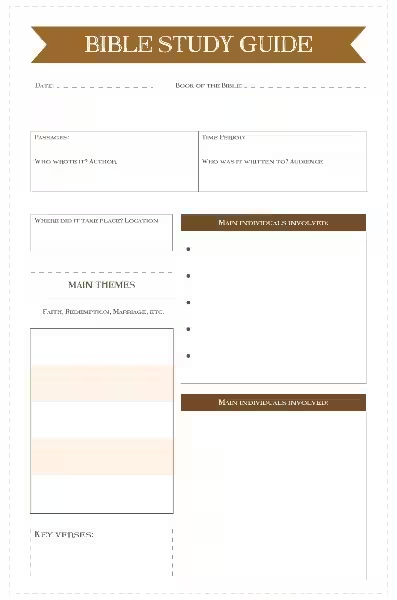
Developing a consistent annotation style is essential for navigating complex religious texts. A thoughtful system allows you to quickly find important information when revisiting your notes. Key strategies for developing your annotation style include:
Using different colors for highlighting different aspects of the text (e.g., key themes, historical context, personal reflection).
Creating a key for symbols used in your annotations.
Using abbreviations for frequently used terms.
Furthermore, think about your learning style when developing your annotation style. If you are visual, using diagrams or flowcharts alongside textual notes might be beneficial. If you are more auditory, recording your thoughts as you read could be the key to unlocking deeper understanding. An effective style will help you navigate the complexities of different religions and sects, ensuring that your annotations become a personalized roadmap for your study. An example could be using different colored pens/highlighters to group ideas, or using symbols to note where a particular idea is referenced elsewhere in the text.
Effective annotation is not just about highlighting; it’s about engaging with the text on a deeper level. Annotating for comprehension includes strategies like identifying key arguments and providing personal interpretations. Analyzing the context of a particular passage is critical. Understanding the historical and cultural background of the text can offer significant insight.
For example, consider annotating the concept of “sin” in a religious text. You could highlight how the concept evolves and changes over time, noting the different interpretations across various sects and eras. You could also record your personal reflection on the concept and how it relates to your own values and beliefs. Connecting personal experiences to the ideas in the text strengthens the learning process.
Connecting Annotations to Religious Dialogue
Religious texts often serve as a foundation for ongoing discussion and debate. Annotating for discussion involves identifying passages that spark questions or challenge your existing beliefs. Highlighting these passages allows you to engage more effectively in theological discussions both within academic settings as well as in social interactions. By understanding opposing viewpoints, you develop a more well-rounded understanding of the topic.
The power of annotation extends beyond personal reflection. It allows you to engage in informed debate on religious themes. For instance, annotating passages discussing the role of women in a particular religion alongside passages regarding the roles of men can provide a framework for discussing gender equality within that faith tradition. Identifying and contrasting perspectives within religious texts helps to cultivate a more nuanced understanding of faith and belief systems. An important note: annotations are a tool, not a replacement for active listening and critical thinking in discussion..
By employing various annotation techniques, you develop a personalized understanding of religious texts. Annotations act as a personal guide to your study. They transform passive reading into an active engagement with complex concepts and ideas. This tool unlocks spiritual insights and strengthens understanding of religious traditions. The key to success is to integrate these practices into your study routine and to remember that the purpose of these annotations is to facilitate a deeper and more personal engagement with the religious texts you read.
Ultimately, the goal of annotating religious texts is not just to accumulate information, but rather to cultivate a deeper understanding of faith, belief, and the human experience. Reflect on the meaning behind the text and how it resonates with you personally. Your annotations should be a living document, evolving with your understanding and offering a unique window into your personal journey of faith. This dynamic process fosters a deeper and more personal engagement with the world of religion.
Frequently Asked Questions about Book Annotations and Religion
What are book annotations?
Annotations are notes, comments, and reflections written in the margins or on the pages of a book. They can include summaries, interpretations, questions, and personal connections.
How can I use annotations to understand religious texts?
Annotations help you engage more deeply with religious texts, by allowing you to explore different interpretations, compare themes, and reflect on their impact on your life.
What are some different annotation methods I can use for religious texts?
Various methods can be employed. Highlighting key passages, summarizing sections, noting connections to personal experiences, and comparing different interpretations are common methods.
How can I use annotations to compare different religious perspectives?
You can annotate different translations and interpretations of religious texts, comparing and contrasting the different viewpoints and perspectives. This can help you understand the complexities of religious ideas.
What are some common annotations for religious texts?
Common annotations include textual summaries, personal reflections, comparisons to other religious texts, and connections to modern events.
How can annotations help me understand the historical context of religious texts?
By annotating with historical information, you can gain a better understanding of the societal and cultural influences that shaped the religious texts and their interpretations.
Can annotations be used for personal reflection on religious beliefs?
Absolutely. Annotations are an excellent tool for personal exploration and reflection, allowing you to connect religious concepts to your own experiences and beliefs.
How do I prevent annotations from becoming just summaries?
Go beyond simple summaries, and strive to explore deeper meanings and interpretations. Asking questions and making connections to personal experiences will encourage deeper engagement.
Are there different types of annotations for different purposes?
Yes. There are annotations for summary, analysis, personal reflection, and comparison. Be clear about your annotation’s purpose to make the most of it.