Delving into religious texts can be a profoundly rewarding experience, but deciphering complex theological concepts, historical contexts, and nuanced interpretations can feel daunting. This is where annotated books become invaluable tools. By providing crucial context and insightful commentary, these resources transform passive reading into an active exploration of faith and belief. An annotated Bible, for example, might include notes explaining obscure passages within the text, tracing their evolution over time, or comparing them to other religious traditions.
Imagine trying to understand a complex philosophical argument without knowing the historical background or the author’s intentions. That’s the experience of reading a religious text without proper annotation. Annotated books bridge this gap, offering the reader a deeper understanding by explaining the historical context, cultural influences, and often, the personal journey of the author. This allows for a more profound and meaningful engagement with the sacred text, and connects the reader to a rich tapestry of insights and perspectives. For instance, an annotated collection of Sufi poetry would be greatly enhanced by notes explaining the specific symbolism, metaphors, and spiritual traditions central to that genre of literature.
Navigating Complexities with Annotated Religious Texts
Annotated books provide a framework for understanding the complexities within religious texts. They often include explanations of difficult concepts, historical background on the author or time period, and comparisons to other related texts. For instance, an annotated edition of the Quran might offer translations of Arabic terms, explanations of Islamic legal principles, and even compare the text with parallel passages in the Old Testament.
This approach allows for a more nuanced comprehension of the text, moving beyond surface-level interpretations. For example, an annotated commentary on the Book of Revelation might outline the various interpretations of apocalyptic imagery over the centuries, showcasing how different historical circumstances have shaped the understanding of these prophecies. An understanding of the author’s intentions, historical context, and the different interpretations over time is crucial for a meaningful engagement. Understanding the cultural context surrounding the text is essential to fully grasp the message, and annotated books facilitate this understanding.
Exploring Diverse Interpretations and Perspectives
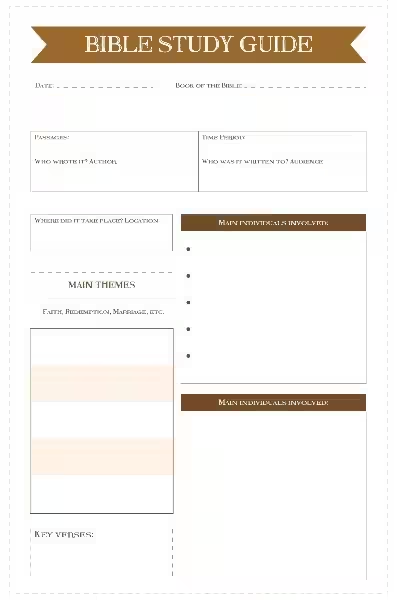
A key benefit of annotated books lies in the exploration of diverse perspectives on a given religious text. By presenting multiple interpretations, commentaries, and historical analyses, these resources empower the reader to form their own informed conclusions. For example, an annotated collection of theological essays might show how different schools of thought within a religion have debated particular doctrines, allowing the reader to evaluate the arguments and understand the historical evolution of these ideas. These tools can include visual aids and supporting materials.
This is particularly important in understanding the evolution of religious thought. Different commentators or scholars offer varied viewpoints. Looking at a critical annotated edition of the Talmud can illuminate the different schools of Jewish thought and their historical development. These annotations show how scholars, theologians, and believers have engaged with the text over time. By presenting these diverse viewpoints, annotated books encourage critical thinking and a deeper appreciation for the complexity of faith.
Engaging with Religious Texts on a Deeper Level
Ultimately, annotated books are more than just tools for religious study; they are gateways to a deeper engagement with faith and belief. By providing context, clarification, and diverse perspectives, these resources unlock the richness and depth of religious texts. They foster a deeper appreciation for the human experience of faith, allowing readers to connect with these texts on a more personal and meaningful level. An example could be an annotated collection of Hindu scriptures, which would include translations, explanations of rituals and philosophies, and insights into the stories’ historical and cultural significance. Reading annotated books facilitates a more active and nuanced understanding.
Furthermore, the use of annotated books can be highly beneficial to those exploring new faiths or seeking a deeper connection with their existing faith. By engaging with the text in a more profound way, readers can gain a richer understanding of the beliefs and practices they cherish. For instance, an annotated book on the history of Christianity might detail the evolution of doctrines and practices throughout the centuries, providing a comprehensive view of the development of Christian thought. Annotated books make the sometimes daunting task of engaging with sacred texts considerably easier, and more rewarding.
Frequently Asked Questions about Annotated Books and Religion
What are annotated books?
Annotated books are books that have notes, commentary, or explanations added by someone other than the original author. These notes can be historical context, analysis of the text, or personal reflections. Sometimes, they focus on a specific aspect of the book, such as its religious significance.
How can annotated books help me understand a religious text?
Annotated religious texts can provide valuable context, historical background, and varying interpretations of the text. They can help clarify difficult passages, highlight key themes, and connect the text to broader cultural and religious traditions.
Are annotated books only for religious studies scholars?
No. Annotated books cater to a wide range of readers, from those with a basic interest in a religion to those seeking a deeper understanding. The level of annotation varies, making them accessible to different skill levels and backgrounds.
What types of annotations are typically found in annotated religious books?
Annotations can include historical context, explanations of religious concepts, translations of difficult words or phrases, comparisons with related texts, and analyses of the author’s intent or the book’s influence.
How do I choose an annotated book on a particular religion?
Consider the annotator’s expertise, the specific focus of the annotation (e.g., historical, theological), and your own level of understanding. Look for reviews and recommendations from other readers.
Can annotated books be used for personal study or religious reflection?
Absolutely. Annotated books can offer insights for personal study, fostering a deeper engagement with the text and leading to deeper personal reflection and understanding of the topic.