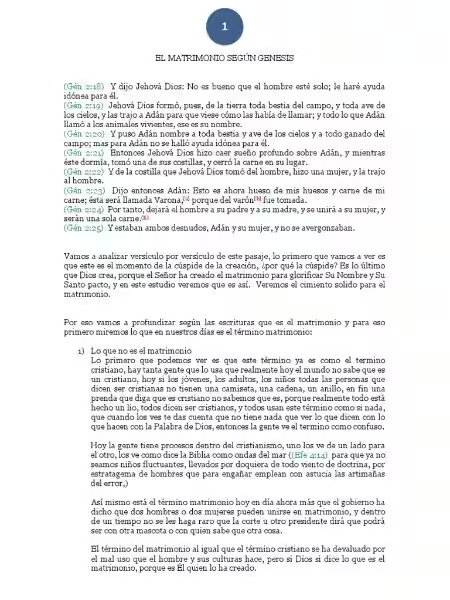
Marriage, a cornerstone of many cultures and faiths, has evolved dramatically throughout history. Understanding its significance, particularly within the framework of religious beliefs, can offer profound insights into human relationships and societal structures. This exploration delves into the biblical perspective on marriage, examining its enduring principles and their relevance in today’s world. Biblical texts present marriage as a sacred covenant, a union ordained by God, imbued with moral and spiritual responsibilities.
The concept of marriage in the Bible isn’t monolithic; it spans centuries and diverse cultural contexts. Different books and passages offer varying insights, reflecting the historical evolution of societal norms. Furthermore, understanding the historical context of these laws is crucial. For instance, the laws surrounding polygamy, while present in some parts of the Old Testament, were often dictated by the specific circumstances of the times. However, monogamous marriage is presented as the ideal in many New Testament teachings.
The Old Testament emphasizes marriage as a sacred covenant between a man and a woman, often viewed as a partnership for procreation and societal stability. God’s role in this union is paramount, with marriage seen as a reflection of His own relationship with humanity. In many instances, marriage was a means of uniting families and establishing alliances. For example, the marriage of Isaac and Rebekah secured a lineage for a chosen people.
Key aspects of Old Testament marriage laws included the concept of marriage as a public agreement, often involving parental consent, and the establishment of rules governing divorce and remarriage. These rules, while sometimes strict or seemingly antiquated, reflect the practical needs and societal structures of the time, such as preserving family lineage and maintaining communal order. These laws were not solely about personal feelings, but also about societal stability and continuity.
Monogamy and Fidelity in the New Testament
The New Testament further develops these ideas, often emphasizing love, compassion, and mutual respect within the marital relationship. Jesus’ teachings, while not explicitly outlining specific laws, highlight the importance of fidelity and commitment. He emphasized the permanence and sacredness of marriage, portraying it as a reflection of the relationship between Christ and the church. For instance, Jesus’ parable of the lost sheep highlights caring for those who might be struggling in the marriage relationship.
The emphasis on forgiveness and reconciliation is also prominent. These teachings resonate with modern couples, providing guidance on navigating disagreements and difficulties in a loving and committed partnership. Many Christians view these teachings as a call to strive for a deeper connection and commitment, recognizing the importance of building a strong spiritual foundation for their marriage.
Biblical Laws and Modern Marriage
Biblical laws on marriage, from both the Old and New Testaments, provide a rich tapestry of principles for building a successful and fulfilling union. While interpretations vary, a common theme emerges: marriage is a sacred covenant requiring commitment, faithfulness, and mutual respect. Modern couples can find valuable guidance in these ancient texts. For instance, the emphasis on communication and shared values in the New Testament teachings resonates with modern relationship dynamics.
Applying these principles in the 21st century requires careful consideration and a nuanced understanding. Contemporary interpretations of biblical texts aim to balance the historical context with contemporary values, fostering a fulfilling and loving marriage that reflects compassion, forgiveness, and shared spiritual growth. These principles can be applied to a range of modern relationships, from traditional marriages to blended families or same-sex unions. Crucially, the underlying themes of love, commitment, and mutual respect remain timeless and relevant.
Biblical laws on marriage, though diverse in their interpretations, offer invaluable insight into the nature of human relationships and the importance of commitment. These principles, when applied thoughtfully, offer a framework for building strong and lasting marriages. Understanding the historical, cultural, and religious contexts is essential for interpreting and applying these principles to modern life. By embracing the key themes of love, compassion, and mutual respect, today’s couples can navigate the complexities of marriage with wisdom and grace.
Ultimately, the goal is not simply to adhere to rules, but to strive for a deeper understanding of God’s vision for marriage and to cultivate a relationship built on love, forgiveness, and enduring commitment. This understanding can lead to a more fulfilling and harmonious life for individuals and families. These principles remain relevant across diverse backgrounds and perspectives, offering a timeless framework for a balanced and supportive marital union.
Frequently Asked Questions about Biblical Laws on Marriage and Religion
What does the Bible say about marriage?
The Bible’s teachings on marriage are multifaceted and span various books and contexts. Generally, it portrays marriage as a sacred covenant between a man and a woman, ordained by God and intended for lifelong commitment, procreation, and mutual support. Specific interpretations and applications of these teachings vary across denominations and individual beliefs.
The Bible’s stance on divorce is complex. Some passages seem to permit divorce in cases of adultery, while others suggest that marriage is intended to be permanent. Different interpretations exist regarding the specific circumstances that justify divorce, leading to diverse perspectives within religious communities.
How do different religions view marriage?
Various religions have unique perspectives on marriage, reflecting their distinct theological traditions and cultural contexts. Some emphasize lifelong commitment and the sanctity of marriage, while others may have differing perspectives on divorce, polygamy, or same-sex marriage.
What is the role of religion in marriage?
Religion plays a significant role in many marriages, providing a framework for understanding, practicing, and strengthening the marital bond. Religious rituals, teachings, and community support can offer guidance and support throughout the marriage journey.
Does the Bible condone polygamy?
While certain historical figures in the Bible practiced polygamy, most modern interpretations consider monogamy (one spouse) as the preferred model of marriage as taught in scripture.